
Picking
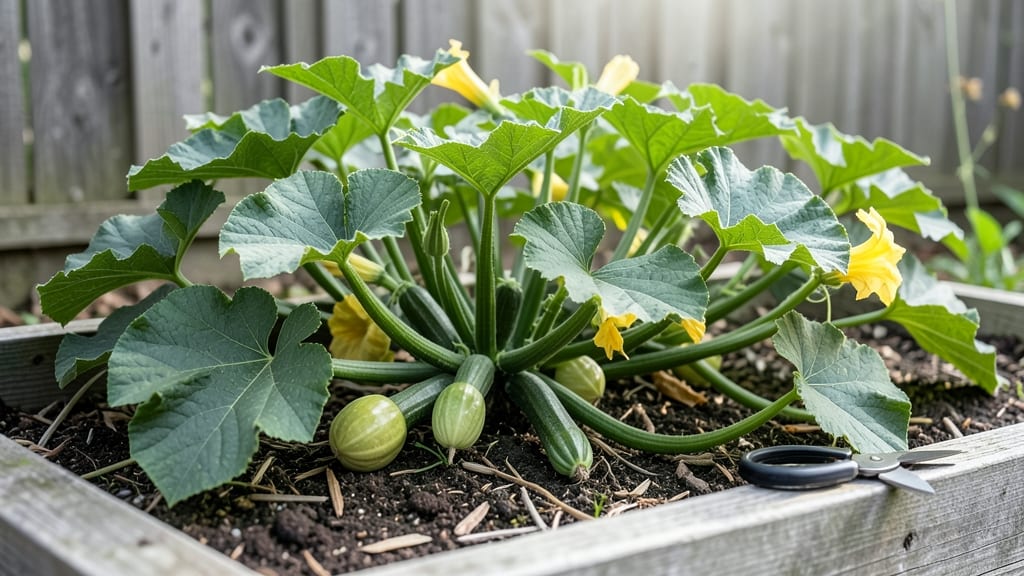
Mastering zucchini squash leaf identification in seconds saves you from misdiagnosing plant problems—here’s how to tell them apart. 🌿 Healthy zucchini leaves are broad with jagged edges and a slightly waxy surface, while squash leaves tend to be more rounded with a rougher texture—though both can look identical until you see the fruit.
The real game-changer is the leaf veins: zucchini leaves have more pronounced, lighter green veins that create a web-like pattern, while squash leaves often have a more uniform green with subtle veining.
Beyond the basics, leaf color and shape shifts reveal what’s really going on. Powdery mildew shows up as white, powdery spots on the top of leaves, while downy mildew appears as yellow patches on the underside.
Squash bugs leave behind brown, oval-shaped eggs clustered along leaf veins, and aphids create sticky residue that attracts ants. Nutrient deficiencies? Yellowing between veins signals nitrogen deficiency, while purple stems and undersides mean phosphorus is lacking.
Here’s the fast fix: snap a photo of the leaf’s underside and compare it to your notes—veins, spots, or holes tell the whole story. Once you spot the issue, you can act quickly: spray with neem oil for pests, apply sulfur for mildew, or amend soil for deficiencies.
The key is catching problems early, before they spread to the fruit.
This method works for both summer and winter squash varieties, so you can use it year-round. Keep a small notebook by your garden to jot down leaf patterns and symptoms—it’ll become second nature in no time.
The sooner you identify the issue, the sooner your plants bounce back, and that means more zucchini on your table.
📚 In This Guide
- What you need
- Instructions
- Tips and common mistakes
- Wrapping up and next steps
What you need
- ● Fresh zucchini and squash plants: At least two healthy plants (one zucchini, one squash) for comparison—bonus points if you have both varieties growing nearby! 🌱
- ● Hand lens or magnifying glass: A 10x magnification tool helps spot fine details like leaf texture and vein patterns.
- ● Notebook or digital device: For jotting down observations (pen + paper or a smartphone with a leaf identification app like PlantNet or Google Lens).
- ● Ruler or measuring tape: To measure leaf dimensions (e.g., length/width in inches or centimeters).
- ○ Camera (optional but helpful): A smartphone with a macro mode or a basic digital camera for close-up shots.
- ● Pruning shears or sharp scissors: For cleanly snipping a few leaves without damaging the plant.
- ● White or light-colored background: A sheet of paper, poster board, or even a plain wall to lay leaves on for clear photos.
- ● Labeling tags or sticky notes: To mark leaves as "zucchini" or "squash" during your comparison.
- ● A field guide to squash plants or a printed visual comparison chart for quick reference.
- ● Gloves: If you’re working with prickly or hairy leaves (some squash varieties have spiny stems!).
- ● Sunlight or bright lamp: Natural light reduces shadows for better leaf detail observation.
How to identify zucchini and squash leaves at a glance
Here's the quick method I use to tell them apart in seconds—no gardening degree required.
🌿 Step 1: Examine Leaf Shape and Texture
Start by looking at the leaf edges—zucchini leaves have deep, jagged lobes that resemble maple leaves, while squash leaves tend to be smoother with shallow scallops. Run your fingers along the edge: zucchini leaves feel like they've been cut with a serrated knife, while squash leaves are more gently rounded.
Check the leaf surface next—zucchini leaves often have a rougher, hairier texture compared to squash leaves, which are usually smoother. This hairiness helps zucchini plants handle heat better, which is why they thrive in summer gardens.
🌱 Step 2: Compare Leaf Size and Growth Pattern
Zucchini leaves typically grow larger and broader, often reaching 6-12 inches wide with 5-7 lobes per leaf. Squash leaves are usually smaller and more compact, around 4-8 inches wide, with 3-5 lobes. Hold the leaves side by side—you'll notice the zucchini leaves dominate in size.
Look at how the leaves attach to the stem—zucchini leaves have longer petioles (the stem connecting leaf to plant), making them appear more spaced out. Squash leaves grow closer together, almost overlapping at times. This difference is your fastest clue when plants are young.
☀️ Step 3: Check the Stem and Vine Structure
The stem color and thickness gives another hint—zucchini plants have thicker, darker green stems that feel sturdy to the touch. Squash stems are usually lighter green and more slender. Run your thumb along the stem: zucchini stems hold up better under weight, while squash stems bend more easily.
Observe the vine growth habit—zucchini vines spread wider and bushier, while squash vines tend to trail more. If the plant looks like it's trying to take over your garden bed, it's likely zucchini. This difference becomes obvious once the plants are a few weeks old.
🌿 Step 4: Look at the Flowers (When Available)
If flowers have appeared, this is your most reliable clue. Zucchini flowers are larger and more dramatic, with bright yellow petals that can reach 2-3 inches across. Squash flowers are smaller and more delicate, usually under 1.5 inches wide, with a softer yellow hue.
The flower stem also differs—zucchini flowers grow on thicker stems that emerge directly from the main vine, while squash flowers often come from side shoots. This distinction helps when plants are mature and flowering heavily.
⏰ Step 5: Verify with Fruit Shape (Final Check)
Once fruits appear, this becomes foolproof—zucchini fruits are longer and more cylindrical, while squash fruits are rounder and more compact. But since we're focusing on leaves, use this as a last-resort confirmation if you're still unsure.
Real talk: If you're still guessing after these steps, snap a photo and compare it to online guides. I always keep a reference chart handy during planting season—it saves time when you're knee-deep in garden work and need answers fast.
Tips & tricks for quick zucchini and squash leaf identification
Confession: I spent years mixing up these leaves until I learned these quick tricks. Here's how to nail it every time.
Visualize the Leaf Edges: Hold leaves side by side and imagine a maple leaf versus a dinner plate. Zucchini leaves have those dramatic, jagged edges that look like they've been cut with a chef's knife, while squash leaves have gentle, shallow scallops. The difference becomes obvious when you run your thumb along the edge—zucchini leaves feel like sandpaper compared to squash's smooth curve.
Size Comparison Hack: For young plants, measure the leaf width with your hand. Zucchini leaves often span from your thumb to pinky when fully grown (6-12 inches), while squash leaves typically fit between thumb and middle finger (4-8 inches). Pro tip: Compare multiple leaves from the same plant—consistency is key.
Stem Strength Test: Bend the stems gently—zucchini stems feel like they could support a small bird, while squash stems bend easily. This is because zucchini plants grow heavier fruits that require sturdier support. I use this test when plants are just a few inches tall to confirm before flowers appear.
Growth Pattern Shortcut: Look at how leaves attach to the vine. Zucchini leaves have those long stems (petioles) that make them look spaced out, while squash leaves grow almost overlapping. This is your fastest clue when plants are young and flowers haven't appeared yet.
Pro Tips for Zucchini Squash Leaf Identification
- Confession: I spent years mixing up these leaves until I learned these quick tricks. Here's how to nail it every time.
- Visualize the Leaf Edges: Hold leaves side by side and imagine a maple leaf versus a dinner plate.
- Size Comparison Hack: For young plants, measure the leaf width with your hand.
Frequently asked questions
Got questions about zucchini and squash leaf identification?
You’re not alone! Here are some of the most common queries—plus quick answers to help you master the difference in no time.
How do I quickly tell zucchini leaves apart from other squash leaves?
Zucchini leaves (a type of summer squash) are slightly lobed with 5-7 rounded teeth per side, while butternut squash leaves are more deeply lobed and jagged. Pumpkin leaves tend to be broader with fewer, sharper lobes. Hold leaves up to light—zucchini’s veins are palmate (spreading from one point), while squash often has a more irregular pattern.
When is the best time to check leaves for identification?
The ideal time is late morning to early afternoon when leaves are fully hydrated and sunlight enhances color/vein contrast. Avoid checking after rain (leaves may appear darker) or late in the day (edges can curl, masking features). Pro tip: Snap a photo if unsure—compare it to online guides later!
What if my plant’s leaves look like zucchini but the fruit is different?
Leaves alone aren’t always foolproof! If your plant has zucchini-like leaves but produces hard-shelled, orange fruit, it’s likely a butternut squash. For round, ribbed fruit, it’s probably a zucchini. Yellow fruit with a smooth skin? Could be a yellow crookneck squash. When in doubt, check the vines and flowers—zucchini flowers are yellow and solitary, while squash often have clustered blooms.
Can I use leaf shape to identify diseased or pest-damaged plants?
Not reliably! Disease (like powdery mildew) or pests (squash bugs) distort leaf shape, making identification tricky. Focus on fruit and plant health first. If leaves are yellowing, spotted, or holes, treat the plant before assuming it’s a different variety. Pro tip: Isolate suspicious plants to prevent spread.
Are there any leaf traits that guarantee a plant is edible?
No trait guarantees edibility—always cross-check with fruit, flowers, and growth habits. However, healthy, glossy leaves with no signs of rot or mold suggest a safe plant. Avoid plants with white powder (mildew), black spots (bacterial wilt), or chewed edges (pests). When harvesting, pick fruit young (under 8 inches) for the best flavor and texture!
Wrapping up and next steps
Identifying zucchini and squash leaves doesn’t have to be a puzzle—once you know the key visual cues, like leaf shape, texture, and growth patterns, you’ll spot the differences in no time! 🌱 Whether you’re a seasoned gardener or just starting out, mastering this skill ensures you can harvest the right veggies and keep your garden thriving.
Ready to put your new knowledge to the test? Head to your garden (or a local farmers' market) and compare leaves side by side! Grab a notebook to jot down any unique traits you notice—you’ll be a leaf-identification pro in no time. Happy gardening! 🌿