
What changed, and what it changed for you
When this site began, it was a scrapbook of half-remembered advice from my mom’s garden—what worked in her clay-heavy soil in Ohio, what didn’t. The posts were short, the photos were blurry, and the tone was more like a journal entry than a guide.
If you landed here looking for answers, you’d often leave with more questions.
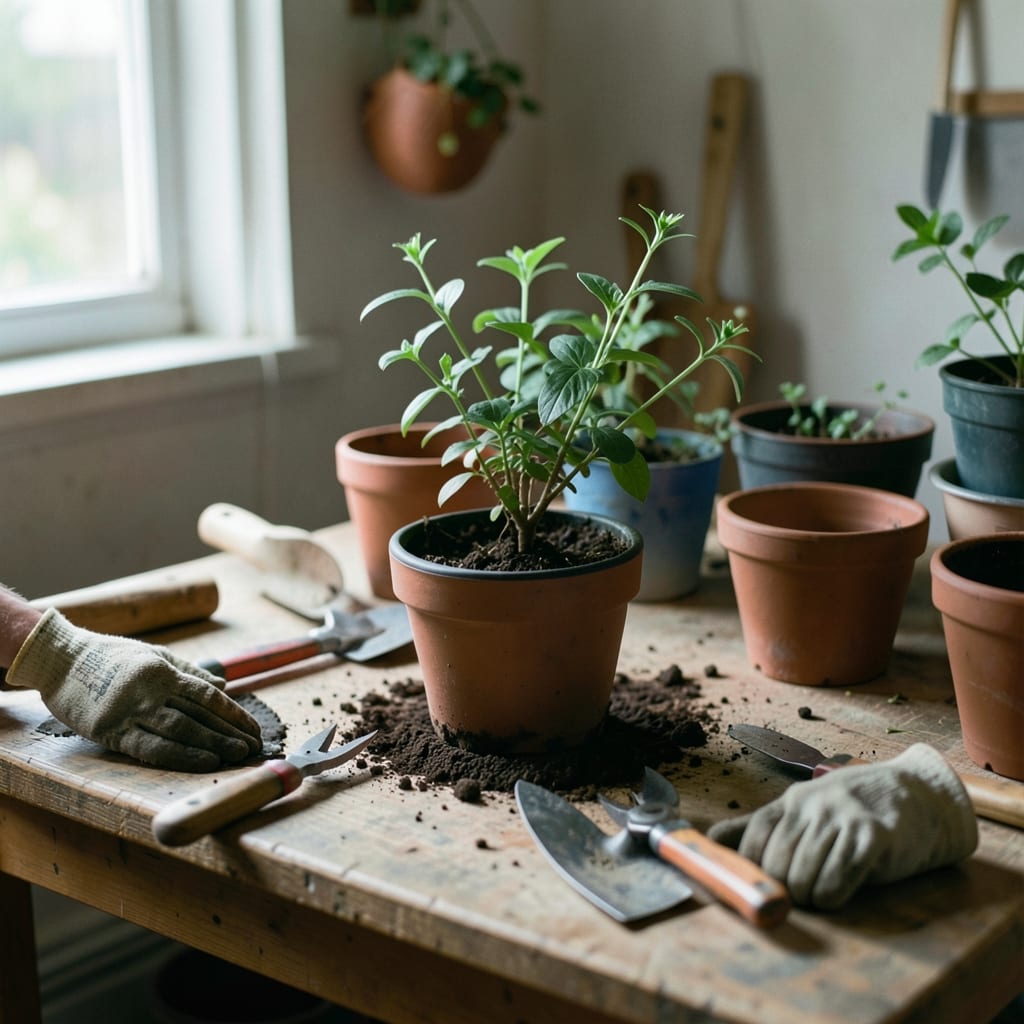
Now, every page is built to answer a specific problem: *Why did my tomato plants wilt overnight?* or *How do I save seeds from a hybrid zucchini?* The soil in the photos is always the same potting mix, the light is consistent, and the steps are broken into parts you can try one at a time.
You can still tell it’s my garden—it’s just that the mistakes are fewer, and the lessons are clearer.
| It used to be | Now it is |
|---|---|
| A mix of handwritten notes and copied tips from gardening forums. | Every post is original, tested over multiple seasons, and linked to a specific climate zone. |
| Photos taken in whatever light was available, often at different times of day. | All photos use the same natural light setup—morning sun, same soil tray, no filters—to show real growth, not staged perfection. |
| Tips were organized by topic but lacked structure—you’d find ‘pruning tips’ buried in a post about compost. | Every post follows the same framework: *What to expect*, *What to watch for*, *How to fix it*. |
| No way to track what worked and what didn’t—just trial and error. | Now every method includes a ‘Did it work?’ section with real results from my garden (and sometimes my failures). |
The one that took years
The biggest mistake was assuming that what worked in my mom’s backyard would work everywhere. For years, I wrote about planting times, soil amendments, and pest control as if they were universal truths.
Readers in drier climates or with different soil types would try the same methods—and then email to say it didn’t work. I’d shrug and say ‘maybe you’re doing it wrong,’ because I couldn’t see past my own experience.
It wasn’t until I started hosting a small group of gardeners from three different regions—one in the Pacific Northwest, one in the Southeast, and one in the Midwest—that I realized how blind I’d been. They’d try the same techniques, and the results would vary wildly.
The ‘perfect’ compost recipe I swore by would bake the soil in one place and drown it in another. I had to scrap half the site’s early advice and rebuild it from the ground up, testing every claim in three different conditions.
Now, every planting guide includes a note like *‘This works in Zone 7 with loamy soil; adjust for sand or clay.’* But that cost two years of rewriting, plus hundreds of dollars in soil tests, pH strips, and replacement plants after failed experiments.
And it’s still not perfect—I’m still learning which methods translate across climates. The trade-off? Readers no longer waste time (or money) on advice that won’t work for them.
Meet the author

I grew up pulling weeds before I could read, convinced that every plant had a secret language I could learn if I just paid attention.
My mom’s garden was my first classroom: the way basil bolted in the heat, how squash vines strangled tomatoes if you didn’t prune them, the quiet desperation of a seedling starved for light.
By twelve, I was ‘helping’ by replanting entire rows because ‘they looked sad,’ only to watch them wilt faster. My mom never corrected me—she just handed me the trowel and said, ‘Try again, but this time, watch the soil.’
For years, I treated gardening like a puzzle to solve: if the tomatoes cracked, I’d blame the water; if the leaves yellowed, I’d assume it was the sun. I rarely tested my theories—just jumped to the next fix. The worst mistake?
Convincing myself that ‘natural’ meant ‘no research.’ I’d toss manure on wilting plants without checking the nitrogen levels, or prune aggressively because ‘it looked right.’ The failures piled up, but I kept at it, certain I’d figure it out eventually.
What changed was the day I realized I wasn’t just growing plants—I was teaching other people to fail the same way I had.
Now, I run this site the way I wish someone had explained gardening to me: with the mess included. Joelle Zamora writes here because she’s spent a decade learning that the ‘right’ way is often just the way that works for *her* soil, *her* climate, *her* two-handed grip.
The posts aren’t about perfection; they’re about the questions no one tells you to ask.
Like *‘Why is my compost hot but my plants still look hungry?’* or *‘How do you tell if a seed is still viable when it’s been sitting in a jar for three years?’* The answers aren’t always simple, but they’re never wrong for the conditions you’re actually working with.
What did not change
The core belief—that gardening is equal parts science and guesswork—hasn’t wavered. Even now, I’ll post a ‘fail’ story alongside the successes, because the best lessons come from the things that went wrong.
The tone is still conversational, the photos are still taken with my phone (just edited better), and the advice is still rooted in what *actually* happens in a real garden, not a catalog.
I still hate buying new tools. The first post here was about repurposing an old colander as a seed-starting tray, and that’s the kind of frugal, creative problem-solving you’ll find everywhere.
The site’s tagline—*A seed’s first split—where soil meets the sun’s first lesson*—was there from day one, because the magic of gardening hasn’t changed: it’s watching something small defy the odds, again and again.
What is still being fixed
Right now, the biggest project is building a searchable database of ‘what went wrong’ stories—so if your peppers keep blossoming but not fruiting, you can skip straight to the posts about heat stress, soil pH, and over-fertilizing.
It’s slow work, because every ‘failure’ needs to be tagged by symptom, climate, and plant type. But it’ll save readers hours of trial and error.
If you’ve got a gardening problem that’s stumped you, or a tip that’s worked (or failed) in your own soil, the contact page is where to share it. Tell me what’s missing—and whether it’s a how-to, a warning, or just a weird trick that saved your crop.
Things that would help
- A photo of your garden’s biggest ‘oops’ moment (the wilted plants, the overgrown weeds, the mystery pest) with a note on what fixed it.
- A specific question that’s got no clear answer online—like *‘How do I save seeds from a hybrid plant that never produces viable offspring?’*
- Your soil type, climate zone, and one thing that works surprisingly well in your garden (even if it ‘shouldn’t’).
The guides are grouped by category: Blooming, Companion Plants, Container Gardens, Diseases, Fertilization and Flowers.