
Planting
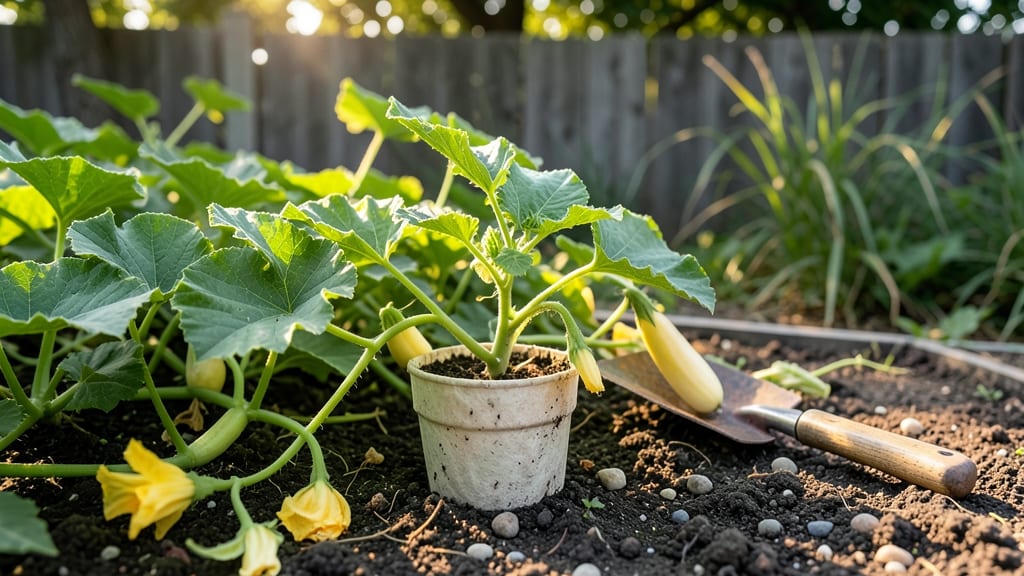
Planting yellow crookneck squash means summer harvests of sweet, tender fruit in just 50 days. 🌱 The secret starts with soil that's warm and well-draining—think loose, compost-rich earth where roots can spread freely.
I've learned the hard way that cold, heavy soil stunts growth, so always work in a few inches of compost before seeds go in.
Sow seeds 1 inch deep and 3 feet apart in hills of 3-4 seeds each, with hills spaced 4-5 feet apart. These vines crave sun—at least 6-8 hours daily—and consistent moisture without soggy soil.
Water at the base, never overhead, to prevent mildew. Once seedlings sprout, thin to the strongest plant per hill, giving each room to vine without crowding.
📚 In This Guide
- What you need
- Instructions
- Tips and common mistakes
- Wrapping up and next steps
What you need
- ● Seeds: 3–5 yellow crookneck squash seeds per plant (or 1 seed per hill if planting in clusters). Choose heirloom or hybrid varieties like 'Early Prolific' or 'Golden Delicious' for best results.
- ● Soil: Well-draining, fertile soil with a pH of 6.0–7.0. Mix in 2–3 inches of compost or aged manure before planting.
- ● Fertilizer: Balanced 10-10-10 or 5-10-10 fertilizer (organic options like bone meal or worm castings work too). Apply at planting and again when vines start to run.
- ● Water: Consistent moisture—aim for 1–2 inches per week, especially during flowering and fruiting.
- ● Garden trowel or transplanting spade for digging holes or furrows.
- ● Garden hose or watering can with a gentle spray nozzle to avoid disturbing seedlings.
- ● Mulch (straw, grass clippings, or black plastic) to retain moisture and suppress weeds.
- ○ Trellis or stakes (optional) if growing vertically to save space (though squash typically sprawls).
- ● Gloves and knee pads for comfort during planting and maintenance.
- ● Sunlight: A full-sun location (6–8+ hours of direct sunlight daily)—crooknecks thrive in warmth!
- ● Space: 3–4 feet between plants or 5–6 feet between rows to allow vines to spread.
- ● Last frost date: Wait until soil temps reach 60°F+ (typically 2–3 weeks after your area’s last frost).
- ● Caution: Avoid planting where cucurbits (squash, pumpkins, melons) grew the prior year to prevent disease.
- ● Row covers for early planting to protect seedlings from pests or cool nights.
- ● Hand pruners for trimming excess vines or removing damaged leaves.
- ● Companion plants: Try nasturtiums or marigolds to deter pests like squash bugs.
- ● Harvest basket or cloth bag to gently carry squash without bruising.
Step-by-step instructions for planting yellow crookneck squash
Here's how to get your vines thriving in just a few focused steps—no guesswork involved.
🌱 Step 1: Choose the Perfect Planting Location
Yellow crookneck squash demands full sun—at least 8 hours daily—so scout your garden for the sunniest spot possible. I always check the area for at least 6 hours of direct sunlight in the morning, as afternoon shade helps prevent sunscald on tender vines. Avoid low-lying areas where cold air pools, as squash roots are sensitive to chilling.
Test your soil's warmth by pressing your hand into the ground on a sunny afternoon. If it feels comfortably warm to your palm, it's ready. Crookneck squash thrives in soil temperatures between 65-75°F, so wait until after the last frost when nighttime temps stay above 50°F. I use a soil thermometer for precision, but your hand works fine if you're patient.
🪴 Step 2: Prepare the Soil for Optimal Growth
Work 2-3 inches of compost into the top 6 inches of soil to create a loose, fertile bed. Yellow crookneck squash prefers well-draining soil with a pH between 6.0-7.0—test your soil if possible, or amend with lime to raise pH if needed. I like to mix in a handful of 5-10-10 fertilizer per planting hole to give vines a nutrient boost right from the start.
Create planting hills by mounding soil into 12-inch tall cones spaced 3-4 feet apart in rows 5-6 feet apart. This elevation improves drainage and warms the soil faster. For every hill, plant 2-3 seeds per mound, burying them just 1 inch deep. Press the soil gently around the seeds to ensure good seed-to-soil contact—this prevents air pockets that can delay germination.
☀️ Step 3: Plant Seeds and Provide Early Support
After planting, water the hills deeply to settle the soil and trigger germination. Keep the soil consistently moist but never soggy—top inch should feel damp—until seedlings emerge in 5-10 days. Once sprouts appear, thin to the strongest seedling per hill, snipping weaker stems at soil level. I use scissors for clean cuts to avoid disturbing roots.
Install trellis supports or cattle panels as soon as vines reach 12 inches tall—crookneck squash grows 6-8 feet long and benefits from vertical training. This saves space and improves airflow, reducing disease risk. Water at the base early in the morning to prevent fungal issues, and mulch with straw to retain moisture and suppress weeds. Watch for first true leaves (the second set after cotyledons) as your cue to begin regular feeding with a balanced liquid fertilizer every 2 weeks.
✂️ Step 4: Maintain Through Fruiting and Harvest
When vines start flowering, hand-pollinate by gently shaking plants in the morning to distribute pollen. Yellow crookneck squash sets fruit 45-50 days after planting, so keep an eye out for 1-inch-long baby squash—this is the sweetest stage. Harvest when squash reach 6-8 inches and the neck begins to curve sharply, as they quickly become tough and seedy.
Use a sharp knife or pruners to cut stems, leaving 1 inch of stem attached to prevent rot. Harvest every 2-3 days during peak production to encourage more fruit. I always check vines twice weekly for signs of powdery mildew (white dust on leaves) or cucumber beetles—spray with neem oil at first sign of trouble. Rotate plants weekly to ensure even sun exposure and prevent lopsided growth.
Tips & tricks for perfect yellow crookneck squash planting
These sun-smart strategies will help you grow the sweetest, healthiest yellow crookneck squash vines possible.
Location Intelligence: The 8 hours of full sun requirement isn't just about sunlight—it's about consistent warmth. I've found that morning sun (at least 6 hours) is particularly important because it helps prevent sunscald on those tender young vines. If you're in a hot climate, afternoon shade becomes even more valuable to protect your plants from intense heat stress.
Soil Temperature Secret: That 65-75°F soil temperature range is non-negotiable for germination. I learned this the hard way when my seeds took three weeks to sprout because the soil was too cool. Use a soil thermometer for precision—it's a small investment that pays off with faster, more reliable germination. If your soil is too cold, consider using black plastic mulch to warm it up faster.
Planting Hill Technique: The 12-inch tall planting hills aren't just for show—they improve drainage and warm the soil faster. For even better results, I like to add a handful of coarse sand to the bottom of each hill to create a drainage layer. This prevents waterlogging, which can lead to rot and poor germination. The 3-4 foot spacing between hills gives vines plenty of room to sprawl or climb.
Harvest Timing: Those 6-8 inch squash with sharply curved necks are the sweet spot. Here's a pro trick: Harvest your first squash when they're about 1 inch long—they'll be incredibly sweet and tender. This encourages the plant to produce more fruit. I always harvest in the morning when the squash is cool and crisp, which helps preserve their quality.
Pro Tips for Yellow Crookneck Squash Planting
- These sun-smart strategies will help you grow the sweetest, healthiest yellow crookneck squash vines possible.
- Location Intelligence: The 8 hours of full sun requirement isn't just about sunlight—it's about consistent warmth.
- Soil Temperature Secret: That 65-75°F soil temperature range is non-negotiable for germination.
Frequently asked questions
When is the best time to plant yellow crookneck squash?
Plant after the last frost when soil temperatures reach at least 60°F (15°C). For warm climates, start seeds indoors 2–3 weeks before the last frost, or direct-sow in early spring. In cooler zones, wait until late spring or early summer. Pro tip: Use black plastic mulch to warm the soil faster!
How long does it take to harvest yellow crookneck squash?
With proper care, expect harvests in 50–60 days from transplanting (or 45–55 days from direct sowing). Pick squash when they’re 6–8 inches long, firm, and still slightly hard. Overripe squash turn rubbery or develop seeds—harvest early for tender, sweet flesh!
Can I grow yellow crookneck squash in containers?
Yes! Choose a container at least 12–18 inches deep with drainage holes. Use a 5-gallon pot or larger for 1–2 plants, and opt for lightweight, nutrient-rich potting mix. Trellising isn’t ideal (they’re vining plants), but containers work well for patios or small spaces. Bonus: Container-grown squash ripens faster in warm conditions!
What pests should I watch for, and how do I prevent them?
Common pests include squash bugs, cucumber beetles, and aphids. To prevent damage:
- Rotate crops yearly to disrupt pest cycles.
- Use row covers early in the season to block beetles.
- Handpick squash bugs (look for flat, gray eggs on leaves).
- Apply neem oil or insecticidal soap as needed.
What if my squash flowers but doesn’t produce fruit?
This usually happens due to temperature stress, poor pollination, or uneven watering. Yellow crookneck squash needs:
- Warm days (75°F+) and cool nights (55–65°F) for pollination.
- Gentle hand-pollination if bees are scarce (use a soft brush to transfer pollen).
- Consistent moisture—1–1.5 inches of water weekly.
Wrapping up and next steps
Growing yellow crookneck squash is a rewarding journey that delivers delicious, homegrown harvests in just 50 days! With the right soil, spacing, and care, these sun-loving vines thrive and produce sweet, nutritious squash perfect for soups, roasting, or fresh eating. 🌱
Now that you’re armed with all the tips and tricks, it’s time to roll up your sleeves and plant those seeds. Start small—even a few plants can yield a bountiful harvest—and enjoy the satisfaction of growing your own food. Happy planting! 🌞