
Companion Plants
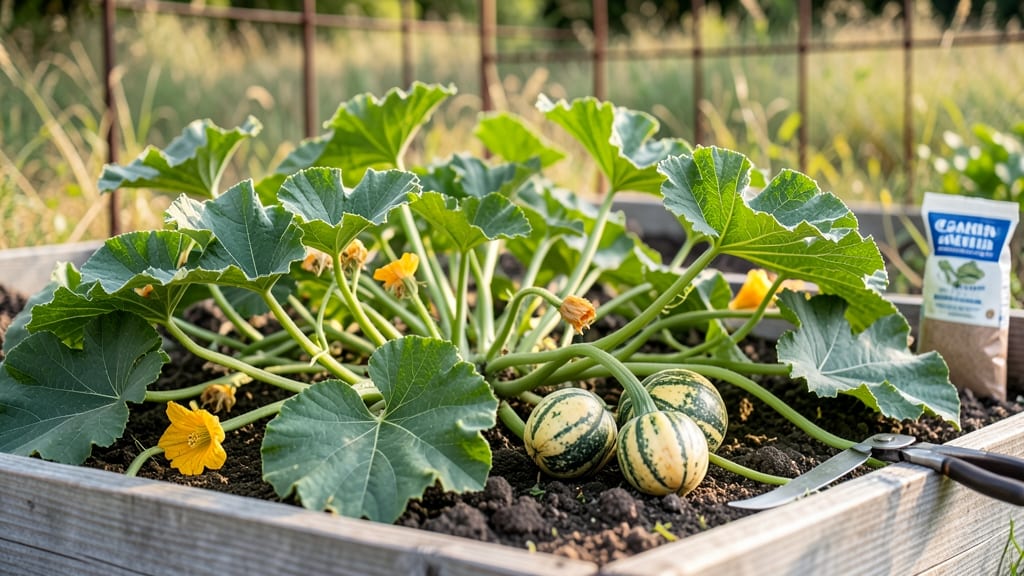
Acorn squash plants look like they have broad, lobed leaves with 3-5 pointed tips and a rough, hairy texture, growing on sprawling vines 3-6 feet long. Their bright yellow flowers bloom mid-summer before developing into ribbed, acorn-shaped fruits near the vine base.
When you're trying to identify acorn squash plants, focus on their distinctive foliage and growth habit.
The large, deep green leaves—often 6-12 inches wide—have jagged edges and a slightly wrinkled surface, which helps differentiate them from other winter squash varieties. 🌿 These plants spread out aggressively, with vines that can reach up to 6 feet, though some compact varieties stay more contained.
The key identifying feature is the fruit itself: small, round, and resembling a tiny pumpkin with deep ridges, typically growing close to the ground rather than climbing up the vine.
One helpful trick is to compare the leaves with butternut squash plants—they're similar but acorn squash leaves tend to be wider and more deeply lobed.
The yellow flowers that appear in midsummer are another clue, as they're a reliable sign you're dealing with a squash plant rather than a pumpkin or gourd.
I always recommend checking the fruit's position on the vine, since acorn squash fruits develop near the base rather than hanging from the vine's top.
💡 In This Article
- Identifying Acorn Squash Leaves and Growth Patterns
- Seasonal Development Stages of Acorn Squash Plants
Identifying acorn squash leaves and growth patterns
The leaves of acorn squash plants are one of their most distinctive features, with a deep green color that often appears almost waxy when viewed under sunlight.
Each leaf typically measures between 6-12 inches wide and has 3-5 broad lobes with sharp, serrated edges that give them a jagged appearance. 🌿 The surface isn't smooth—it's covered in tiny hairs that create a rough texture when you run your fingers along them, which helps distinguish them from smoother butternut squash leaves.
The veins are prominent, creating a network that supports the leaf's sturdy structure, especially important since these plants grow in sprawling vines that can reach 3-6 feet long.
What really sets acorn squash apart is their vine growth pattern. Unlike bush varieties that grow more compactly, acorn squash plants spread aggressively in a sprawling habit, often requiring trellises or strong support to manage their growth.
The vines can produce multiple side shoots, creating a dense mat of foliage that can shade out weeds naturally. If you're comparing acorn squash to butternut squash, note that butternut leaves tend to be narrower with fewer lobes, while pumpkin plants have larger, more rounded leaves with deeper indentations.
The hairy texture of acorn squash leaves is another key identifier—most pumpkin varieties have smoother leaf surfaces.
When examining the plant's overall structure, pay attention to how the leaves attach to the stem. Acorn squash leaves have petioles (leaf stems) that are typically 3-6 inches long and slightly hairy, which helps anchor the large leaves to the vine.
This growth pattern creates a distinctive layered look as the vines sprawl outward.
The combination of broad lobes, rough texture, and sprawling vine habit makes acorn squash plants instantly recognizable to experienced gardeners. 🌱 For those new to growing squash, this visual profile is crucial for distinguishing acorn squash from other winter squash varieties during early growth stages.
One advanced identification technique is to examine the leaf arrangement along the vine. Acorn squash leaves grow in an alternating pattern along the stem, with each new leaf emerging slightly higher than the previous one.
This spiral growth pattern is common among squash plants but becomes particularly noticeable in acorn squash due to their large leaf size.
The leaves also tend to grow more upright compared to the flatter leaves of some pumpkin varieties, which can help with visual identification when plants are young and fruits haven't yet formed.
For gardeners working with limited space, some compact acorn squash varieties have been developed that grow more like bush plants, reaching only 2-3 feet in height. These varieties maintain the characteristic leaf shape and texture but with a more controlled growth habit.
This adaptation doesn't change the fundamental identification features—just the overall plant size. The key takeaway is that while growth patterns can vary slightly between varieties, the leaf morphology remains consistent, making it the most reliable feature for positive identification throughout the growing season.