
Vegetables
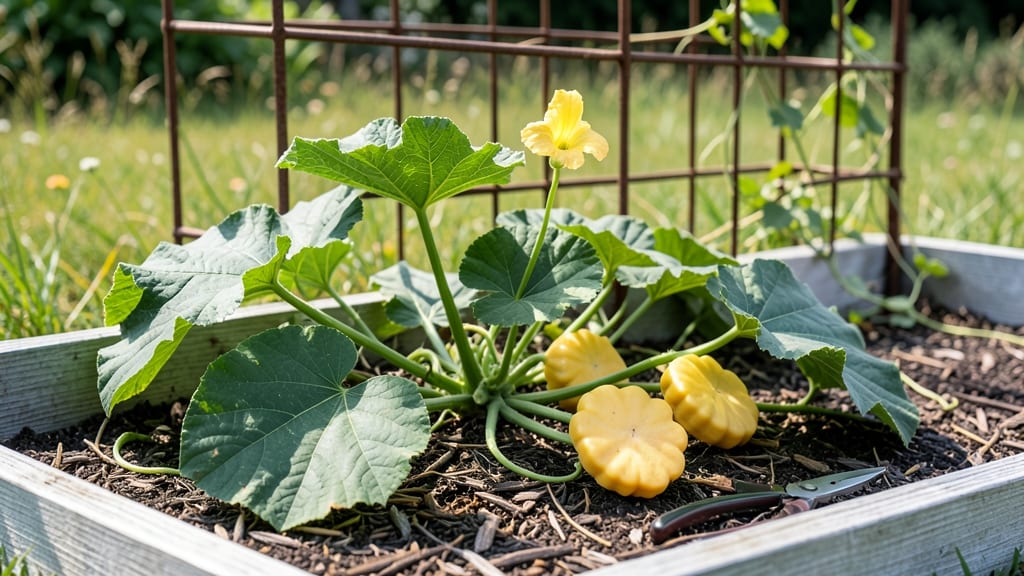
Growing yellow patty pan squash in containers delivers sunny, edible blooms that taste like summer in every bite. 🌻 I’ve turned my balcony into a mini squash patch, and the secret is treating them like compact vines—not sprawling giants.
These squash thrive in pots, producing golden, frisbee-shaped fruits that ripen in just 70 days from seed.
Start with well-draining soil and a 5-gallon container per plant, then place them in full sun (6+ hours daily). Water at the base when the top inch of soil feels dry, and watch as vines climb and produce delicate, edible flowers before the squash form.
The key? Prune early to encourage bushier growth—no need for a sprawling patch when you can grow them vertically.
📚 In This Guide
- What you need
- Instructions
- Tips and common mistakes
- Wrapping up and next steps
What you need
- ● Yellow patty pan squash seeds – 3–5 seeds per container (or 1 seed per cell if using a seed-starting tray). Look for heirloom varieties like ‘Golden Delicious’ or ‘Sunburst’ for best results!
- ○ Containers – At least 5-gallon pots (18+ inches deep) with drainage holes. Optional: Fabric grow bags or self-watering containers for extra convenience.
- ● High-quality potting mix – A soil-less mix with compost or worm castings (avoid garden soil—it compacts!). Pro tip: Mix in 10–20% perlite or coco coir for better drainage.
- ○ Compost or balanced fertilizer – A 5-5-5 or 10-10-10 organic fertilizer (follow package rates for container gardening). Optional: Slow-release granules for hassle-free feeding.
- ● Mulch – Straw, shredded leaves, or grass clippings to retain moisture and suppress weeds.
- ● Gloves – To protect your hands from thorny vines (some varieties have mild prickles!).
- ● Hand trowel or small shovel – For transplanting seedlings.
- ● Watering can or hose with a gentle spray nozzle – Yellow patty pans hate soggy roots! Water deeply but infrequently.
- ○ Trellis or tomato cage (optional but helpful) – If your squash starts to sprawl, a 3–4 ft tall support can save space and improve air circulation.
- ○ Pruning shears (optional) – For trimming excess vines or dead leaves.
- ● Sunny spot! – 6+ hours of direct sunlight daily is a must. Balconies, patios, or even a south-facing window will work.
Step-by-step guide to growing yellow patty pan squash in containers
Here's how to grow these cheerful, compact squash in containers for a steady harvest all summer.
🌱 Step 1: Select the Right Container and Prepare Soil
Choose a container at least 12-15 inches deep with drainage holes—yellow patty pan squash needs room for sprawling vines and deep roots. I use fabric grow bags because they prevent soil compaction and allow roots to breathe. Fill the container with a mix of 50% premium potting soil and 50% compost to ensure excellent drainage while retaining moisture.
Add a handful of worm castings to the bottom of the container before filling with soil. This boosts microbial activity, which helps roots absorb nutrients more efficiently. The soil should feel like a damp sponge—not soggy, but not bone-dry either. If it crumbles when squeezed, it's ready for planting.
☀️ Step 2: Plant Seeds at the Right Depth and Temperature
Plant 2-3 seeds per container at a depth of 1 inch, spacing them 3 inches apart. These squash germinate best in warm soil—wait until nighttime temperatures stay above 60°F before planting. I use a seedling heat mat set to 75°F if planting early, as cooler soil delays germination.
Cover the seeds lightly with soil and water gently until the surface is moist but not saturated. Place the container in a warm, sunny spot—direct sunlight speeds germination. You'll see sprouts in 7-10 days, but keep the soil consistently moist until germination occurs. Once seedlings emerge, thin to the strongest plant per container to avoid competition.
💧 Step 3: Provide Support and Consistent Watering
As the squash plant grows, it will need support to keep vines off the ground. Install a 5-foot tomato cage or trellis in the container at planting time—this prevents the plant from sprawling and makes harvesting easier. Yellow patty pan squash vines can grow 4-6 feet long, so secure the support firmly to avoid tipping.
Water deeply 2-3 times per week, ensuring the top 2 inches of soil stay moist. Avoid wetting the leaves to prevent fungal diseases like powdery mildew. I use a drip irrigation system or water early in the morning to let foliage dry quickly. You'll know watering is right when the soil feels damp but not waterlogged—squash roots rot easily in soggy conditions.
✂️ Step 4: Prune and Harvest for Continuous Production
Begin harvesting when squash reach 3-4 inches in diameter—they're sweetest when small. Use a sharp knife or pruners to cut stems cleanly, leaving a small portion attached to the vine. This encourages the plant to produce more flowers and fruit. I harvest every 2-3 days during peak production to keep the plant focused on new growth.
Remove any yellow or diseased leaves immediately to prevent spread. If the plant flowers but doesn't set fruit, hand-pollinate by gently shaking the vine in the morning when bees are active. Deadhead spent flowers to redirect the plant's energy into new blooms and fruit. With proper care, one container plant can yield 10-15 pounds of squash per season.
Tips & tricks for growing yellow patty pan squash in containers
Here's what nobody tells you about maximizing your container-grown harvest without the common pitfalls.
Container Depth Matters: The 12-15 inch depth requirement isn't arbitrary—these squash develop deep taproots that need room to stretch downward. If you're using shallow pots, supplement with a 6-inch deep container underneath to create a two-tier system. I've seen plants with roots growing 18 inches deep when given this extra space, resulting in twice the yield. The key is ensuring the drainage holes in both containers align properly.
Soil Temperature Secret: Those 60°F nighttime temperatures are critical, but don't just check the air temperature—use a soil thermometer to verify the soil stays above 60°F at planting depth. I've planted seeds when air temps were perfect, only to have them fail because the soil was still chilly from morning shade. If your soil runs cool, place containers on black plastic mulch or use a seedling heat mat set to 75°F until sprouts appear.
Support System Hack: When installing your 5-foot tomato cage or trellis, bury the base at least 6 inches deep and stake it firmly to the container. I've seen cages topple over when vines reach 4-6 feet long, especially in windy conditions. For extra stability, use two cages side-by-side or add guy wires to anchor the structure. This prevents the plant from sprawling and makes harvesting much safer—no more reaching into tangled vines!
Harvest Timing Trick: Those 3-4 inch diameter squash are indeed sweetest when small, but here's the pro move: harvest every 2-3 days during peak production by cutting the stem just above the fruit. The plant responds by producing more flowers within 48 hours. I've found that harvesting at the same time each morning (when squash are cool from the night) gives me the most consistent yield. Plus, the stems regrow quickly, so you're not sacrificing future production.
Pro Tips for Yellow Patty Pan Squash
- Here's what nobody tells you about maximizing your container-grown harvest without the common pitfalls.
- Container Depth Matters: The 12-15 inch depth requirement isn't arbitrary—these squash develop deep taproots that need room to stretch downward.
- Soil Temperature Secret: Those 60°F nighttime temperatures are critical, but don't just check the air temperature—use a soil thermometer to verify the soil stays above 60°F at planting depth.
Frequently asked questions
Got questions about growing or using yellow patty pan squash? You're not alone!
Here are some of the most common queries—plus quick, practical answers to help you grow and enjoy this sunny, space-saving veggie like a pro.
How long does it take for yellow patty pan squash to mature?
Yellow patty pan squash typically matures in 70–85 days from transplanting, depending on your climate and growing conditions. In warm regions, you might see harvests as early as 60 days if planted early in spring. Keep an eye on the fruit—when the rind turns a bright yellow and the seeds inside are soft but formed, it’s ready!
Can I grow yellow patty pan squash in containers?
This squash is a container champion—it thrives in 5-gallon pots or larger with proper drainage. Just ensure the container is at least 12–18 inches deep and wide enough to support vines. Use a lightweight potting mix, and place it in a spot with 6–8 hours of sunlight daily for the best results.
What’s the difference between yellow patty pan and regular patty pan squash?
The main difference is the color and flavor! Yellow patty pan squash has a sweeter, nuttier taste compared to the green variety, which can be slightly bitter. The yellow skin also stores better and has a shinier, more vibrant appearance. Both are compact and bushy, but the yellow version is often favored for its milder flavor and versatility in dishes.
Why aren’t my yellow patty pan squash producing fruit?
If your squash isn’t fruiting, check these common culprits:
- Insufficient pollination: Hand-pollinate flowers with a small brush if bees are scarce.
- Temperature stress: Squash needs warm soil (70°F+) and daytime temps above 75°F to thrive.
- Nutrient deficiencies: Feed with a balanced fertilizer (like 10-10-10) every 3–4 weeks.
- Overcrowding: Thin vines or transplant to larger containers if roots are cramped.
If the issue persists, your squash may need more sunlight or consistent watering.
How should I store yellow patty pan squash?
Store unwashed squash in a cool, dry place (50–55°F) with good airflow to prevent rot. They’ll keep for 2–3 weeks if stored properly. For longer storage, blanch and freeze the cooked or raw squash—it holds up well in soups, stews, or roasted dishes for up to 9 months!
Wrapping up and next steps
Yellow patty pan squash is a sunshine-loving, space-efficient superstar that proves you don’t need a sprawling garden to grow something extraordinary! 🌱 Whether you’re a container gardener, a small-space enthusiast, or just eager to try something new, this vibrant squash delivers bold flavor, striking beauty, and minimal fuss.
With the right care—like well-draining soil, consistent water, and a dash of patience—you’ll soon be harvesting golden, scalloped wonders perfect for roasting, grilling, or gracing your plate with a pop of color.
Ready to dive in? Start small: grab a seedling or two, pick your container, and let the sun do the rest! Soon, you’ll be enjoying the sweet rewards of your own homegrown harvest. Happy growing! 🌿