
Plants
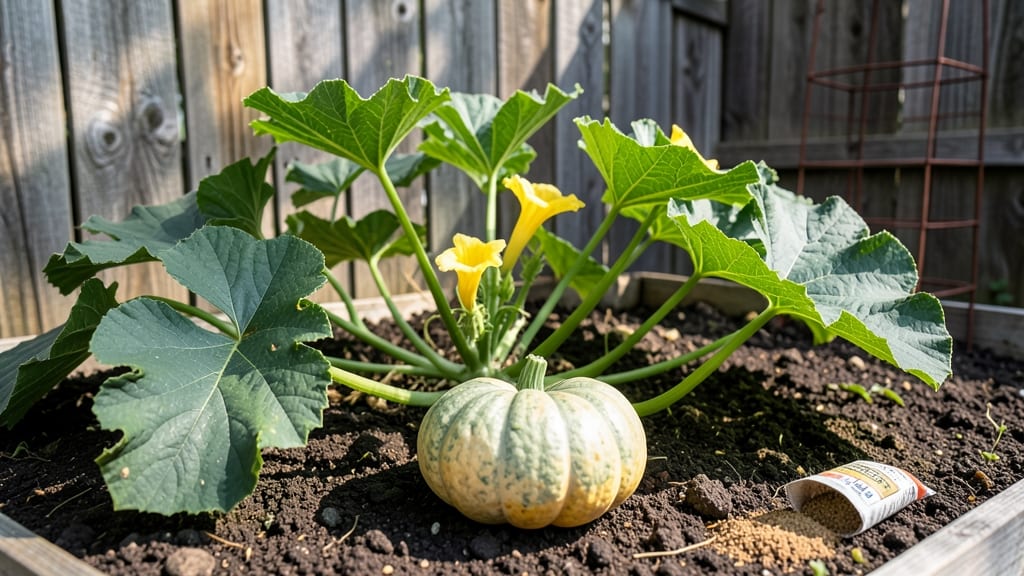
Patty pan squash looks like small, round fruits with scalloped edges that resemble tiny cabbage leaves, typically growing in vibrant yellow, green, or orange colors. Its leaves feature deep lobes with jagged edges, similar to miniature oak leaves in appearance.
This unique squash gets its name from the distinctive "patty pan" shape of its fruits—flat, circular, and slightly concave in the center, almost like a tiny frying pan. 🌿 The leaves are what really set it apart, though, with their deeply indented lobes and sharp serrations that catch sunlight beautifully.
Unlike other squash varieties, patty pans stay small (about 3-5 inches wide) and produce a single fruit per stem, making them perfect for small gardens or container growing.
When comparing it to similar-looking squash, you'll notice patty pan's fruits are flatter and more scalloped than cherry squash's rounded shape, while its leaves are more intricate than zucchini's smoother edges.
The vibrant color variations also help distinguish it—yellow patty pans are the most common, but green and orange varieties add extra visual interest to your garden.
💡 In This Article
- Identifying Patty Pan Squash by Fruit and Leaf Characteristics
- Visual Comparison: Patty Pan Squash vs Other Small Squash Varieties
Identifying patty pan squash by fruit and leaf characteristics
The fruit of patty pan squash is its most distinctive feature, resembling a tiny frying pan with its flat, circular shape and scalloped edges. These fruits typically measure between 3-5 inches in diameter and grow in vibrant colors like bright yellow, green, or orange.
The center often remains slightly concave, creating a natural "pan" shape that gives this squash its name. When ripe, the skin becomes firm but still tender enough to eat without peeling, unlike thicker-skinned varieties.
The leaves are equally unique, featuring deep lobes that resemble miniature oak leaves with serrated edges. Each leaf can grow up to 6-8 inches wide and has 3-5 prominent lobes with jagged, almost saw-toothed margins.
These leaves grow on hairy stems and have a slightly rough texture that distinguishes them from smoother-leaved squash varieties. The lobed structure maximizes surface area for sunlight absorption, which helps the plant produce energy efficiently during its 60-90 day growing season.
What makes patty pan squash stand out in a garden is how its fruits grow—typically just one per stem—unlike other squash that produce multiple fruits. This single-fruit habit means you won't be overwhelmed with harvests, making it ideal for small spaces.
The fruits also stay small and tender, with a texture similar to zucchini but with a slightly sweeter, more delicate flavor when cooked. This combination of visual and growth characteristics helps distinguish it from other summer squash varieties.
Color variations play a key role in identification too. Yellow patty pan squash is the most common, but green varieties have a slightly darker, almost chartreuse hue, while orange types develop a warm, golden tone when fully ripe.
These color differences aren't just cosmetic—they can indicate slight flavor variations, with orange types often having a slightly richer, caramel-like sweetness when cooked. The vibrant colors also make them excellent for ornamental gardens, where they add visual interest beyond their culinary value.
When examining the plant's overall structure, you'll notice patty pan squash grows on vining plants that spread 3-5 feet wide, with leaves that climb slightly on neighboring plants. This growth habit contrasts with bushier varieties like zucchini, which grow more upright.
The combination of these fruit, leaf, and growth characteristics creates a distinctive profile that helps gardeners identify patty pan squash even from a distance. 🌿
One interesting botanical detail is how the scalloped edges of the fruit develop. These edges form as the fruit grows from a single seed, with the scallops creating natural ventilation points that prevent rot.
This unique structure also makes patty pan squash perfect for stuffing—its flat shape holds fillings beautifully while the scalloped edges add visual appeal when sliced. The leaves' deep lobes serve a similar functional purpose, increasing the plant's ability to capture sunlight for photosynthesis.