
Size
Growing squash and zucchini in small spaces is easier than you think—especially with compact varieties that thrive in pots or tight rows. 🌱 I learned this the hard way after my first sprawling plants took over the yard, but now I grow bushels in just a few square feet using the right techniques.
The secret lies in choosing determinate varieties (like 'Eight Ball' zucchini or 'Patio Star' squash) that stay contained, paired with rich soil and consistent watering—no fancy equipment needed.
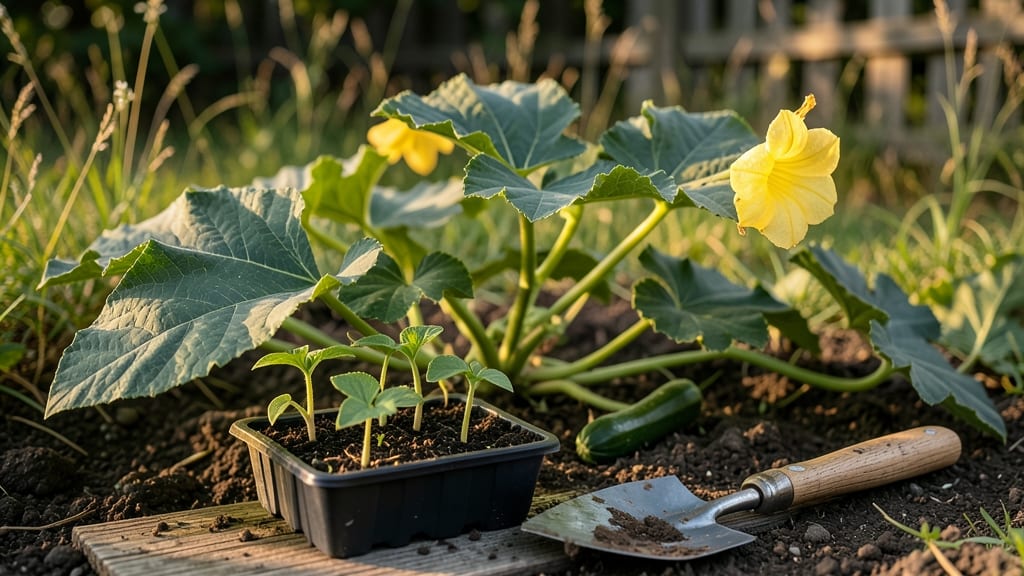
Even my balcony now produces enough for summer meals, and the plants reward you with prolific harvests in just 60 days. You'll start with tiny seedlings that quickly transform into leafy monsters, then watch as yellow flowers give way to heavy vines of fruit.
The best part? These plants are disease-resistant when given proper airflow, and pests rarely bother them if you keep them healthy. Whether you're working with containers, raised beds, or a corner of your yard, these methods scale perfectly. Let’s get those seeds in the ground!
📚 In This Guide
- What you need
- Instructions
- Tips and common mistakes
- Wrapping up and next steps
What you need
- ● Seeds or Seedlings: Compact or bush varieties (e.g., Eight Ball, Patio Star, or Black Beauty zucchini).
- ● Quantity: 2–4 seeds per plant (or 1–2 seedlings per container).
- ● Growing Space: For in-ground gardens: 3–5 ft diameter per plant (or rows spaced 3–4 ft apart).
- ● For containers: 5-gallon pots or larger (minimum 12" deep).
- ● For raised beds: 12"–18" spacing between plants.
- ● Soil: Well-draining, rich soil (amend with compost or aged manure for fertility).
- ● pH: 6.0–6.8 (test with a soil kit if unsure).
- ● Fertilizer: Balanced 10-10-10 or 5-10-10 fertilizer (or compost tea).
- ○ Optional: Epsom salt (1 tbsp per plant) for magnesium boosts.
- ● Garden trowel or transplanting spade.
- ● Pruners (for trimming vines if needed).
- ● Mulch (straw or shredded leaves to retain moisture).
- ○ Trellis or stakes (optional, for vertical varieties like Spaghetti Squash).
- ● Garden gloves (to protect hands from prickly vines!).
- ● Watering can or hose with a gentle spray nozzle.
- ● Sunlight: 6–8 hours of full sun daily (no shade-tolerant varieties!).
- ● Warmth: Soil temp 60–70°F (wait until after last frost).
- ● Water: 1–2 inches per week (keep soil consistently moist but not soggy).
- ● Patience: 50–60 days to harvest (varies by variety).
Step-by-Step guide to growing compact squash and zucchini
Here's how to cultivate space-saving varieties that deliver abundant harvests without sprawling vines.
🌱 Step 1: Choose the Right Varieties and Planting Time
Select bush or compact vining varieties like 'Eight Ball' zucchini or 'Table Queen' summer squash—these stay under 4 feet tall and 3 feet wide. Plant after your last frost date when soil reaches 60°F or warmer, as cold soil slows germination and invites rot. I always check my local frost calendar and mark the date 2-3 weeks before to time everything perfectly.
Squash and zucchini thrive in warm conditions, so avoid early spring plantings. If your growing season is short, opt for fast-maturing varieties that reach harvest in 45-55 days. The key is patience—rushing leads to weak plants that struggle with disease. I like to soak seeds overnight in lukewarm water for 8-12 hours before planting to speed germination.
🪴 Step 2: Prepare Soil and Plant Seeds or Transplants
Amend your soil with 2-3 inches of compost mixed into the top 6 inches to improve drainage and fertility. Squash and zucchini are heavy feeders, so I add a balanced organic fertilizer (like 5-5-5) at planting time. Space seeds 1 inch deep and 2-3 inches apart in hills, with 3-4 seeds per hill. Hills improve drainage and make harvesting easier.
For transplants, dig holes the same depth as the root ball and space them 2-3 feet apart in rows 4-5 feet apart. If you're planting in containers, use 5-gallon pots with drainage holes—one plant per container. Water deeply after planting to settle the soil and encourage root growth. You'll know it's right when the soil surface looks slightly damp but not soggy.
☀️ Step 3: Provide Consistent Water and Sunlight
Keep soil evenly moist—never soggy—by watering 1-2 inches per week, more during fruit development. I water at the base in the early morning to reduce fungal diseases like powdery mildew. Mulch with 2-3 inches of straw or shredded leaves to retain moisture and suppress weeds. Compact varieties still need full sun (6-8 hours daily), so choose a south-facing spot or use a trellis for vining types to save space.
Watch for yellowing leaves, which signal overwatering, or wilting in afternoon heat, which means you need more frequent watering. Squash and zucchini are prolific producers, so consistent moisture is critical—skipping watering leads to bitter fruit. I also rotate plants every 2-3 weeks to ensure even sun exposure and prevent leggy growth.
✂️ Step 4: Harvest Regularly and Manage Growth
Harvest zucchini when 6-8 inches long and squash when 8-10 inches—check plants every 2-3 days to avoid overgrowth. Use a sharp knife or pruners to cut stems, leaving a small portion attached. The sooner you harvest, the more your plant produces. If fruits go unchecked, they’ll turn woody and the plant will slow down. I always harvest in the morning when fruits are crispest.
For bush varieties, pinch off flowers if you're not ready for fruit to redirect energy to the plant. Remove any yellow or diseased leaves immediately to prevent spread. If vines start sprawling, prune them back to 2-3 feet to encourage bushier growth. The goal is to keep the plant focused on producing, not just growing bigger.
🌿 Step 5: Extend the Season and Prevent Common Issues
To prolong harvests, use row covers in early spring or late fall to protect plants from frost. In containers, bring pots indoors or to a sheltered spot during cold snaps. I’ve kept zucchini producing well into October with a simple frost blanket draped over plants at night. Rotate crops next year—squash and zucchini are susceptible to cucumber beetles and squash vine borers, so avoid planting in the same spot annually.
Watch for chewed leaves (beetles) or wilted vines (borers). If you spot borers, cut into stems to remove larvae. For beetles, handpick them or use neem oil spray in the evening. Compact varieties are less prone to these issues, but vigilance pays off. With proper care, you’ll enjoy harvests for weeks—just don’t let them overwhelm your kitchen!
Tips & tricks for growing compact squash and zucchini
These space-saving varieties need just the right touch to thrive—here's how to maximize your harvest without the sprawl.
Soil Prep Secret: The 2-3 inches of compost in Step 2 isn't just about nutrients—it's about creating the perfect air-to-water ratio. I like to mix in a handful of perlite or coarse sand to improve drainage, especially in heavy clay soils. This prevents the dreaded "soggy bottom" that leads to rot, particularly important since compact varieties have shallower root systems than their sprawling cousins.
Germination Game-Changer: That 8-12 hour soak in lukewarm water before planting in Step 1 works wonders, but here's the pro move: use filtered water, not tap. Chlorine can inhibit germination. I also add a drop of liquid seaweed fertilizer to the soaking water—it gives seedlings a growth boost without any extra effort. Just don't over-soak; 12 hours max or seeds can get waterlogged.
Watering Wisdom: The 1-2 inches per week guideline in Step 3 is perfect, but timing matters more than quantity. I set a timer for every 48 hours during hot spells to check soil moisture. Stick your finger an inch deep—if it feels dry, water deeply. The key is to keep roots consistently moist without creating puddles. For container growers, I've found drip irrigation systems work best to maintain that even moisture without overwatering.
Harvest Hack: When checking for 6-8 inch zucchini in Step 4, look for the telltale "thumb rule"—if it's about the size of your thumb from tip to first knuckle, it's perfect. For squash, aim for 8-10 inches when firm but not hard. I harvest with pruners and immediately check the stem end for tiny flowers—if you see them, your plant is ready to produce again within days. This regular harvesting actually stimulates more fruit production!
Pro Tips for Grow Squash And Zucchini
- These space-saving varieties need just the right touch to thrive—here's how to maximize your harvest without the sprawl.
- Soil Prep Secret: The 2-3 inches of compost in Step 2 isn't just about nutrients—it's about creating the perfect air-to-water ratio.
- Germination Game-Changer: That 8-12 hour soak in lukewarm water before planting in Step 1 works wonders, but here's the pro move: use filtered water, not tap.
Frequently asked questions
Got questions?
Growing squash and zucchini is rewarding, but it’s natural to have doubts—especially for beginners! Here are answers to the most common questions to help you grow like a pro.
How long does it take for squash/zucchini to grow?
From seed to harvest, it typically takes 45–55 days for zucchini and 50–60 days for most squash varieties. Warm soil and consistent watering speed up the process. Start seeds indoors 2–4 weeks before the last frost for a head start!
Can I grow squash and zucchini in containers?
Compact varieties like ‘Eight Ball’ zucchini or ‘Table Queen’ bush squash thrive in 5-gallon containers or larger. Use well-draining soil, place in full sun, and ensure the pot has drainage holes. Just be ready to harvest more frequently—container plants produce faster!
What are the most common pests, and how do I prevent them?
Squash bugs, cucumber beetles, and squash vine borers are the biggest threats. Prevent them with:
- Row covers (early season)
- Neem oil or insecticidal soap
- Handpick eggs (look for clusters under leaves!)
- Crop rotation (avoid planting in the same spot yearly)
Why aren’t my zucchini/squash flowering?
No flowers? Check these fixes:
- Not enough sun? Move to a sunnier spot (6+ hours/day).
- Temperature too low? Squash needs warm soil (60°F+) to thrive.
- Overwatering? Let soil dry slightly between waterings.
- Nutrient deficiency? Feed with compost or a balanced fertilizer.
Can I save seeds from my squash/zucchini?
Yes! Save seeds from open-pollinated (not hybrid) varieties like ‘Straightneck’ squash or ‘Black Beauty’ zucchini. Scoop out seeds from a fully ripe fruit, rinse, dry, and store in a cool, dark place. Pro tip: Label seeds—next year’s harvest depends on it!
Wrapping up and next steps
Growing squash and zucchini—even in small spaces—is totally doable with the right compact varieties and techniques! 🌱 From choosing the perfect seeds to mastering pruning and pest control, you now have all the tools to turn your garden (or balcony!) into a bountiful harvest hub.
Whether you’re a beginner or a green thumb looking to optimize space, your future zucchini bread or summer stir-fry is just a few weeks away.
Ready to get started? Plant those seeds this week! If you’re feeling inspired, explore our guide on preserving your harvest or dive into creative recipes to make the most of your homegrown bounty. Happy gardening! 🌟