
Plants
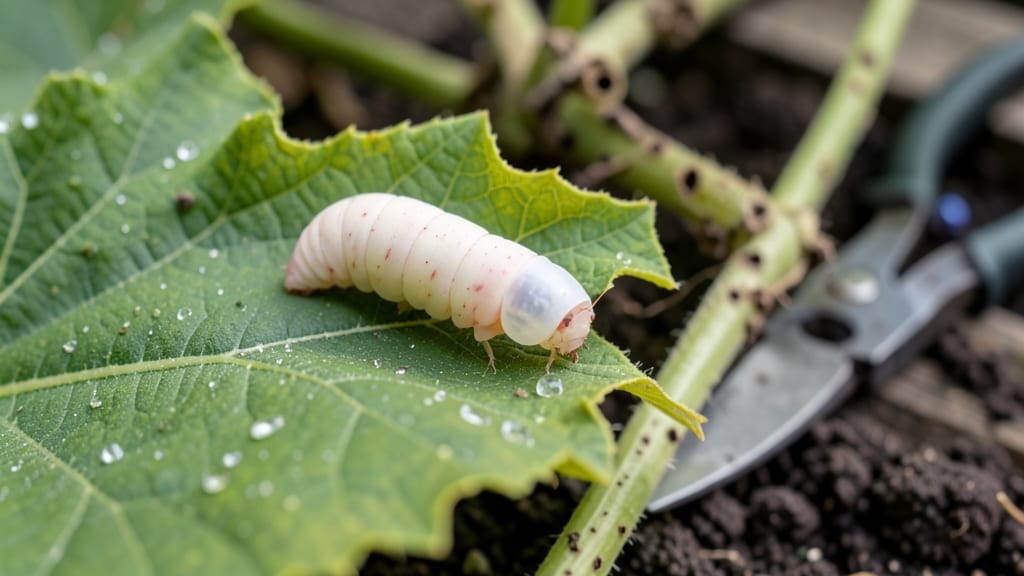
What does a squash vine borer look like—this tiny white worm with a brown head—and spotting it early saves your zucchini patch. 🌿 I learned the hard way—my first infestation turned my thriving vines into sad, wilted sticks before I even knew what was happening.
The real giveaway? Frass (insect poop) oozing from small holes near the stem base, and sawdust-like debris when you peel back the leaf. The adult moth looks like a striped white-and-black wasp, about an inch long, and lays eggs on the undersides of leaves.
Once the larvae hatch, they burrow into the stem, cutting off water flow. That’s why your plants suddenly droop midday, even though the soil feels moist. The damage happens fast—within days of hatching, the worm can kill a plant entirely.
You’ll catch it early by checking leaf undersides and stems for tiny holes or sawdust piles in June and July. A quick scrape with your fingernail reveals the worm inside.
The moment you see frass or wilting, wrap the stem with aluminum foil or use Bt spray—both disrupt the larvae’s life cycle before they mature. Prevention is easier than cleanup: row covers in early summer block moths from laying eggs, and clean garden debris in fall removes overwintering pupae.
Even experienced gardeners miss the first signs—don’t let that be you.
Root Causes of Borer Infestations
The squash vine borer (Melittia cucurbitae) doesn’t just appear out of nowhere—it’s drawn to your garden like a magnet. Understanding why these pests target your squash, pumpkins, and cucumbers is the first step in stopping them before they destroy your harvest.
Here’s a breakdown of the key factors that turn your thriving plants into a buffet for these destructive caterpillars.
The squash vine borer is highly specific about its meals—it only attacks plants in the Cucurbitaceae family, which includes:
- Squash (butternut, zucchini, acorn)
- Pumpkins
- Cucumbers
- Melons
- Gourds
But why these plants? The answer lies in their volatile organic compounds (VOCs), which act like a dinner bell to adult moths.
When these plants are healthy and thriving, they release more of these chemical signals, making them irresistible to female moths looking to lay eggs. Stressed or damaged plants emit even stronger signals, turning your garden into a squash vine borer hotspot.
💡 Pro Tip: If you’ve grown cucurbits before, the moths may already know your garden’s scent profile. Rotate planting locations every year to disrupt their homing instincts.
The squash vine borer’s life cycle is tightly linked to warmth and humidity. Adult moths emerge in late spring to early summer (typically May–June in most regions) when temperatures consistently reach 70°F (21°C) or higher. Here’s how their behavior sets the stage for infestations:
| Trigger | What Happens | How to Disrupt It |
|---|---|---|
| 🌞 Warm Nights | Moths are nocturnal and most active when nights stay above 65°F (18°C). They use moonlight and heat to navigate to host plants. | Use blacklight traps or yellow sticky traps to catch males before they mate. |
| 💧 High Humidity | Female moths prefer to lay eggs in moist, sheltered areas—like the base of leaves or stems—where humidity keeps eggs from drying out. | Improve airflow around plants by pruning dense foliage and watering at the base (not overhead). |
| 🌿 Young, Tender Vines | Moths zero in on newly transplanted or young squash plants because their stems are soft and easy to penetrate. | Use row covers for the first 3–4 weeks after transplanting to block moths entirely. |
⚠️ Warning: A single female can lay up to 200 eggs in her lifetime, and they hatch in just 3–10 days. Once larvae burrow in, they’re nearly impossible to remove without killing the plant.
Squash vine borers thrive in warm, stable environments. Even if your region isn’t traditionally hot, microclimates in your garden can create perfect conditions for them:
- South-facing garden beds get more direct sunlight, staying warmer longer into the evening—ideal for moth activity.
- Low-lying or sheltered areas (like near fences or under eaves) trap heat and humidity, extending the borer’s active season.
- Greenhouse or high-tunnel growing can accelerate their life cycle, leading to multiple generations per year.
In cooler climates, borers may take longer to develop, but they can still survive if they overwinter as pupae in garden debris. That’s why fall cleanup is critical—leaving old vine residue gives them a head start next season.
🔥 Hot Spot Check: If your garden has black plastic mulch or dark soil, it absorbs heat and can create a 5–10°F warmer microclimate than surrounding areas—perfect for borers.
Squash vine borers don’t just appear—they’re often invited by garden practices that create ideal conditions:
- Lack of crop rotation: Borers remember where their favorite meals are. Planting squash in the same spot year after year trains them to return.
- Ignoring garden debris: Old squash vines, leaves, and stems left in the soil provide pupation sites for borers to overwinter.
- Overwatering or poor drainage: Waterlogged soil weakens plants, making them easier targets. Borers also prefer soft, saturated stems for egg-laying.
- Weedy garden edges: Weeds like morning glories or cucumbers can act as alternative hosts, keeping borer populations high even if your squash is healthy.
🧹 Cleanup Action Plan:
- Remove and dispose of (not compost) all squash vine debris after harvest.
- Till or solarize the soil in fall to kill pupae.
- Plant trap crops (like cucumbers) far from your main garden to lure borers away.
Quick Fixes for Squash Vine Borers
If you’ve spotted the telltale signs of squash vine borers—wilted vines, sawdust-like frass, or chewed stems—don’t panic! These pests are manageable with the right approach. Below, we break down targeted solutions based on the stage of infestation, from early detection to severe damage.
Combine these methods for the best results, and keep reading for prevention tips to protect your garden next season.
H3: 👀 Spot and Squash (Literally) the Larvae If you catch the borers early (before wilting appears), you can manually remove them and save your plants:
- Inspect stems daily during warm, humid weather (their favorite conditions).
- Look for tiny holes or sawdust-like frass near the base of stems.
- Use a sharp knife or scissors to slice open the stem where you see signs.
- Fish out the larvae (they’ll be pale, fuzzy, or brownish) and drop them into soapy water to kill them.
- Seal the cut stem with a toothpick dipped in petroleum jelly to prevent reinfestation.
💡 Pro Tip: Do this first thing in the morning—larvae are sluggish when it’s cool, making them easier to spot and remove.
If the infestation is spreading but you prefer non-toxic methods, try these: H3: 🌿 Neem Oil or Insecticidal Soap Spray
- Mix 2 tbsp neem oil + 1 tsp mild liquid soap in 1 quart of water.
- Spray directly on stems and leaves, focusing on the base of the plant where larvae hide.
- Reapply every 5–7 days or after rain, as it breaks down quickly.
- Best for: Early-stage borers or as a preventive measure.
H3: 🥘 Diatomaceous Earth (DE) Barrier
- Sprinkle food-grade DE around the base of stems and along the soil surface.
- Lightly dust the plant (avoid over-applying—it can harm beneficial insects).
- How it works: DE’s microscopic particles dehydrate and kill larvae on contact.
- Reapply after rain or watering, as it loses effectiveness when wet.
- Best for: Preventing new infestations in high-risk areas.
H3: 🔪 Hand-Pulling Infested Plants (Last Resort) If a plant is severely damaged (wilting, hollow stems, or multiple borers), it’s often better to remove and destroy it:
- Wear gloves and pull the plant from the ground.
- Bag it immediately and dispose of it in the trash (not compost).
- Check nearby plants for early signs and treat them preemptively.
⚠️ Warning: Never compost infested plants—larvae can survive and reinfest your garden!
If your garden is heavily infested and organic methods fail, chemical treatments can help: H3: 💊 Bt (Bacillus thuringiensis) Spray
- Bt is a natural bacteria that targets caterpillars and borers but is safe for humans and pets.
- Mix according to package instructions and spray every 7–10 days.
- Works best when larvae are young—once they bore into stems, it’s less effective.
- Best for: Early-season prevention or light infestations.
H3: 🛡️ Systemic Insecticides (Use Sparingly)
- Imidacloprid or dinotefuran (e.g., Marathon or Safari) can be soil-drench treatments.
- Follow label instructions carefully—overuse can harm bees and beneficial insects.
- Apply at planting time as a preventive measure.
- Best for: Severe, repeated infestations (last resort).
🌡️ Pro Tip: If using chemicals, apply in the evening when pollinators are less active, and avoid spraying flowers directly.
The best defense is a strong offense.
Here’s how to protect your squash, cucumbers, and melons next season: H3: 🌱 Rotate Crops Annually - Never plant squash, cucumbers, or melons in the same spot two years in a row. - Borers overwinter in the soil—rotation disrupts their life cycle.
H3: 🛡️ Use Physical Barriers
- Wrap stems with aluminum foil, cardboard, or plastic collars (cut from a plastic bottle) to block egg-laying moths.
- Place collars around stems early (before moths emerge in late spring).
H3: 🌿 Trap Crops and Companion Planting
- Plant a sacrificial trap crop (like zucchini or pumpkins) far from your main garden to attract borers away.
- Interplant with basil, marigolds, or nasturtiums—these repel squash vine borer moths.
H3: 🌡️ Monitor and Act Fast
- Set up pheromone traps (available at garden centers) to catch male moths before they mate.
- Check plants weekly during peak borer season (late spring to early summer).
H3: 🌱 Healthy Soil = Strong Plants
- Avoid over-fertilizing with nitrogen—borers love weak, stressed plants.
- Improve soil health with compost to boost plant resilience.
Final Reminder: Consistency is key! Combine prevention + early action for the best results. With these strategies, you’ll minimize damage and enjoy a bountiful squash harvest without the borer battle. 🚜🌿
Frequently asked questions
How can I tell if I have squash vine borers vs. another pest?
Look for these key clues: sawdust-like frass (insect poop) oozing from tiny holes near the stem base, and wilting vines that recover overnight but droop by midday. Other pests like aphids or beetles won’t cause these stem-specific symptoms. The larvae themselves are pale white with brown heads, about 1 inch long when mature.
What’s the best time of day to check for squash vine borers?
Check your plants early morning (before 9 AM) when larvae are sluggish and easier to spot. The frass (their poop) is also more visible before dew evaporates. If you find holes, slice open the stem with a knife—you’ll see the worm inside. This is when they’re most vulnerable to removal.
Can I save a plant that already has a squash vine borer inside?
It depends on the damage. If the plant is still partially green and wilting only in the afternoon, you can try removing the larva and sealing the stem with petroleum jelly. For severely wilted plants (completely limp by noon), the damage is usually irreversible—the borer has cut off water flow. Remove and destroy the plant immediately to prevent spread.
How long do squash vine borers live in the soil between seasons?
They overwinter as pupae in garden debris or soil, emerging as adult moths the following spring. The pupal stage can last 10-14 months, meaning they may survive two winters if conditions are right. That’s why thorough fall cleanup (removing ALL plant debris) is critical—it starves them before they mature.
Will squash vine borers attack other vegetables besides squash?
No—they’re highly specific to plants in the Cucurbitaceae family. This includes zucchini, pumpkins, cucumbers, melons, and gourds. They won’t bother tomatoes, peppers, or beans. However, they may use morning glories or cucumbers as alternative hosts if your main crops aren’t available.