
Pests and Diseases
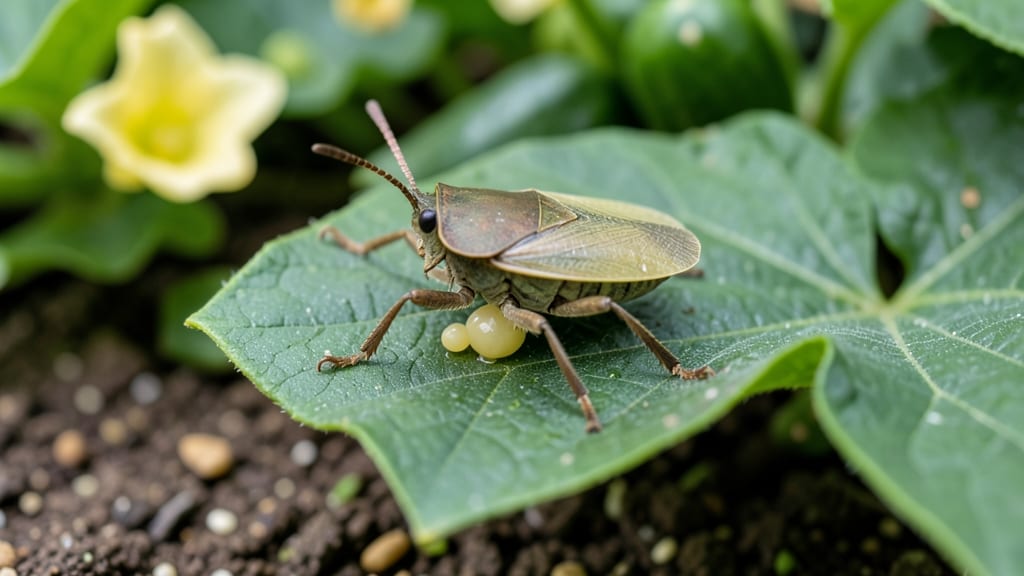
Squash bugs stop laying eggs when temperatures dip below 65°F consistently—usually by mid-to-late August in most regions. 🌿 I learned this the hard way after finding fresh egg clusters on my zucchini vines well into September.
The bugs time their final hatch with warm soil and lingering summer heat, making late summer your last window to catch them before they overwinter. The real giveaway? Tiny yellow eggs clustered on leaf undersides or stems—look for them in shady, protected spots where bugs hide.
Once you stop seeing new eggs (around first frost in cooler climates), the adults will seek shelter in garden debris or mulch. That’s when you can shift focus from egg hunting to preventing next year’s infestation.
By then, your plants should be maturing fast—harvesting squash and pumpkins before bugs return in spring is key. I’ve found that row covers after egg-laying ends still protect young plants, while handpicking adults in fall cuts next year’s population by half. The battle isn’t over, but you’ve gained critical ground.
For gardeners in warmer zones, watch for delayed egg-laying—some bugs keep going until October. The rule of thumb? When mornings stay cool for a week, assume the worst is past. Now’s the time to clean up plant debris and inspect storage areas where overwintering adults might hide.
Biological Triggers Behind Egg-Laying
Squash bugs (Anasa tristis) are relentless garden pests, and their egg-laying habits are tightly linked to their biology—specifically, how temperature, daylight, and internal cues interact.
Understanding these triggers helps predict when they’ll stop laying eggs, giving gardeners a window to act before new generations emerge. Here’s why it happens:
Squash bugs are cold-sensitive and rely on warm weather to reproduce. Their egg-laying peaks when daytime temperatures hover between 75–85°F (24–29°C), but as temperatures consistently drop below 70°F (21°C), their reproductive drive dims. Here’s how it works:
- Enzyme slowdown: Cooler temps reduce the activity of enzymes like vitellogenin, which squash bugs need to produce egg yolks. Without this protein, females can’t mature eggs efficiently.
- Diapause preparation: As nights grow cooler, squash bugs enter a pre-diapause state—a biological "pause" where they stop laying eggs to survive winter. This typically kicks in by late August to early September in most U.S. growing zones.
- Geographic variations: In Zone 5 or colder, egg-laying may halt by mid-August due to earlier temperature drops. In Zones 8–10, it might stretch into October if warm spells persist.
💡 Pro Tip: Monitor your local degree-day accumulations (a tool used in pest management). Squash bugs usually stop laying eggs after ~2,000–2,500 growing degree days (base 50°F)—a sign their internal clock is shifting toward dormancy.
Squash bugs are photoperiod-sensitive, meaning they respond to changing daylight hours. As summer wanes, shorter days trigger hormonal shifts that curtail reproduction. Here’s the science:
- Juvenile hormone (JH) drop: Longer nights reduce juvenile hormone levels in females, which suppresses egg production. This is a conserved trait in many insects, including squash bugs.
- Critical threshold: Egg-laying typically declines when daylight drops below 14 hours. In the Northern Hemisphere, this often aligns with the autumnal equinox (late September).
- Exception: In tropical or extended-growing-season areas, squash bugs may continue laying eggs if daylight remains above 13 hours—but their numbers will dwindle.
✨ Key Insight: If you’re in a region with early frost risks, squash bugs may stop laying eggs before daylight shortens—temperature often overrides photoperiod cues.
Squash bugs need healthy, nutrient-rich host plants (like cucurbits—squash, pumpkins, melons) to fuel egg production. When these plants senesce (age) or stress, the bugs’ reproductive cycle grinds to a halt. Here’s why:
- Reduced phloem sap quality: Mature or stressed plants produce lower-sugar phloem sap, which squash bugs rely on for energy. Females need ~10–15% more nutrients to produce eggs, and stressed plants can’t provide this.
- Secondary metabolites: As plants age, they produce defensive compounds (like cucurbitacins in bitter squash) that deter egg-laying. Squash bugs avoid laying eggs on plants with high levels of these chemicals.
- Leaf drop triggers: When host plants start shedding leaves (a sign of senescence), squash bugs lose preferred oviposition sites. They’ll only lay eggs on young, tender foliage.
🎯 Actionable Takeaway: If your squash plants are yellowing, wilting, or flowering heavily, squash bugs will likely stop laying eggs within 2–3 weeks. This is your cue to remove old vines (where eggs may linger) and focus on protecting new growth.
By understanding these biological triggers—temperature, daylight, and host plant health—you can predict squash bug egg-laying patterns with surprising accuracy. The next step? Learn how to disrupt their cycle before it starts.
Stopping Squash Bug Eggs Naturally
Squash bugs may be relentless, but with the right strategies, you can break their life cycle and protect your garden. Below are practical, actionable solutions tailored to the root causes—from egg removal to habitat disruption—plus prevention tips to keep these pests at bay for good.
Squash bugs lay eggs in clusters on the undersides of leaves, stems, and even garden tools. Act fast—eggs hatch in 7–14 days, depending on warmth.
- 👨🍳 Inspect Daily: Check squash, pumpkin, and cucumber plants every 2–3 days (especially in late summer). Look for flat, tan, barrel-shaped eggs grouped in rows. - 🔪 Scrape Them Off: Use a plastic scraper, fingernail, or soft brush to gently remove egg masses.
Drop them into soapy water to kill them instantly. - 🌡️ Freeze or Burn: If eggs are on fallen leaves or debris, bag and freeze them for 48 hours or burn them (if local regulations allow).
> 💡 Pro Tip: Focus on new growth areas—squash bugs prefer tender leaves where they can insert their piercing mouthparts.
Squash bugs thrive in weedy, mulch-heavy, or damp areas. Making your garden less inviting can deter egg-laying and adult activity.
- 🌱 Reduce Mulch Thickness: Thick mulch provides hiding spots. Use straw or shredded leaves (1–2 inches deep) instead of dense layers. - 🌿 Keep Beds Tidy: Remove fallen leaves, plant debris, and weeds where eggs hide.
Rake under plants weekly. - 🌞 Improve Airflow: Space plants 12–18 inches apart to reduce humidity—squash bugs love damp, shaded spots.
> ✨ Prevention Hack: Plant nasturtiums or marigolds near squash plants—their strong scent repels squash bugs naturally.
Adult squash bugs feed and mate in late summer, so eliminating them early prevents next year’s eggs.
- 🕷️ Use Sticky Traps: Place yellow or blue sticky traps near plants to catch flying adults.
- 💦 Handpick & Crush: Drop squash bugs into soapy water (they’re slow-moving and easy to spot on leaves).
- 🐜 Encourage Predators: Ladybugs, spiders, and parasitic wasps eat squash bugs. Avoid pesticides to protect these helpers.
> 🎯 Target Weakness: Squash bugs can’t fly well—check low-hanging leaves and garden edges first.
Break the cycle before eggs appear by rotating crops, sanitizing tools, and choosing resistant plants.
- 🌱 Crop Rotation: Plant squash family crops (cucumbers, melons, pumpkins) in different spots each year—eggs survive in soil for months.
- 🧼 Clean Tools & Containers: Wash pruners, trellises, and pots with soapy water to remove hidden eggs.
- 🥔 Choose Resistant Varieties: Some squash types (‘Early Prolific Straightneck’ cucumbers, ‘Butternut’ squash) are less appealing to squash bugs.
> 🔥 Last Resort: If infestations persist, neem oil or insecticidal soap (applied in early morning or evening) can suffocate eggs without harming plants.
By combining egg removal, habitat control, and adult trapping, you can slash squash bug populations by 90% or more. Stay vigilant—late summer is their final push, but your garden doesn’t have to be their victory. 🚜💪
Frequently asked questions
What’s the best way to tell if squash bugs have stopped laying eggs?
Look for no new egg clusters on leaf undersides for 7–10 days. Eggs appear as flat, tan, barrel-shaped groups—if you haven’t spotted any fresh ones by mid-to-late September in most regions, they’ve likely stopped. Also check for adults seeking shelter in garden debris or mulch.
Can squash bugs lay eggs in cooler weather?
They prefer 75–85°F for egg-laying, but may continue in 60–65°F if daytime warmth persists. In Zones 8–10, egg-laying can stretch into October, while colder zones see it halt by mid-August. Watch for consistent nighttime temps below 60°F—that’s when they finally stop.
What should I do once squash bugs stop laying eggs?
Shift focus to removing adult bugs and cleaning up debris where they overwinter. Handpick adults into soapy water, use row covers for new plantings, and sanitize tools to prevent next year’s eggs. Also rotate crops to break their life cycle.
Do squash bugs lay eggs on non-squash plants?
They prefer cucurbits (squash, pumpkins, melons), but may lay eggs on beans, peas, or even weeds if no better hosts are available. Check leaf undersides on nearby plants—especially if you see adults feeding there.
Can I still get squash bugs after they stop laying eggs?
Yes! Adults survive winter and resume feeding in spring, laying new eggs. The key is to eliminate them before they hide—focus on fall cleanup and early spring monitoring to catch them before they reproduce again.