
Companion Plants
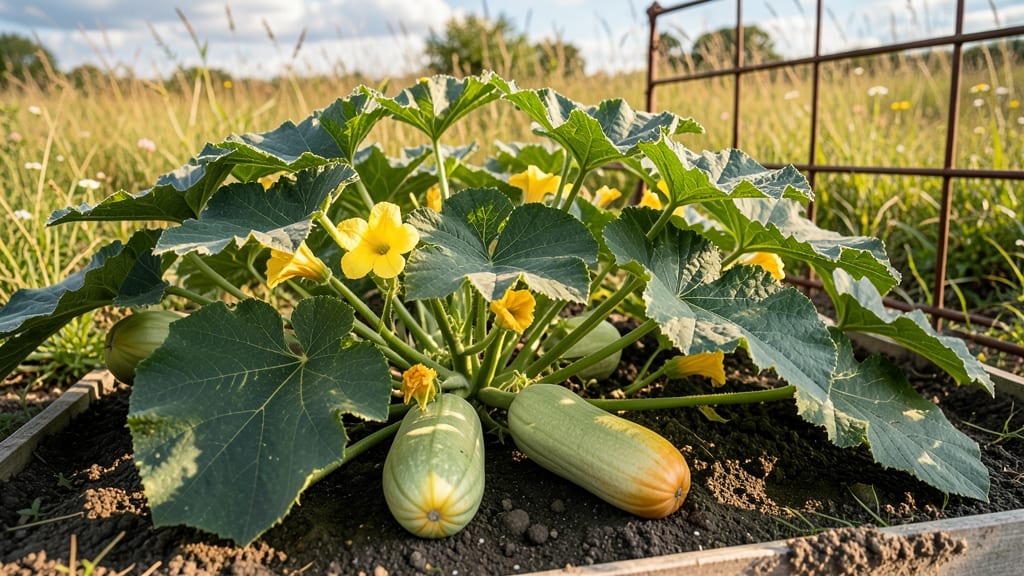
Spaghetti squash plants look like they have broad, deeply lobed leaves with jagged edges, sprawling vines reaching 3-5 feet, and showy yellow trumpet flowers. Their thick, fuzzy stems and bushy growth pattern make them easy to spot among other summer squash varieties.
Spaghetti squash plants stand out with their hand-shaped leaves that have 3-5 pointed lobes and serrated edges, almost like a maple leaf's smaller cousin. 🌿 The vines grow aggressively, spreading horizontally rather than climbing, which helps them sprawl across garden beds.
Unlike zucchini's smooth stems, spaghetti squash stems are thick and covered in stiff hairs, giving them a rough texture you can feel.
Early in the season, the plants look like they're just putting on leafy growth, but by midsummer, you'll start seeing those distinctive yellow flowers that eventually turn into the squash's signature oblong fruits.
One key difference from other squash varieties is how the leaves angle outward rather than growing upright. This bushy, sprawling habit means they need more space than vertical vines, and their leaves develop a slightly waxy coating as they mature.
The flowers themselves are another great identifier—they're larger than zucchini blossoms and have a more pronounced trumpet shape, often appearing in clusters along the vines.
💡 In This Article
- Identifying Spaghetti Squash Leaves and Stems
- Growth Habits and Seasonal Changes in Spaghetti Squash
Identifying spaghetti squash leaves and stems
The leaves of spaghetti squash plants are one of their most distinctive features, resembling oversized maple leaves with 3-5 deep lobes and sharply serrated edges.
Each leaf typically measures 6-12 inches wide, with prominent veins creating a web-like pattern that's more pronounced than zucchini's smoother leaf structure. 🌿 These leaves grow on thick, hairy stems that are covered in stiff, white bristles—unlike the smooth stems of butternut squash, which feel almost silky to the touch.
The hairiness serves as a natural defense against pests while also helping the plant retain moisture in hot climates.
The leaf texture changes as the plant matures: young leaves are softer with a slight downy coating, while mature leaves develop a waxy, almost leathery surface that helps reduce water loss. This waxiness is more noticeable than in zucchini leaves, which tend to stay velvety throughout their growth cycle.
The stems themselves are deep green to grayish-green, often with a slight purple tint near the base, and they grow at a 45-degree angle from the main vine rather than upright like pumpkin stems.
This sprawling growth pattern creates that signature bushy look that's so different from the more vertical growth of other winter squash varieties.
When comparing spaghetti squash to its close relatives, the differences become clear: zucchini leaves are more rounded with fewer lobes, while butternut squash leaves are narrower and more elongated.
The hairy stems are another dead giveaway—most other squash varieties have smooth or slightly ribbed stems that lack the rough texture of spaghetti squash.
These botanical details aren't just for identification; they also influence how the plant interacts with its environment, like how the waxy leaves help reflect sunlight during peak summer heat.
One fascinating detail is how the leaf arrangement follows a specific pattern called alternate phyllotaxy, where each new leaf emerges at a 120-degree angle from the previous one. This spiral arrangement maximizes sunlight exposure while creating that distinctive bushy appearance.
The stems themselves contain a milky sap when broken, which is a common trait among squash plants but more pronounced in spaghetti squash due to its thicker stem structure. 🌱 This sap contains cucurbitacins, natural compounds that deter many common garden pests while attracting beneficial insects like bees that pollinate the flowers.
If you're trying to identify spaghetti squash in a garden setting, focus on these three key characteristics:
- Leaf shape: Deeply lobed with serrated edges (like a smaller maple leaf)
- Stem texture: Thick, hairy, and rough to the touch
- Growth pattern: Bushy and sprawling with leaves growing outward