
Flowers
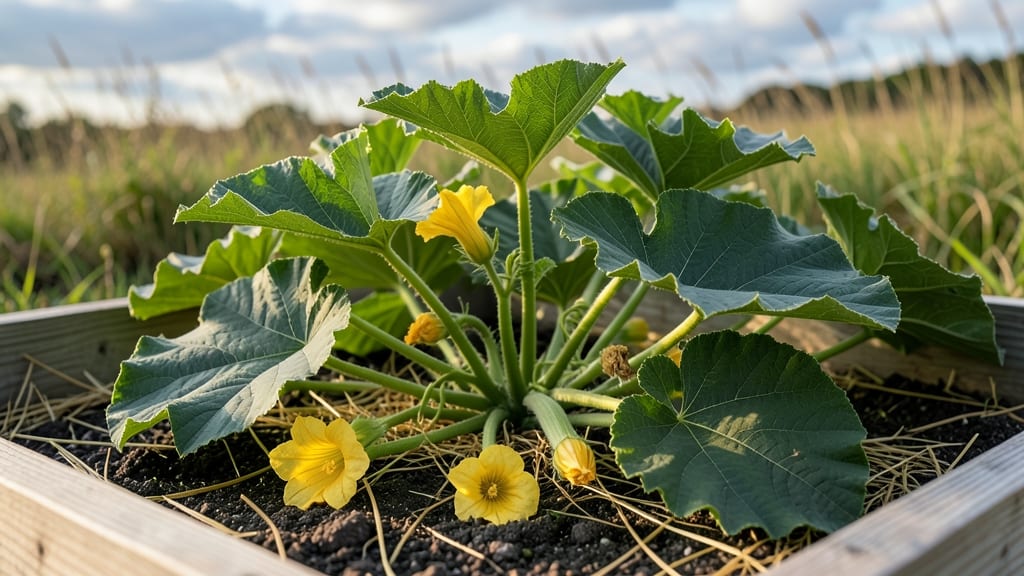
Finding pictures of male and female squash flowers reveals key differences: female blooms show a small squash forming at their base, while male flowers have long, thin stems without any fruit development. Female flowers also grow slightly larger and appear later in the growing season.
These visual cues aren't just helpful for identification—they're crucial for successful pollination. 🌸 The tiny squash at the base of female flowers (called the ovary) is your first clue that this bloom is ready for fertilization.
Male flowers, with their slender stems, serve as pollen donors, while female flowers receive it. I've found that understanding these differences helps gardeners hand-pollinate squash plants when bees aren't active, especially useful for varieties like zucchini or butternut squash that require cross-pollination.
The timing difference matters too: female flowers typically appear 2-3 weeks after males, which is why early-season blooms are usually male flowers preparing the plant for fruit production later.
For visual learners, comparing side-by-side images of both flower types makes identification much easier. The ovary on female flowers often appears as a small bump at the base, while male flowers have a more uniform stem structure.
This distinction becomes particularly important when dealing with squash varieties that require specific pollination techniques or when trying to maximize fruit production in controlled environments like greenhouses.
💡 In This Article
- Key Visual Differences Between Male and Female Squash Blooms
- How to Use Flower Identification for Better Squash Pollination
Key visual differences between male and female squash blooms
Female squash flowers stand out immediately with their distinctive swollen ovary at the base, which is where the fruit will develop. This ovary appears as a small, round bump—often about 0.5-1 inch in diameter—that looks like a tiny squash before fertilization.
Male flowers, in contrast, have a slim, elongated stem that tapers evenly without any bulbous growth, making them easier to spot when comparing side-by-side.
The petal structure also differs subtly: female flowers typically have slightly larger petals (about 2-3 inches wide) with a more pronounced central stem, while male petals are narrower and more delicate.
The color intensity often varies too—female blooms sometimes appear brighter yellow due to higher nutrient allocation for potential fruit development. 🌼 This visual contrast becomes especially noticeable in varieties like acorn squash, where the ovary is more pronounced and the petals have a deeper hue.
Seasonal timing plays a crucial role in identification. Male flowers emerge first, typically 2-3 weeks earlier than females, as the plant prioritizes pollen production before focusing on fruit development. This early bloom period helps gardeners anticipate which flowers to remove if they're dealing with varieties prone to over-pollination.
The female flowers, appearing later, signal the plant's readiness to produce fruit, which is why they're often more abundant during peak harvest seasons.
Another key distinction lies in the stem attachment. Female flowers have a thicker, sturdier stem that supports the developing ovary, while male stems are thin and flexible, almost like a straw.
This structural difference becomes particularly useful when hand-pollinating—simply grasp the male stem to transfer pollen to the female flower's stigma. The ovary's presence also makes female flowers heavier, causing them to droop slightly compared to the upright posture of male blooms.
For gardeners working with heirloom varieties, these visual cues become even more important. Some squash types, like Crosnoe squash, have particularly large female flowers with petals that can reach 4 inches wide, while others like pattypan squash have smaller but more numerous female blooms.
The ovary size can also indicate fruit potential—larger ovaries often correlate with bigger squash, though environmental factors like sunlight and water play equally critical roles.
Understanding these distinctions goes beyond mere identification—it's about optimizing your garden's productivity. When you recognize female flowers early, you can prioritize their protection from pests or ensure they receive adequate water to support fruit development.
Male flowers, while essential for pollination, can be removed if you're dealing with varieties that produce too many fruits, helping the plant focus its energy on fewer, higher-quality squash.