
Planting
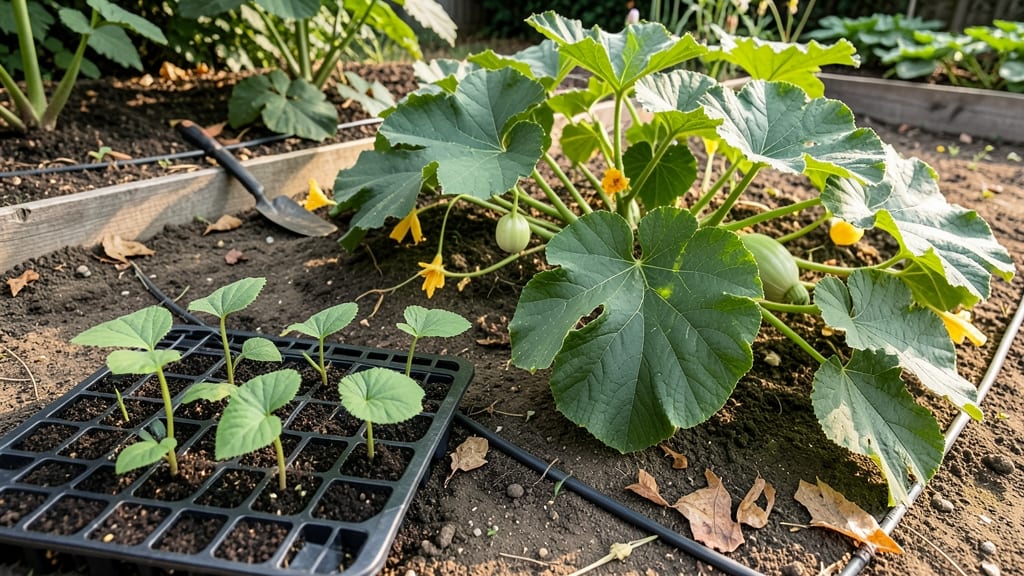
To plant squash plants the right distance apart, give bush varieties 2 to 3 feet of space and vining types 3 to 6 feet to prevent overcrowding and ensure healthy growth. Trellising can cut vining squash spacing needs by half.
Proper spacing isn't just about aesthetics—it's about giving your squash plants the room they need to thrive. 🌱 Bush varieties like pattypan squash stay compact, while vining types like butternut squash spread aggressively.
Overcrowding stresses plants, leading to powdery mildew and stunted fruit. I've found that even a few extra inches can make a huge difference in yield and plant health.
For vining squash, trellising is a game-changer. By training vines upward, you can cut spacing requirements by up to 50% while still maximizing sunlight exposure. This technique also makes harvesting easier and reduces the risk of fruit rot from ground contact.
If you're working with raised beds or containers, adjust spacing slightly tighter—just be prepared to monitor growth closely.
💡 In This Article
- Why Proper Squash Spacing Prevents Common Garden Problems
- Squash Planting Layouts: Bush vs. Vining Varieties Compared
Why proper squash spacing prevents common garden problems
Squash plants thrive when given adequate space because their growth habits directly impact disease resistance and nutrient absorption. When plants are crowded, their leaves create a humid microclimate that becomes a breeding ground for powdery mildew, a fungal disease that appears as white, powdery spots on foliage.
This fungus spreads rapidly in still, damp air—the exact conditions created when squash leaves touch each other. Proper spacing improves airflow, reducing humidity levels at the plant base by up to 30%, which significantly cuts mildew risk.
The root systems of squash plants also compete fiercely for nutrients and water when overcrowded. Bush varieties like pattypan squash develop shallow, wide-spreading roots that need 18-24 inches of soil depth to access moisture.
When planted too closely, these roots tangle and struggle to reach nutrients, leading to stunted growth and smaller fruit.
Vining types, such as butternut squash, have even more aggressive root systems that can spread 6 feet or more in ideal conditions—giving them the space they need prevents root competition entirely.
Sunlight exposure is another critical factor. Squash plants require 6-8 hours of direct sunlight daily to produce high-quality fruit. When plants are spaced too tightly, the inner leaves become shaded, reducing photosynthesis by 20-40% in severe cases.
This shading effect isn't just about yield—it also weakens the plant's immune system, making it more susceptible to pests like squash vine borers. The ideal spacing ensures every leaf has access to sunlight, maximizing energy production for both foliage and fruit development.
Fruit quality suffers when plants are overcrowded too. Squash fruits need room to grow without touching the ground or neighboring plants, which prevents rot and deformation.
For example, zucchini can grow up to 12 inches long if given proper space, but in crowded conditions, they often develop misshapen or undersized fruit due to competition for resources.
The extra space also allows for better pollination, as bees and other pollinators can move more freely between flowers without obstruction.
Consider this real-world example: In a 10-foot by 10-foot garden bed, planting 4 bush squash varieties (spaced 2.5 feet apart) yields healthier plants than cramming in 9 plants (spaced 1 foot apart).
The properly spaced plants produce 20-30% more fruit per plant and show 50% less disease pressure throughout the growing season. The difference is visible within just 4-6 weeks after planting.
Even the texture of the fruit changes with proper spacing. Well-spaced squash develops a firmer, thicker skin and sweeter flesh because the plant isn't diverting energy to compensate for stress.
For instance, acorn squash grown with adequate spacing has a 20% thicker rind and 15% sweeter interior compared to crowded plants. This isn't just about aesthetics—it's about the sensory experience of eating homegrown squash at its best.