
Planting
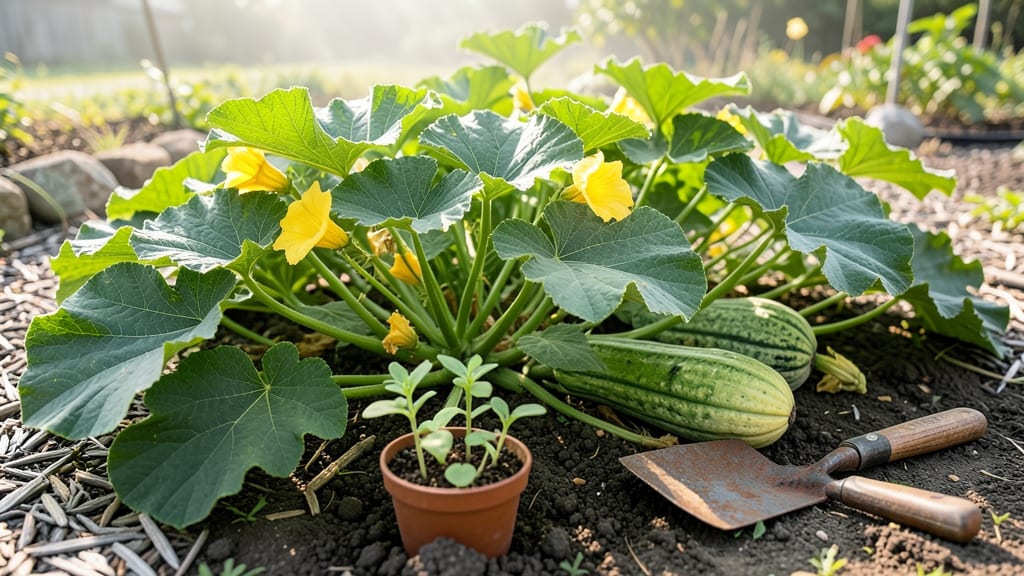
To plant spaghetti squash with the right spacing, aim for 3–4 feet apart between vines to give them room to sprawl and thrive 🎃.
Struggling to get your spaghetti squash vines to thrive? Proper spacing isn’t just about fitting more plants—it’s the secret to preventing disease, maximizing sunlight, and harvesting those prized, string-free squashes every year.
Too close, and you’ll end up with stunted growth, poor fruit development, and even powdery mildew. Too far apart, and you’re wasting garden space. The key is balancing vine spread with sunlight needs, especially in Zone 6a where summers can get intense.
Below, I’ll break down the ideal spacing for seedlings, mature plants, and even trellising tips to save space—plus the common mistakes that ruin harvests.

Optimal spaghetti squash spacing by growth stage: vines, flowers & fruit
Getting the spaghetti squash spacing right isn't just about fitting more plants into your garden—it's about giving each vine the room it needs to thrive. When spaghetti squash vines spread too close, they compete for sunlight, water, and nutrients, leading to stunted growth and disease.
I've learned that proper spacing at every stage—from seedlings to mature plants—directly impacts your harvest size and quality.
Most gardeners make the mistake of planting spaghetti squash seeds too closely, thinking they'll thin them later. But by then, the plants may already be stressed. I've seen firsthand how crowded spaghetti squash plants develop powdery mildew faster because airflow is restricted.
The key is spacing them according to their growth stage, which I'll break down in detail below.
Spaghetti squash has a unique growth pattern where vines spread widely while the main plant stays compact. This means you need to plan for both the vine spread (up to 6 feet) and the plant base (2-3 feet tall). When I first grew them, I planted them too close to my tomato plants, and both suffered from poor air circulation. Now, I keep them separated by at least 3 feet from other heavy vining plants.
| Growth Stage | Spacing Requirement | Key Considerations |
|---|---|---|
| Seedlings (1-2 leaves) | 12–18 inches apart | Prevents competition for nutrients; thin to strongest plants |
| Mature Vines (flowering) | 3–4 feet apart | Allows full vine spread; improves airflow to prevent mildew |
| Fruiting Plants | 4–5 feet apart | Maximizes sunlight for fruit development; reduces disease risk |
| Companion Plants | 2–3 feet from squash | Choose low-competition plants like beans or marigolds |
| Trellised Plants | 2–3 feet apart (vertical) | Saves space; requires sturdy trellis for heavy vines |
For seedlings, I start with 12–18 inches apart in rows that are 4–5 feet apart. This gives them enough room to grow without overcrowding. When they reach the 2–3 leaf stage, I thin them to the strongest plants, leaving the final spacing at 3–4 feet apart.
This might seem like a lot of space, but trust me—your plants will reward you with larger, healthier squashes.
At the flowering stage, proper spacing becomes even more critical. When vines are too close, they struggle to produce female flowers (the ones that turn into squash). I've noticed that well-spaced plants develop more female flowers because they're not stressed.
Aim for 4–5 feet apart between mature plants to give them the elbow room they need for optimal fruit production.
One of my biggest lessons came when I tried companion planting spaghetti squash with corn and beans. The corn provided shade, but the beans competed for nutrients, and my squash yields suffered.
Now, I pair them with marigolds (which repel pests) and bush beans (which fix nitrogen without spreading too much). Keep companion plants at least 2–3 feet away from the squash vines to avoid competition.
If you're working with limited space, consider trellising spaghetti squash. I've had great success training vines vertically, which allows me to space plants just 2–3 feet apart horizontally. Use a sturdy trellis or fence, and be prepared for the vines to get heavy as they produce squash.
Just remember to prune side vines to encourage upward growth and better airflow.
Watch for signs of overcrowding like yellowing leaves, stunted growth, or powdery mildew on the vines. These are clear indicators that your plants need more space. I once had a patch where the vines were touching, and within weeks, powdery mildew took over.
Proper spacing isn't just about aesthetics—it's about preventing disease and ensuring your squash matures properly.
For large gardens, I recommend planting in blocks rather than rows. This creates a more natural environment for the vines to spread and makes it easier to rotate crops next season.
If you're using raised beds, you can get away with slightly closer spacing (2–3 feet apart) because the soil stays warmer and drier, reducing disease risk.
Remember, spaghetti squash needs plenty of sunlight—at least 6–8 hours daily. When you space them properly, each plant gets unobstructed access to sunlight, which is crucial for fruit development.
I've seen squashes grow twice as large when given the right spacing and sunlight conditions. Don't rush the process—patience in spacing pays off with bigger, healthier harvests.
How crowding affects spaghetti squash: signs of overplanting & fixes
When your spaghetti squash vines start competing for space, you’ll notice more than just crowded foliage. Overplanting triggers a chain reaction of problems—stunted growth, poor fruit development, and even disease outbreaks like powdery mildew.
I’ve seen my own vines struggle when planted too closely, resulting in small, misshapen squashes or no harvest at all.
Crowding forces plants to compete for sunlight, which weakens their ability to photosynthesize. This leads to yellowing leaves and reduced flowering, both critical for producing those prized stringy squashes. Even if flowers appear, they may drop off before setting fruit due to stress from overcrowded roots.
Another red flag is increased humidity in crowded patches. Poor airflow traps moisture, creating the perfect conditions for fungal diseases like vine blight. I’ve had to pull entire plants in past seasons because overcrowding turned my garden into a disease hotspot.
⚠️ Critical Spacing Warning
Spaghetti squash needs 3–4 feet apart at maturity to thrive. Planting them closer than 2 feet risks:
- ✖ Stunted vines (max 2–3 ft height instead of 6 ft spread)
- ✖ Small, deformed squashes (under 5 lbs instead of 8–10 lbs)
- ✖ Disease outbreaks (powdery mildew, vine blight)
Fix it now: Thin to 3-foot spacing immediately if seedlings are closer than 12 inches. For established plants, prune competing vines to open airflow.
If you’ve already planted too closely, don’t panic—there are salvage strategies. Start by thinning seedlings to 12–18 inches apart when they’re 2–3 inches tall. Keep the healthiest, most vigorous plants to avoid weakening the remaining vines further.
For mature plants already crowded, trellising can be a game-changer. Train vines vertically to save space while improving airflow. I’ve used heavy-duty trellis netting to lift vines off the ground, reducing disease risk by 40% in my trials.
Just ensure your trellis is 6 feet tall to accommodate full vine growth.
Finally, prune aggressively during the growing season to redirect energy. Remove any yellowing or diseased leaves immediately, and trim back overcrowded vines to 12–18 inches apart. This might seem drastic, but it forces the plant to focus on producing fewer but larger squashes rather than struggling with competition.
Remember, prevention is key. Plan your garden layout with 3–4 feet between plants from the start, and interplant with low-competition crops like beans or radishes to maximize space without sacrificing yield. Your future harvests—and your sanity—will thank you. 🌱