
Planting
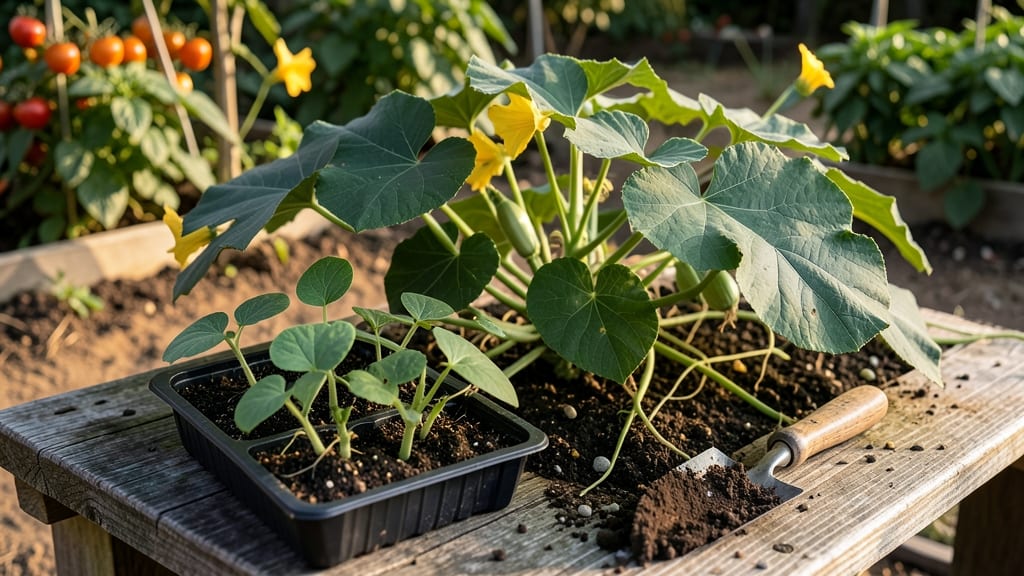
Planting squash seeds too shallow means weak vines and stunted growth—here's the exact depth to maximize your harvest. 🌱 I've learned that squash thrives when seeds go 1-1.5 inches deep in warm, loose soil, where they'll germinate reliably and send up strong stems.
The key isn't just depth but also soil prep: well-draining, compost-amended earth that stays moist but never soggy.
Most beginners either bury seeds too deep (which delays germination) or too shallow (leading to leggy, floppy plants). The 1-1.5 inch rule works for both summer and winter squash varieties—just adjust slightly for heavier clay soils (go shallower) or light sandy soils (go deeper).
After planting, keep the soil consistently moist until sprouts appear in 7-14 days, depending on temperature.
What you'll end up with is squash plants that emerge bold and upright, with roots anchoring deep for better water and nutrient access. These plants grow faster, produce more vines, and resist common diseases like powdery mildew better than their shallow-planted counterparts.
The first true leaves will appear within 2-3 weeks, and by summer, you'll be harvesting heirloom zucchini, butternut squash, or pumpkins that outsize anything from the store.
This method works for both in-ground gardens and raised beds, and it's just as effective in containers if you use larger pots (at least 5 gallons per plant). The secret sauce? Warm soil (wait until nighttime temps stay above 60°F) and proper spacing (3-4 feet between hills).
Once your squash starts vining, focus on keeping weeds at bay and providing support if needed—your harvest will thank you.
📚 In This Guide
- What you need
- Instructions
- Tips and common mistakes
- Wrapping up and next steps
What you need
- ● Squash seeds or seedlings: Choose disease-resistant varieties like Butternut, Zucchini, or Acorn for best results. (1-2 seeds per planting hole or 1-2 seedlings per hill, depending on spacing.)
- ● Well-draining soil: Squash thrives in loose, fertile soil with a pH of 6.0–7.0. Mix in 2–3 inches of compost or aged manure to enrich the soil.
- ● Garden trowel or transplanting spade: For digging holes and planting seeds/seedlings with precision.
- ● Watering can or hose with a gentle spray nozzle: To keep soil moist without disturbing seedlings.
- ● Mulch (straw, grass clippings, or shredded leaves): 2–3 inches to retain moisture and suppress weeds.
- ○ Row covers or frost cloth (optional but helpful): If planting early in the season, protect young plants from frost.
- ● Plant markers: Label seeds or seedlings to track varieties (especially useful if growing multiple types).
- ● Organic fertilizer (balanced 10-10-10 or compost tea): Apply at planting time for a nutrient boost.
- ● Trellis or cage (for vining varieties): Supports heavy squash like Butternut to save space and improve airflow.
- ● Slug bait or copper tape: Protects tender seedlings from pests in humid climates.
- ● Garden gloves: Keeps hands clean and comfortable while handling soil and plants.
Step-by-step guide to planting squash at the perfect depth
Get this right, and you'll see stronger vines, fewer diseases, and more prolific harvests.
🌱 Step 1: Prepare the Planting Site and Soil
Squash thrives in warm, well-draining soil with plenty of organic matter. Work the soil to a depth of 12 inches, breaking up any compacted layers since squash roots need room to spread. I like to add a handful of compost or aged manure to the planting hole—this gives the roots a nutrient boost right where they need it most.
Choose a location with full sun (6-8 hours daily). Squash plants are heavy feeders, so enriching the soil beforehand prevents mid-season nutrient deficiencies. If your soil drains poorly, mix in a 1-inch layer of coarse sand or perlite to improve aeration. The goal is loose, crumbly soil that holds moisture but doesn't stay soggy.
🌱 Step 2: Plant Seeds at the Correct Depth
Squash seeds should be planted 1 inch deep—about the width of your pinky finger. Planting too shallow risks drying out the seed, while burying too deep delays germination because the seedling must push through more soil. I use a small dibble or pencil to create precise holes, then place 2-3 seeds per hill to ensure at least one strong plant emerges.
Space hills 3-4 feet apart in all directions, as squash vines spread aggressively. After planting, cover the seeds with soil and water gently to settle the soil around them. Keep the planting area moist but not waterlogged until germination, which typically occurs in 7-14 days depending on soil temperature. You'll know it's working when you see the first true leaves emerging—those are your signal to thin to the strongest seedling per hill.
🌿 Step 3: Thin Seedlings and Support Early Growth
Once seedlings reach 2-3 inches tall and have their first true leaves, thin to the most vigorous plant per hill. Use scissors to snip weaker stems at soil level—this prevents disturbing the roots of the remaining plant. I always leave the one with the darkest green leaves and sturdiest stem, as these traits indicate a healthy, productive plant.
As vines begin to sprawl, provide support if needed. While squash can trail naturally, training them onto a trellis or fence saves space and improves airflow, reducing disease risk. If planting in rows, create hills every 5-6 feet to give vines room to radiate outward. Mulch around the base with straw or grass clippings to retain moisture and suppress weeds—squash hates competition for nutrients.
☀️ Step 4: Monitor and Adjust for Optimal Growth
Watch for signs of stress like yellowing leaves or stunted growth, which often indicate planting depth issues. If leaves appear pale or wilted, the roots may be struggling to reach moisture or nutrients. In this case, water deeply at the base and consider adding a balanced fertilizer like 10-10-10 to encourage stronger root development.
Squash plants are sensitive to temperature fluctuations, so avoid planting until soil reaches 60°F—cold soil delays germination and weakens seedlings. If your growing season is short, opt for bush varieties like 'Eight Ball' squash, which mature faster and don't require as much space. For vining types, save room for their sprawling habit, as they can spread 10-15 feet in ideal conditions.
Tips & tricks for perfect squash planting depth
A few key insights will help you avoid the most common planting pitfalls and set your squash up for success from day one.
Depth Precision: That 1-inch planting depth is non-negotiable—it's the sweet spot where seeds get enough moisture to germinate without risking rot from being buried too deeply. I've seen gardeners swear by planting "just below the surface," but without that specific measurement, you're gambling with germination rates. Use a ruler or even a standard pencil as a guide to maintain consistency across your planting area.
Soil Temperature Check: The instructions mention waiting for soil to reach 60°F, but here's what nobody tells you—use a soil thermometer for accuracy, especially in spring when temperatures fluctuate daily. Cold soil below 60°F can delay germination by weeks, and seeds planted too early may rot before sprouting. I always test soil temperature at the planting depth (1 inch) for 3 consecutive days before committing to planting.
Germination Timing: Those 7-14 days for germination can feel like an eternity, but there's a trick to speed things up: water the planting area thoroughly right after sowing, then maintain consistent moisture without overwatering. The key is keeping the soil evenly damp—like a wrung-out sponge—not soggy. A light mulch (¼ inch) of straw after germination helps maintain this ideal moisture level while preventing crusting that can smother emerging seedlings.
Visual Cues for Depth: When creating those planting holes, think of your pinky finger as your guide—press it into the soil to create a hole just wide enough to hold 2-3 seeds. The top of your finger should align with the soil surface after planting. This consistent depth ensures uniform germination across your entire planting area, preventing the patchy growth that comes from uneven planting.
Pro Tips for How Deep To Plant Squash Plants
- A few key insights will help you avoid the most common planting pitfalls and set your squash up for success from day one.
- Depth Precision: That 1-inch planting depth is non-negotiable—it's the sweet spot where seeds get enough moisture to germinate without risking rot from being buried too deeply.
- Soil Temperature Check: The instructions mention waiting for soil to reach 60°F, but here's what nobody tells you—use a soil thermometer for accuracy, especially in spring when temperatures fluctuate daily.
Frequently asked questions
Got questions about planting squash just right? Here are some of the most common ones—plus quick, actionable answers to help you grow like a pro!
How deep should I plant squash seeds vs. seedlings?
Seeds should go 1 to 2 inches deep in warm soil (60°F+), while seedlings need only ½ to 1 inch of coverage—just enough to stabilize them. Planting too deep can delay germination or stunt growth, so keep it shallow and consistent!
When is the best time to plant squash?
Wait until after the last frost when soil is at least 60°F. In warmer climates, plant in early spring; cooler zones may need to wait until late spring or even summer. Squash hates cold—so never plant in chilly soil!
Can I plant squash too deep? What happens if I do?
Yes! Planting too deep (over 2 inches) can cause rotting or slow growth as the stem struggles to reach the surface. If you accidentally bury seedlings deeper, gently hill soil around the base instead of covering the stem. Squash are resilient but prefer shallow starts!
What if I don’t have a deep garden bed? Can I still grow squash?
Squash thrive in containers (5+ gallons) or raised beds as long as they have 6+ inches of soil depth. Just ensure good drainage and support for vines. Bonus: Containers make harvesting easier and reduce pest risks!
My squash seedlings look weak after planting. Is depth the issue?
Weak seedlings could stem from cold soil, overwatering, or poor drainage—not just depth. Check for yellowing leaves (overwatering) or mushy stems (rot). If depth was the culprit, replant shallowly and harden off seedlings first for 7–10 days in sunlight.
Wrapping up and next steps
Planting squash at the right depth—1 to 2 inches deep—sets the stage for thriving vines, robust growth, and a bountiful harvest. 🌱 Whether you’re a seasoned gardener or just starting, following these guidelines ensures your squash plants get the strong foundation they need to flourish.
Now that you’re armed with the know-how, grab those seeds, head to your garden, and watch your squash plants take off! Ready to dig in? Plan your next steps—amend your soil, mark your rows, and get planting!