
Container Gardens
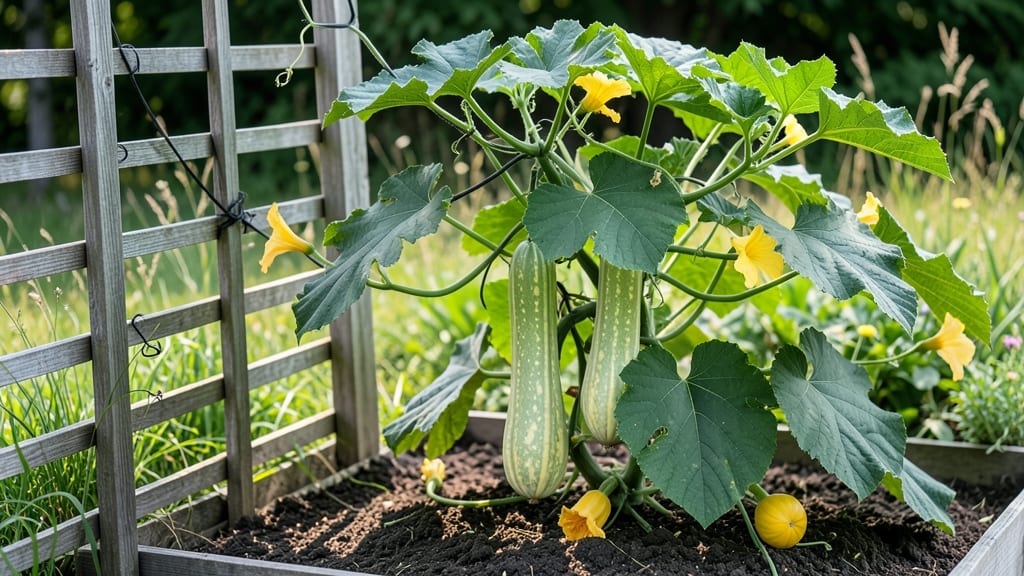
Growing spaghetti squash vertically saves space while delivering those sweet, strand-like harvests you crave. 🌱 I used to watch my squash sprawl across the garden, stealing sunlight from tomatoes—until I discovered how a simple trellis changes everything.
Now my vines climb neatly, leaving room for salad greens below while still producing 8-10 pound squash per plant.
The secret starts with the right trellis: sturdy metal cages or strong wooden stakes work best. Spaghetti squash vines are heavy, so avoid flimsy plastic trellises that sag mid-season. Plant seeds 1-2 inches deep in well-draining soil, and once vines reach 6 inches, gently weave them through the trellis supports.
Prune side shoots to encourage upward growth—this keeps the main vine strong and focused on producing fruit.
By midsummer, you'll see those classic yellow blooms followed by squash growing straight up instead of out. The best part? Harvesting becomes a breeze—no more bending over to find hidden squash under leaves.
With proper support, you'll get 2-3 times the yield in the same footprint as ground-planted squash, and the vines stay off your prized garden real estate.
This method works equally well in containers or in-ground gardens, making it perfect for small spaces, balconies, or urban plots. Just ensure your trellis gets 6+ hours of full sun daily—that's the only non-negotiable.
Ready to reclaim your garden's real estate while growing squash that's easier to harvest than ever?
📚 In This Guide
- What you need
- Instructions
- Tips and common mistakes
- Wrapping up and next steps
What you need
- ● Spaghetti squash seeds – 3–5 seeds per plant (or 1–2 seedlings if starting with transplants). Choose a variety like ‘Caserta’ or ‘Golden Delicious’ for reliable vertical growth.
- ● Large container or raised bed – At least 18–24 inches deep and 12+ inches wide (5–6 gallons minimum). Use a fabric pot or grow bag for better drainage.
- ● Vertical trellis or support system: DIY option: Sturdy bamboo stakes (3–4 ft tall) or a cattle panel arch (4–5 ft wide).
- ● Store-bought: A tomato cage (5–6 ft tall) or a freestanding trellis net (at least 6 ft high).
- ● Potting mix – High-quality, well-draining container mix (avoid garden soil—it compacts!). Mix in compost or worm castings (20–30%) for nutrients.
- ● Slow-release fertilizer – 5–10-10 or organic options like fish emulsion (follow package rates).
- ● Pruning shears – For trimming excess vines (sterilize with rubbing alcohol).
- ● Garden twine or soft plant ties – To secure vines to the trellis (avoid wire—it can damage stems!).
- ● Mulch – Straw or shredded leaves to retain moisture and suppress weeds.
- ● Drip irrigation kit – For consistent moisture without overhead watering (spaghetti squash hates wet leaves!).
- ● Row covers or shade cloth (30–50%) – Protects from pests and intense afternoon sun in hot climates.
- ● Mycorrhizal fungi – Adds to potting mix to boost root health (great for container gardens!).
- ● Liquid seaweed or kelp extract – Spray every 2–3 weeks for stress resistance.
- ● Garden journal – Track growth stages, watering, and trellis adjustments!
Step-by-Step instructions for growing spaghetti squash vertically
Here’s how to transform your small garden into a vertical spaghetti squash powerhouse using proven trellis techniques.
🪴 Step 1: Select and Prepare the Trellis Structure
Spaghetti squash vines can reach 10-15 feet, so your trellis must be at least 8 feet tall and 3-4 feet wide to support the weight. I use T-posts driven 2 feet deep into the ground, connected with heavy-duty garden twine or nylon mesh stretched diagonally for stability. The angle matters—45-degree supports prevent vines from snapping under fruit weight.
For a 4-plant setup, space trellises 4-5 feet apart in a row. If using a single trellis, position it south-facing to maximize morning sunlight, which spaghetti squash loves. Avoid flimsy materials like wire—bamboo stakes or wooden lattice hold up better against wind and heavy vines.
🌱 Step 2: Plant Seedlings at the Right Time and Depth
Start with 4-week-old seedlings (or direct-sow in warm soil after last frost when night temps stay above 55°F). Plant each seedling 6 inches from the trellis base, pressing the root ball 1 inch deeper than its container to encourage strong anchorage. The first true leaves should be 2-3 inches wide before trellising begins.
I always side-dress with compost at planting—spaghetti squash is a heavy feeder, and vertical growth demands extra nutrients. Water deeply right after planting to settle soil around roots, but avoid soggy conditions. You’ll know moisture is perfect when the top 2 inches of soil feel damp but not wet.
☀️ Step 3: Train Vines Upward and Prune Strategically
Once vines reach 12 inches tall, gently weave them through the trellis supports, securing with soft plant ties every 12-18 inches. Don’t let vines tangle—they’ll strangle each other and drop fruit. Prune side shoots that form below the first 3 feet to direct energy upward; these compete with the main vine for nutrients.
Here’s the thing—male flowers appear first and can be removed to save energy for fruit production. Female flowers (the ones with tiny squash at their base) should be left. Watch for yellowing leaves—this often signals powdery mildew, so spray with neem oil preventatively if humidity rises above 70%.
💧 Step 4: Water and Fertilize for Vertical Success
Vertical spaghetti squash needs consistent moisture—1-1.5 inches per week, delivered at the base of the plant (never overhead). I use drip irrigation to avoid wetting leaves, which reduces disease risk. Let the top 3 inches of soil dry slightly between waterings; wilting vines won’t recover quickly once trellised.
Fertilize every 3 weeks with a balanced 10-10-10 mix, increasing to 20-20-20 when flowers appear. I switch to fish emulsion at fruiting stage for a phosphorus boost—this is when the magic happens. You’ll see fruit set within 4-6 weeks after flowering, and squash will grow 1-2 inches daily until mature.
✂️ Step 5: Harvest and Prepare for Storage
Spaghetti squash is ready when the skin turns dull yellow and you hear a hollow thud when tapped. Use pruning shears to cut the stem, leaving 1 inch attached to prevent rot. Harvest before hard frosts—even a light freeze ruins the texture. I cure squash in a shady, dry spot for 3 days to toughen the skin before storing.
Store in a cool, dark place (50-55°F) where they’ll keep for 2-3 months. If you’re growing 4 plants, you’ll have enough for 4-6 meals—each squash yields 2-4 cups of "noodles." The best part? Your vertical garden just freed up 90% of that space for other crops!
Tips & tricks for growing spaghetti squash vertically
These game-changing strategies will help you maximize your vertical harvest without sacrificing yield or quality.
Trellis Stability is Non-Negotiable: The 8-foot height and 45-degree angle in Step 1 aren't just suggestions—they're critical. I've seen trellises collapse under 10-foot vines when using flimsy materials. For extra security, add cross-bracing between T-posts at the midpoint. This creates a diamond shape that distributes weight more evenly, especially important when squash reach their 1-2 inch daily growth rate in Step 4. The wider your trellis (3-4 feet), the better it handles wind loads—think of it like a suspension bridge for your plants.
Root Development Hack: Pressing the root ball 1 inch deeper than its container in Step 2 does more than just anchor the plant. This creates a "root flare" that prevents waterlogging while encouraging lateral root growth. For even better results, mix mycorrhizal fungi into the planting hole—these beneficial microbes form symbiotic relationships with roots, dramatically improving nutrient uptake. Your spaghetti squash will repay this investment with thicker vines and more robust fruit set, especially important when you're directing all that energy upward.
Pruning Precision: The 3-foot pruning threshold in Step 3 might seem arbitrary, but it's based on vine physiology. Below this height, side shoots compete directly with the main stem for nutrients that could be going to fruit development. Use sharp pruning shears to make clean cuts at the base of these shoots, and be ruthless—every inch of energy saved here translates to bigger squash later. I also recommend removing male flowers as they appear; while they don't produce fruit, they drain energy that could be going toward female flowers and fruit development.
Harvest Timing Secret: That hollow thud you hear when tapping in Step 5 is your squash telling you it's ready. But here's the pro move: harvest when the skin turns from bright yellow to a dull, matte finish—this indicates peak starch conversion. For maximum storage life, harvest in the morning when temperatures are coolest. The 3-day curing period is crucial too—it allows the skin to harden and develop protective compounds. Store your cured squash with a small piece of newspaper in the container; the acidity helps prevent rot during those 2-3 months of storage.
Pro Tips for Growing Spaghetti Squash Vertically
- These game-changing strategies will help you maximize your vertical harvest without sacrificing yield or quality.
- Trellis Stability is Non-Negotiable: The 8-foot height and 45-degree angle in Step 1 aren't just suggestions—they're critical.
- Root Development Hack: Pressing the root ball 1 inch deeper than its container in Step 2 does more than just anchor the plant.
Frequently asked questions
Got questions about growing spaghetti squash vertically?
You’re not alone! Here are answers to the most common concerns—from setup to harvest—so you can maximize your space and enjoy that spaghetti-like goodness without the sprawl.
How tall does a spaghetti squash vine need to grow vertically?
A single spaghetti squash vine can climb 8–12 feet with proper support! Use a sturdy trellis, fence, or even a cattle panel—just ensure it’s wide enough (3–4 feet) to accommodate the vine’s sprawling leaves. Prune side shoots to encourage upward growth and reduce weight on the trellis.
When should I start training my spaghetti squash up the trellis?
Begin guiding the vine upward as soon as it’s 6–12 inches tall and has 3–4 true leaves. Gently tie it to the trellis with soft plant ties or old fabric strips (avoid wire—it can damage the stem!). Wait until the vine is strong enough to support its own weight before removing temporary supports.
Can I grow spaghetti squash vertically in containers?
Use a large container (at least 15–20 gallons) with good drainage and a trellis or cage inside. Opt for dwarf varieties like ‘Golden Spaghetti’ or ‘Cocozelle’, which stay more compact (6–8 feet tall). Just ensure the container is stable—spaghetti squash vines get heavy when fruiting!
What pests or issues should I watch for with vertical spaghetti squash?
Watch for cucumber beetles, spider mites, and squash vine borers. Use row covers early in the season to deter pests, and inspect leaves regularly. If you spot borers, handpick eggs or use Bt (Bacillus thuringiensis) spray. Yellowing leaves? Check for powdery mildew—improve airflow and avoid overhead watering.
How do I know when my vertically grown spaghetti squash is ready to harvest?
Harvest when the rind turns deep orange-yellow and feels hard when pressed (like a cantaloupe). A gentle thump should sound hollow. Use pruning shears or a knife to cut the squash from the vine, leaving a 1-inch stem. Wait 10–14 days after flowering for peak sweetness—patience pays off!
Wrapping up and next steps
Growing spaghetti squash vertically isn’t just a clever way to save space—it’s a rewarding way to enjoy a bountiful, low-maintenance harvest in even the smallest of gardens!
With the right trellis, a little patience, and a few simple tricks, you’ll be feasting on homemade "spaghetti" straight from your own backyard. 🌱
Ready to take the next step? Start by sketching your garden layout—mark where your trellis will go and plan for companion plants nearby. Then, grab your seeds, tools, and a sunny spot, and let your vertical spaghetti squash adventure begin! Happy growing! 🌟