
Picking
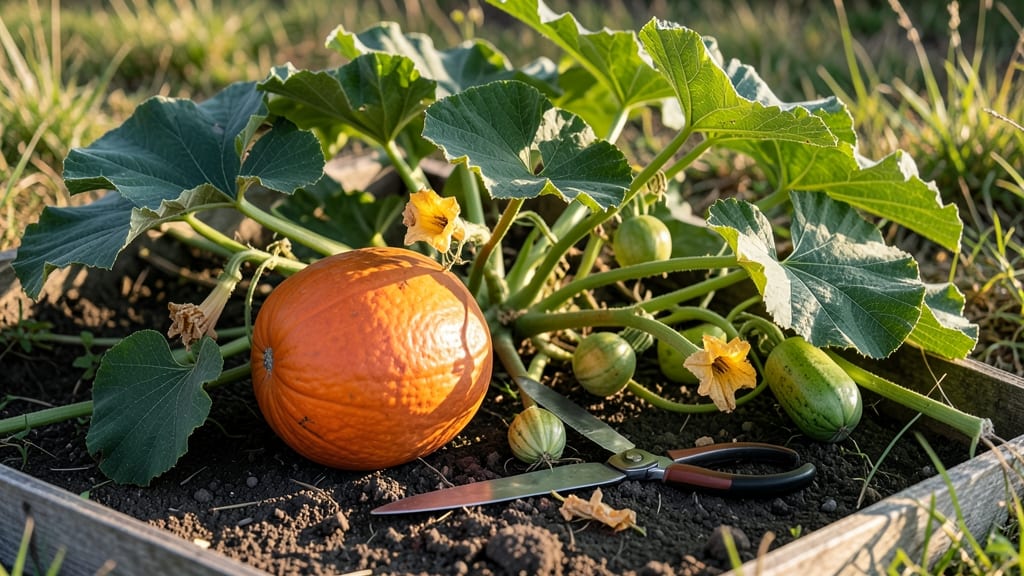
Winter squash relies on the vine for critical ripening processes that transform its starches into sugars and harden its rind. 🌱 Unlike tomatoes or peaches that continue ripening after harvest, winter squash depends on the plant's energy—once detached, its development halts.
I've found that varieties like butternut and kabocha benefit most from vine connection, as their natural sugars peak only when fully attached. The curing process after harvest (typically 7-10 days in warm, humid conditions) mimics these final ripening stages, intensifying flavor and shelf life.
Timing your harvest is key—wait until the stem dries and hardens, but before the skin softens. Overripe squash loses sweetness and spoils quickly, while underripe ones remain bland.
For best results, harvest on a dry morning when temperatures are mild, then let them cure in a well-ventilated space away from direct sunlight.
💡 In This Article
- Why Winter Squash Needs the Vine for Full Ripening
- Harvesting and Curing Winter Squash for Best Results
Why winter squash needs the vine for full ripening
Winter squash relies on its vine connection for a biological process called climacteric ripening, where ethylene gas—produced by the plant—triggers sugar conversion and cell wall breakdown.
Unlike climacteric fruits (like tomatoes) that ripen post-harvest, winter squash needs the vine's warmth (75-85°F) and nutrients to develop its signature sweetness. The vine supplies energy for starch-to-sugar conversion, which peaks only when fully attached.
This connection also hardens the rind through lignification, a process where cell walls thicken with lignin—a natural polymer. Without the vine, the rind stays soft and thin, making squash prone to bruising and spoilage.
For example, butternut squash develops its dense, fibrous skin only when vine-attached, while detached specimens remain tender and perish faster. The seeds also mature properly only with vine support, ensuring full flavor potential.
Think of it like baking bread—yeast (the vine) provides the energy for fermentation (ripening). Once removed, the dough (squash) stops rising, leaving it underdeveloped. 🌱 The curing process after harvest mimics the vine's final energy boost, but it can't fully replace the plant's role.
That's why cured squash tastes sweeter than freshly picked ones—it's completing the ripening cycle artificially.
Contrast this with summer squash (like zucchini), which ripens quickly and can be harvested young. Winter varieties need 90-120 days of vine growth to reach peak sweetness, with sugar content often doubling from vine attachment to harvest.
Varieties like acorn squash develop their nutty flavor only when fully ripened on the vine, while premature harvest yields bland, starchy results.
Here's what happens without the vine: sugar conversion stalls, the rind stays weak, and storage life drops from 3-6 months to just 2-4 weeks. The vine's role is irreplaceable—it's why professional growers monitor vine health as closely as fruit development.
Even after curing, vine-detached squash lacks the depth of flavor found in properly ripened specimens.
For home gardeners, this means patience is key. Harvesting too early (before the stem dries) locks in underripe qualities, while waiting too long risks overripening. The sweet spot? A firm squash with a hardened stem but no soft spots—proof the vine did its job.