
Vegetables
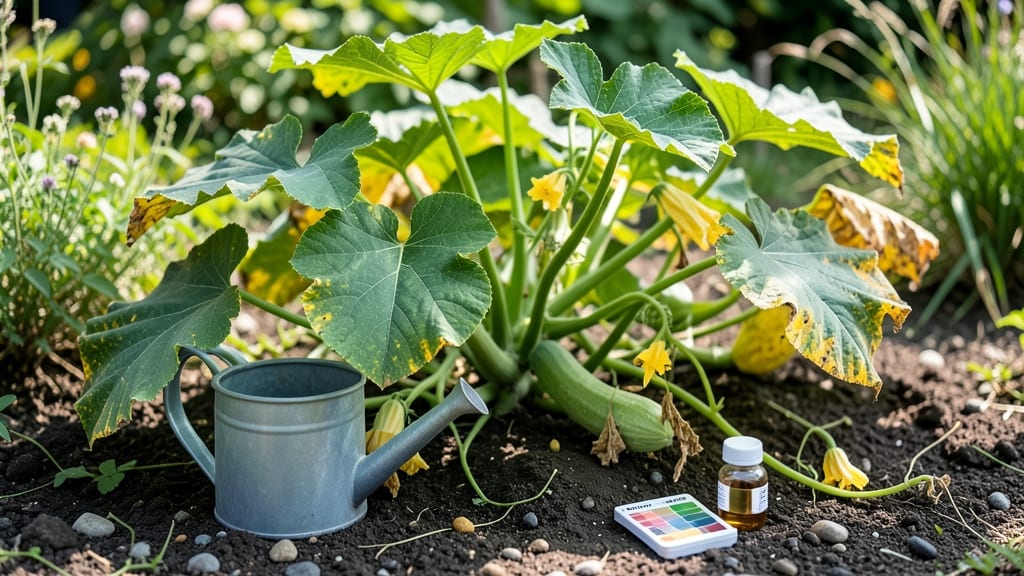
Your squash plants are screaming for help when leaves turn yellow—this is your SOS guide. 🌱 I’ve seen this happen after ignoring subtle signs, and the good news is most fixes take less than 30 minutes.
The key is spotting the why behind the yellow: is it thirsty roots, hungry soil, or something sneaking under the leaves?
Start by checking the undersides of leaves for pests like squash bugs or aphids (tiny, green, and sticky). Yellowing often begins at the edges if it’s overwatering or the wrong soil mix—squash loves well-draining, compost-rich dirt.
If the yellow spreads from the older leaves inward, it’s likely a nutrient deficiency (nitrogen, magnesium, or zinc).
Here’s the quick fix: trim the yellowed leaves to redirect energy, adjust watering (1–1.5 inches per week), and feed with a balanced fertilizer. For pests, blast them off with water or use neem oil.
Most plants bounce back in 2–3 weeks with the right care—no professional needed unless the vines wilt or rot sets in.
Prevent future drama by mulching (2–3 inches of straw) to retain moisture and rotating crops next season. Squash are heavy feeders, so side-dress with compost mid-season. Now go save those vines—your future zucchini depends on it!
Root Causes Of Yellowing Squash Leaves
Yellowing squash leaves aren’t just an aesthetic concern—they’re your plant’s way of signaling distress. Understanding the why behind the discoloration is the first step toward reviving your garden. Below, we break down the most common culprits, from environmental stressors to hidden pests, with clear explanations and actionable insights.
Squash plants thrive in well-drained soil, and when roots sit in soggy conditions, they suffocate. Yellowing leaves—especially those closest to the soil—often signal root rot, a fungal infection triggered by excess moisture. Here’s why it happens:
- Oxygen deprivation: Waterlogged soil blocks oxygen, forcing roots to "drown." Without oxygen, roots can’t absorb nutrients or water efficiently, leading to chlorosis (yellowing) as chlorophyll production halts.
- Fungal growth: Fungi like Phytophthora or Pythium thrive in wet conditions, attacking roots and cutting off nutrient flow. The plant compensates by shedding older leaves first.
- Nutrient leaching: Overwatering washes away essential nutrients (like nitrogen and potassium) from the root zone, starving the plant.
🔍 How to spot it: Check for mushy, dark roots or a foul odor near the base. Leaves may also feel limp or develop brown, water-soaked patches.
Yellowing leaves can also stem from a nutrient deficiency, particularly if the yellowing starts between leaf veins (interveinal chlorosis). Squash plants are heavy feeders, and imbalances in key nutrients disrupt their growth:
| Nutrient Deficiency | Yellowing Pattern | Why It Happens |
|---|---|---|
| Nitrogen (N) | Uniform yellowing across older leaves (starting at the base) | Nitrogen is critical for chlorophyll production. A deficiency slows photosynthesis, causing leaves to yellow and eventually die. Common in depleted or sandy soils. |
| Magnesium (Mg) | Yellowing between veins on older leaves (interveinal chlorosis) | Magnesium is central to chlorophyll. Poor soil structure, high soil pH, or excessive potassium can lock out magnesium, leading to yellow patches. |
| Iron (Fe) | Yellowing between veins on younger leaves (often with green veins) | Iron is immobile in plants, so new growth shows symptoms first. High pH (alkaline soil) or compacted soil binds iron, making it unavailable. |
💡 Pro Tip: Test your soil’s pH (ideal: 6.0–6.8 for squash). If it’s high, amend with sulfur or compost to lower pH and boost nutrient availability.
Pests and pathogens can drain a squash plant’s vitality, leading to yellowing as the plant diverts energy to defend itself. Common offenders include:
- Squash vine borers: These caterpillars burrow into stems, disrupting water and nutrient transport. Yellowing leaves above the infestation are a red flag.
- Aphids or spider mites: These sap-sucking pests weaken leaves by removing chlorophyll-rich fluids. Look for stippling (tiny yellow dots) or webbing on undersides.
- Powdery mildew: A fungal disease that coats leaves in a white, powdery film, blocking sunlight and causing yellowing. Common in humid, shaded conditions.
- Bacterial wilt: Spread by squash bugs, this disease clogs a plant’s vascular system. Leaves wilt and turn yellow rapidly, often with a foul smell.
🔍 How to spot it: Inspect leaves for holes, webbing, or unusual growths. Scrape off powdery mildew to check for yellowing beneath.
Squash plants are sensitive to extreme conditions, and sudden changes can trigger yellowing as a survival mechanism:
- Heat stress: Temperatures above 90°F (32°C) can scorch leaves, causing yellowing or browning edges. High heat also accelerates water loss, leading to nutrient imbalances.
- Cold damage: Frost or chilly nights (below 50°F/10°C) can shock squash plants, particularly young seedlings. Leaves may yellow and develop crispy edges.
- Sunburn: Intense afternoon sun (especially after transplanting) can bleach leaves. Look for yellow patches with green veins—classic sunburn symptoms.
- Wind or hail: Physical damage from storms can rupture cells, causing yellowing or browning as the plant repairs tissue.
🌡️ Pro Tip: Provide afternoon shade (using shade cloth) during heatwaves or mulch heavily to protect roots from temperature swings.
If you’ve recently repotted or transplanted your squash, yellowing leaves may signal root trauma. Here’s why:
- Root pruning: Disturbing roots (even gently) during transplanting severs fine root hairs, reducing water and nutrient uptake. The plant sheds leaves to conserve energy.
- Improper handling: Dropping or roughing up roots can bruise them, leading to localized rot or slowed growth.
- Shock response: Squash plants are sensitive to changes in their environment. Transplanting can trigger a temporary "pause" in growth, manifesting as yellowing.
⏰ Recovery Time: Most plants bounce back in 1–2 weeks if roots are healthy. Avoid fertilizing immediately—wait until new growth appears.
How to Fix Yellowing Squash Leaves
Now that you know the likely culprits behind your squash leaves turning yellow, let’s roll up our sleeves and get them back to their vibrant green! The good news? Most fixes are simple, cost-effective, and can be done with tools you likely already have.
Below, we’ll tackle each cause with a clear, step-by-step plan—plus pro tips to keep your squash thriving long-term.
Fix it:
- Check the soil moisture 💧: Stick your finger 1–2 inches into the soil. If it’s soggy (like a damp sponge), it’s time to pull back.
- Adjust your watering routine 🔄:
- Water deeply but less frequently—aim for 1–1.5 inches per week (including rain).
- Water at the base of the plant, not the leaves, to prevent fungal issues.
- Use a moisture meter or a simple DIY test: Grab a handful of soil; if it crumbles when dry, it’s time to water.
- Improve drainage 🏗️:
- If your pots lack drainage holes, add them or switch to a container with holes.
- Amend heavy or clay soil with perlite, sand, or compost to loosen it up.
- Elevate pots slightly (use bricks or saucers) to prevent water pooling.
Prevent it:
- Mulch around the base (2–3 inches of straw or shredded leaves) to retain moisture without overdoing it.
- Water in the morning so excess moisture evaporates during the day.
- Avoid shallow watering—focus on soaking the root zone.
Fix it:
- Give your squash a deep drink 💦:
- Water slowly and thoroughly until it seeps out the drainage holes (for pots) or 6–8 inches into the soil (for in-ground plants).
- For heatwaves, water twice a day—early morning and late evening.
- Provide shade relief 🌞:
- Use shade cloth (30–50%) if temps hit 90°F+ (32°C+).
- Plant near tall crops (like corn or sunflowers) for natural shade.
- Mist leaves lightly (if no fungal risk) to cool them down—early in the day only.
Prevent it:
- Group squash plants together to create a microclimate with shared moisture.
- Use drip irrigation or soaker hoses to deliver water directly to roots.
- Harvest fruits promptly—overripe squash saps energy, stressing the plant.
Fix it:
- Prune infected leaves ⚔️:
- Snip off yellow or spotted leaves with sterilized scissors (wipe with rubbing alcohol).
- Remove leaves 2–3 inches below the infection to prevent spread.
- Spray with fungicide 🛡️:
- Baking soda spray: Mix 1 tsp baking soda + 1 tbsp oil + 1 tsp mild soap per quart of water. Spray every 7–10 days.
- Neem oil (1 tsp per liter of water + a drop of dish soap) for a natural fungicide.
- Commercial fungicides (like copper or sulfur-based) for severe cases.
- Improve airflow 🌬️:
- Space plants 3–4 feet apart (or thin seedlings).
- Remove nearby weeds or overgrown plants blocking airflow.
Prevent it:
- Water at the base only—avoid wetting leaves.
- Rotate crops—don’t plant squash in the same spot next year.
- Choose resistant varieties (e.g., ‘Eight Ball’ or ‘Early Prolific Straightneck’ for mildew resistance).
Fix it:
- Handpick pests 👨🍳:
- Squash bugs: Flip leaves to find eggs (tiny, coppery clusters) and scrub them off with a stiff brush.
- Aphids: Blast them off with a strong stream of water or crush them with your fingers.
- Spray insecticidal soap 🧼:
- Mix 2.5 tbsp castile soap + 1 quart water or buy a pre-made solution.
- Spray directly on pests (avoid hot sun—it can burn leaves).
- Introduce beneficial insects 🐞:
- Ladybugs (eat aphids), lacewings (devour mites), or praying mantises (hunt squash bugs).
- Buy them online or attract them with dill or fennel plants nearby.
Prevent it:
- Use row covers (floating fabric) early in the season to block pests.
- Interplant with herbs like basil or marigolds to repel bugs.
- Inspect leaves daily—catch pests before they multiply!
Fix it:
- Test your soil 📊:
- Use a DIY soil test kit (available at garden centers) or send a sample to a local extension office.
- If deficient, amend with:
- Nitrogen (for yellowing lower leaves): Blood meal (1 tbsp per plant) or compost tea.
- Magnesium (for yellow between veins): Epsom salt (1 tbsp per gallon of water)—spray on leaves.
- Iron (for pale yellow leaves): Iron chelate or used coffee grounds (rich in iron).
- Fertilize properly 🌱:
- Use a balanced fertilizer (10-10-10) at planting, then switch to low-nitrogen (5-10-10) when fruits form.
- Avoid over-fertilizing—yellow leaves can also signal fertilizer burn!
Prevent it:
- Add compost (2–3 inches) to the soil before planting.
- Use slow-release fertilizers to avoid spikes in nutrients.
- Rotate crops to prevent nutrient depletion.
Fix it:
- Protect from cold ❄️:
- Cover plants with frost blankets if temps dip below 50°F (10°C).
- Move potted squash to a sheltered spot (like a garage or sunroom) overnight.
- Beat the heat 🔥:
- Mulch heavily (4–6 inches of straw) to keep roots cool.
- Provide afternoon shade with a breathable shade cloth.
- Harvest frequently to reduce plant stress.
Prevent it:
- Plant at the right time—wait until soil temps are 60°F+ (15°C+).
- Choose heat-tolerant varieties like ‘Cocozelle’ or ‘Straightneck’.
- Yellow leaves on older growth? It’s often normal aging—prune them to redirect energy.
- Yellow leaves with brown edges? Likely salt buildup—flush soil with water or switch to rainwater.
- Prevent future issues by monitoring plants weekly and acting fast!
With these fixes, your squash should bounce back in 7–14 days. Keep an eye on them, adjust as needed, and soon you’ll be harvesting plump, vibrant squash instead of yellowing leaves! 🎉🍉
Frequently asked questions about yellowing squash leaves
Why do my squash leaves turn yellow first on the edges?
Edge yellowing usually signals overwatering or salt buildup from tap water. Check if the soil stays soggy for more than 24 hours after watering. For containers, flush the soil with water to remove excess salts. If the edges feel crispy, it’s a classic sign of too much moisture or poor drainage.
Can I still harvest squash if the leaves are yellow?
Yes! Yellow leaves won’t ruin your harvest unless the vines wilt or fruit starts rotting. Focus on removing only the most damaged leaves to redirect energy. If the plant looks otherwise healthy, continue harvesting as usual—yellow leaves often just mean the plant is redirecting nutrients to the fruit.
How do I tell if yellowing is from pests vs. disease?
Check the undersides of leaves—pests like aphids or spider mites leave sticky residue or tiny webs. Diseases (e.g., powdery mildew) show white powder or brown spots. If you see holes in stems, it’s likely squash vine borers. Always inspect both sides of leaves and stems for clues.
Is Epsom salt safe for squash plants with yellow leaves?
Yes, but only if the yellowing is caused by a magnesium deficiency (yellow between veins on older leaves). Mix 1 tablespoon per gallon of water and spray on leaves weekly. Avoid overusing it—too much magnesium can disrupt other nutrients. Test soil first if unsure about deficiencies.
My squash leaves turn yellow after transplanting—is this normal?
Transplant shock is common! Yellowing usually fades within 1–2 weeks if roots aren’t damaged. Water deeply but less frequently and avoid fertilizing until new growth appears. If yellowing persists beyond 3 weeks, check for root rot or poor drainage.