
Planting
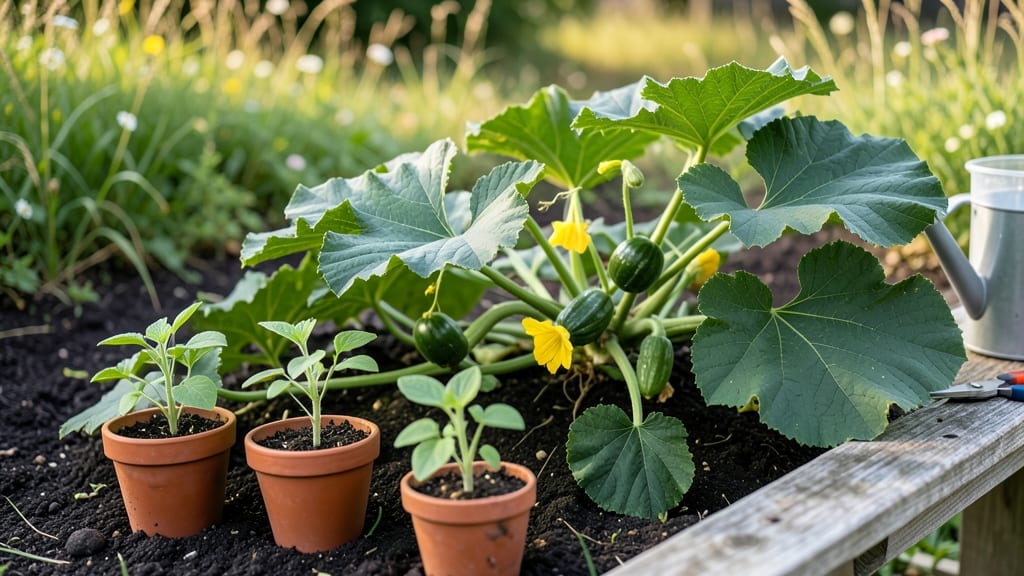
To plant fall squash successfully, aim for 4-6 weeks before your first frost—this timing ensures your 🎃 vines mature before cold sets in.
Timing your fall squash planting perfectly can mean the difference between a bountiful harvest and wasted effort—get it wrong, and frost will ruin your crop before it even ripens.
In USDA Zone 6a, that window typically falls between mid-August and early September, but soil temperature is just as critical as the calendar. Too cold, and seeds won’t germinate; too late, and your squash won’t reach full size before frost.
Below, I break down the exact soil temps to watch for, how to adjust for your local frost date, and the 3 key steps that separate a great harvest from a disappointing one.
Optimal soil temperature and planting windows for fall squash
Fall squash varieties like butternut, acorn, and pumpkins demand precise soil temperatures to thrive. For germination, aim for 60-90°F—any cooler, and seeds may rot or fail to sprout.
Once sprouted, 55-75°F keeps vines growing strong. Cold soil slows growth, while heat above 85°F can stress young plants. Understanding these thresholds ensures your squash matures before frost strikes.
Testing soil temperature is simpler than you think. A soil thermometer (available for $10-$20 at garden centers) gives instant readings. Insert it 2-3 inches deep, where roots form, and check early morning when temps are lowest.
If your soil runs below 60°F, pre-warm it with black plastic mulch or a cold frame for 1-2 weeks before planting.
Regional planting windows vary dramatically. In USDA Zones 3-5, start seeds indoors 4-6 weeks before last frost, then transplant after soil hits 65°F. Zones 6-8 can direct-sow late May to early July, while Zones 9-10 may plant August-September for fall harvests.
Short-season varieties (75-day squash) need earlier starts, while 100-day types can wait until June in cooler climates.
| USDA Zone | Ideal Planting Window | Soil Temp Requirement | Notes |
|---|---|---|---|
| 3-5 | Late May - Early July | 65-75°F (for transplant) | Start indoors 4-6 weeks before last frost |
| 6-7 | June - Mid-July | 60-70°F (direct sow) | Use row covers for early starts |
| 8-9 | July - Early August | 55-65°F (fall planting) | Choose fast-maturing varieties |
| 10+ | August - September | 50-60°F (cool-season tolerant) | Extend season with shade cloth |
Short-season varieties like ‘Early Prolific Straightneck’ (75 days) can handle cooler soils, while ‘Waltham Butternut’ (100 days) needs warmer conditions. If your soil stays below 60°F for weeks, opt for fast-maturing types or use black plastic mulch to raise temps by 5-10°F.
Always check seed packets for days to maturity—this dictates your planting deadline.
Watch for slow germination or yellowing leaves, signs of improper soil temps. Seeds planted in cold soil (<55°F) may rot, while overly hot soil (>90°F) can stunt growth. If seedlings emerge weak, thin to 2-3 feet apart and mulch with straw to stabilize soil temps.
Adjust your planting schedule based on real-time soil checks, not just calendar dates.
For northern climates, consider succession planting every 2 weeks in June-July to stagger harvests. In southern zones, plant late summer for fall harvests, using shade cloth if temps exceed 85°F.
Always account for first frost dates—subtract maturity days from your local frost date to calculate the last safe planting window.
Pro tip: Use burlap sacks filled with compost to create micro-heated soil pockets if your garden stays cool. Place them near planting areas 1 week before sowing to warm the soil naturally.
Pair this with drip irrigation to maintain consistent moisture—squash roots need deep, even water to avoid bitter fruit.
Remember, soil temperature matters more than air temperature. A 70°F day with 50°F soil will fail your squash, while a 60°F day with 65°F soil is ideal. Invest in a soil thermometer—it’s the #1 tool for fall squash success.
With the right temps and timing, you’ll harvest plump, sweet squash long after summer crops fade.
Calculating frost dates and safe planting deadlines
Determining the perfect planting window for fall squash hinges on one critical factor: frost dates. Unlike spring planting, where you work with the last frost, fall squash requires precise frost-free day calculations to ensure your crop matures before winter arrives.
A single late frost can turn a promising harvest into a sad, mushy disappointment—so let’s break down how to get this timing right every time.
Start by locating your average first frost date for your region. This isn’t just about the calendar—microclimates, elevation, and even urban heat islands can shift frost dates by weeks. For example, a valley might frost 2 weeks earlier than a nearby hilltop.
Use resources like the USDA Plant Hardiness Zone Map or your local Cooperative Extension Service for the most accurate data. Once you have this date, count backward from the harvest-ready stage of your squash variety.
- ❌ Myth: "I can plant 100 days before frost." ➡️ Reality: Squash needs 75-120 frost-free days to mature—always add a 10-day buffer for unexpected cold snaps.
- ❌ Myth: "My neighbor’s frost date works for me." ➡️ Reality: Check your specific microclimate—urban areas, slopes, and bodies of water all affect frost timing.
- ❌ Myth: "Seed packets list days to maturity—I don’t need frost dates." ➡️ Reality: Those days assume ideal conditions; frost shortens the season dramatically.
- ❌ Myth: "Row covers protect squash from frost." ➡️ Reality: While covers help, they’re no substitute for proper timing—frost can still damage tender vines.
- ❌ Myth: "All squash varieties mature in the same time." ➡️ Reality: Butternut squash (80-100 days) and acorn squash (75-90 days) have different needs—always match your variety to your frost-free window.
Here’s the step-by-step method I use to calculate safe planting deadlines: First, identify your first frost date. Then, subtract the maturity days of your squash variety. For example, if your first frost is October 15 and you’re growing butternut squash (90 days to harvest), plant by July 5.
But don’t stop there—subtract another 10-14 days as a safety net. This accounts for unpredictable weather or slower growth due to cooler fall temperatures.
For short-season varieties like acorn squash (75 days), you have more flexibility, but timing is still critical. Plant these 4-6 weeks before your first frost to ensure they reach maturity.
If you’re in a Zone 5 or colder, consider fast-maturing varieties or starting seeds indoors to extend your growing window. I’ve had success with ‘Early Butternut’, which matures in just 80 days, giving me a longer harvest window in cooler climates.
Adjusting for microclimates can save your harvest. A south-facing slope might stay frost-free 2 weeks longer than your average, while a low-lying area could frost earlier. Observe your garden over a few years to spot patterns—note where frost settles first and where warmth lingers.
If you’re unsure, err on the side of earlier planting and use row covers to protect young plants if frost threatens.
Finally, don’t overlook backup strategies for late frosts. Cold-hardy varieties like ‘Waltham Butternut’ tolerate cooler temps better than others, and row covers can extend the season by 2-3 weeks.
I’ve also had luck with succession planting: Sow a second batch of seeds 3-4 weeks after the first to stagger harvests and reduce frost risk. With these methods, you’ll maximize your chances of a bountiful fall squash harvest, no matter what Mother Nature throws your way. 🍂