
Fertilization
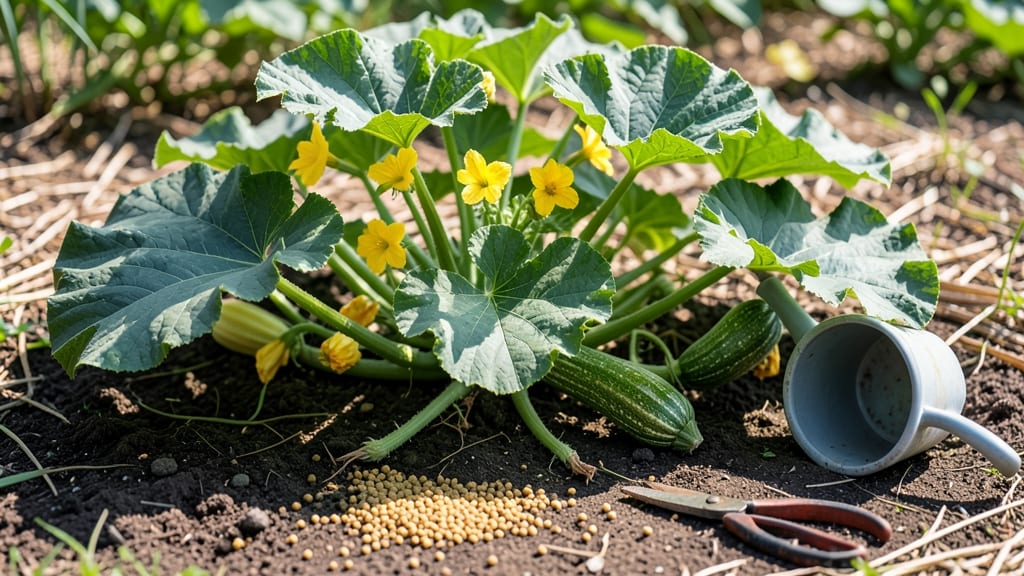
To fertilize squash at the right times means feeding your plants 🎃 when they need it most—not too early, not too late.
Timing your squash fertilization perfectly can mean the difference between a thriving vine and a disappointing harvest—here’s exactly when to feed your plants for maximum yield.
Start with a soil test before planting to check nutrient levels, then apply a balanced fertilizer when the first true leaves appear. This early boost sets the stage for strong growth, but too much nitrogen now can stunt flowering.
After that, focus on three key stages: a light feed when vines begin sprawling, a mid-season boost during flowering, and a final dose when fruit starts swelling. Stop feeding by late summer to avoid late-season growth that won’t ripen before frost.
Pre-planting fertilization: soil prep for squash success
Squash plants thrive when their soil is nutrient-rich before seeds even sprout. Pre-planting fertilization sets the stage for healthy vines and abundant harvests. Unlike fast-growing greens, squash needs balanced nutrients from day one to support their sprawling growth habit.
Skipping this step often leads to stunted plants or poor fruit development.
Start by testing your soil pH—squash prefers a range of 6.0 to 7.0. Most garden soils fall short of the phosphorus and potassium squash craves, so amending before planting is critical.
Whether you choose organic matter or synthetic blends, timing and method matter just as much as the nutrients themselves.
🌱
| Soil Prep Step | When to Do It | Materials Needed | Squash Benefit |
|---|---|---|---|
| Test soil pH | 4-6 weeks before planting | pH test kit, lime (if needed) | Ensures optimal nutrient uptake |
| Add compost | 4-6 weeks before planting | Well-aged compost (2-4 inches) | Boosts organic matter and microbes |
| Apply balanced fertilizer | 2-3 weeks before planting | 10-10-10 or 5-10-10 NPK | Provides phosphorus for root growth |
| Work in bone meal | 2 weeks before planting | 1-2 tbsp per sq ft | Adds phosphorus for early vigor |
| Mulch planting area | After soil prep, before seeds | Straw or shredded leaves | Retains moisture and regulates temp |
For organic gardeners, focus on compost and manure-based fertilizers like aged cow or chicken manure. These provide slow-release nutrients that mirror natural soil ecosystems. Work in 2-4 inches of compost 4-6 weeks before planting to give microbes time to break it down.
Add a handful of kelp meal for trace minerals that squash loves but often lacks.
Synthetic fertilizers like 10-10-10 or 5-10-10 offer precise nutrient ratios but require careful application. Apply half the recommended rate 2-3 weeks before planting to avoid nutrient burn. Mix granules into the top 6 inches of soil where roots will develop.
If your soil tests low in phosphorus (the middle number), boost it with bone meal—this nutrient is crucial for root and vine development.
💧
One common mistake is overdoing nitrogen-heavy fertilizers before planting. While nitrogen fuels leafy growth, too much early on can lead to weak stems that struggle to support heavy squash fruits.
Instead, prioritize phosphorus (for roots) and potassium (for disease resistance). A 5-10-10 ratio works well for pre-planting because it balances these needs without overwhelming young plants.
Container growers should prep their potting mix differently. Use a high-quality vegetable mix and amend with worm castings or fish emulsion before planting. Since containers dry out faster, add water-holding crystals to prevent nutrient loss during irrigation.
For every 5 gallons of mix, add 1 cup compost and 1 tbsp bone meal to give squash a nutrient head start.
After amending your soil, let it settle for 1-2 weeks before planting. This gives nutrients time to integrate naturally. Water the area lightly during this period to help microbes activate.
When you're ready to plant, your squash will find rich, fertile soil waiting—exactly what they need to launch into vigorous growth from day one.
🌿
3 Critical growth stages for squash fertilization (with timing)
Squash plants are heavy feeders, and feeding them at the right time ensures strong vines, abundant flowers, and heavy fruit production. Unlike many vegetables, squash responds best to a balanced fertilization schedule tied to its growth phases.
Missing these key stages can lead to stunted plants or poor yields—even if your soil looks rich. Let’s break down when and how to fertilize for maximum success.
Most gardeners make the mistake of fertilizing once at planting and calling it a day. But squash has three distinct nutritional needs: early vine growth, flowering, and fruiting. Each stage requires different nutrients to support the plant’s shifting priorities.
For example, too much nitrogen during fruiting will push leafy growth at the expense of your harvest. The secret? Timed applications with the right nutrient ratios.
-
1
Early Vine Growth (2-4 Weeks After Germination)
Apply a light nitrogen boost (10-10-10 or compost tea) to encourage leafy growth. Look for dark green leaves and rapid vine expansion. -
2
Flowering Stage (4-6 Weeks After Planting)
Switch to a balanced or phosphorus-rich fertilizer (5-10-10) to support bloom production. Watch for yellowing leaves—a sign of nitrogen deficiency. -
3
Fruiting Stage (6-8 Weeks After Planting)
Use a potassium-heavy fertilizer (10-10-20) to boost fruit development. Wilting or cracked squash may signal calcium or water stress—address immediately.
Here’s a pro tip: Always fertilize in the morning to avoid burning tender roots and give nutrients time to absorb before evening heat. I’ve seen squash plants wilt dramatically after afternoon feeding—don’t let that be you!
For organic gardeners, compost or worm castings work wonders, especially during flowering when squash needs phosphorus for root and fruit development.
How do you know if your squash needs extra nutrients? Watch for these red flags: slow vine growth, pale leaves, or small, deformed fruit.
These are your plant’s way of saying, “Feed me now!” On the flip side, dark green leaves with no flowers mean too much nitrogen—cut back immediately. The goal is harmony: enough nutrients to fuel growth without overwhelming the plant.
For container-grown squash, reduce fertilizer amounts by half since roots are confined. In-ground plants can handle the full dose, but always water thoroughly after fertilizing to prevent root burn.
I’ve had the best luck with a slow-release organic fertilizer like bone meal (for phosphorus) mixed into the soil at planting, followed by liquid feeds during critical stages.
Remember: Stop fertilizing 4-6 weeks before your first frost. Squash plants need time to mature their fruit, and late-season feeding can lead to tender growth that won’t survive cold snaps. Mark your calendar now—your future harvest depends on it! 🎃