
Companion Plants
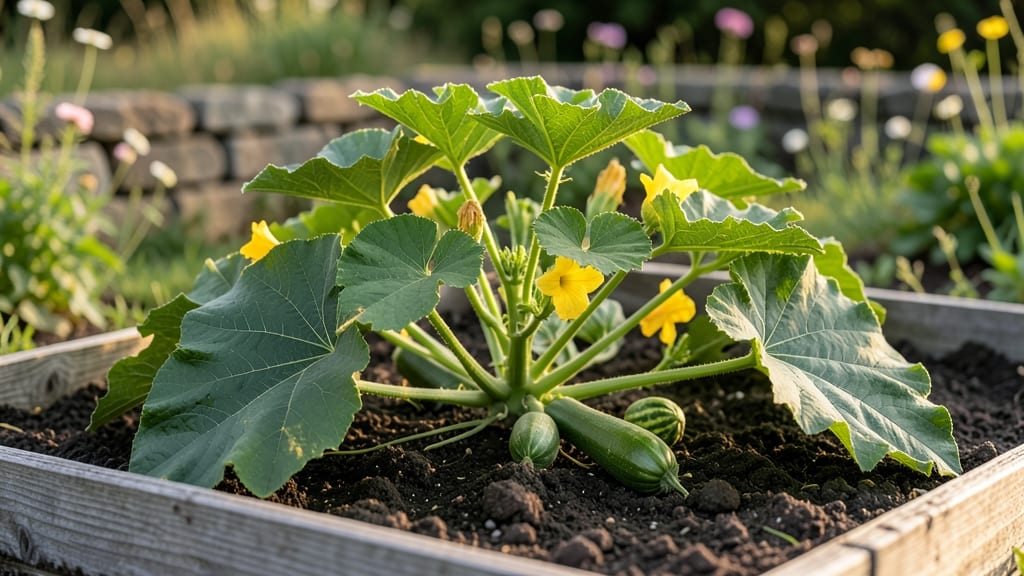
Summer squash plants stand out with their distinctive leaf shapes—think of large, hand-shaped leaves with deep indentations and serrated edges that catch sunlight beautifully. 🌿 The vines spread aggressively, often reaching up to 6 feet in length, while the stems feel rough to the touch due to their coarse, hairy texture.
Unlike their winter squash cousins, these plants grow quickly, producing flowers within weeks that transition into edible squash. The bright blossoms are another key identifier, often appearing in cheerful yellow or pale green hues.
What's interesting is how these plants adapt to their environment. Bush varieties stay more compact, while trailing types spread wider, which affects how you plan your garden layout.
The rapid growth is a double-edged sword—it means you'll see squash forming quickly, but it also requires consistent care to keep the plants healthy and productive.
If you're comparing them to zucchini, the main differences lie in the leaf structure and vine density. Summer squash varieties like yellow crookneck tend to have slightly more delicate leaves and less dense foliage, making them easier to spot among other garden plants.
The flowers also serve as a great early indicator—while zucchini flowers are typically more robust, summer squash blossoms are often more delicate and abundant.
💡 In This Article
- Identifying Summer Squash Leaves, Stems, and Growth Habits
- Summer Squash Plant vs. Zucchini: Key Visual Differences
Identifying summer squash leaves, stems, and growth habits
The leaves of summer squash plants are one of their most distinctive features, resembling oversized maple leaves with deep lobes and jagged, serrated edges. Each leaf typically measures 6-12 inches wide, with 3-5 prominent lobes that create a hand-like shape when viewed from above.
The edges aren't just serrated—they have small, sharp teeth that catch light differently than smooth-edged leaves, making them stand out in garden beds.
The stems are another key identifier, covered in coarse, bristly hairs that give them a rough texture you can feel when running your fingers along them. These stems are also ridged, with noticeable grooves that help channel water efficiently.
The vines themselves grow aggressively, reaching 3-6 feet in length, and can be either trailing or bush-type depending on the variety. Trailing types spread horizontally, while bush varieties stay more compact, which affects how you'll need to support or space them in your garden.
What makes summer squash plants unique is their rapid growth cycle. From seed to first harvest, these plants can produce edible squash in as little as 45-55 days, a stark contrast to winter squash varieties that take months to mature.
The bright yellow or pale green flowers appear early in the season, often within 3-4 weeks of planting, and serve as a clear visual marker that you're looking at a summer squash plant rather than something else.
One fascinating detail is how the leaf structure changes as the plant matures. Young leaves start smaller and more rounded, but as the plant grows, they develop those signature deep lobes and serrations. This gradual transformation is a great way to track the plant's progress.
The coarse hairs on the stems also become more pronounced as the plant ages, making mature plants instantly recognizable to experienced gardeners.
The growth habit of summer squash plants is also influenced by their genetic makeup. Varieties like yellow crookneck tend to have more delicate leaves and longer vines, while straightneck types may have slightly broader leaves.
This variation means you can often identify specific types just by observing the leaf shape and vine structure before any fruit even appears.
When comparing summer squash to winter squash, the leaves are the most telling feature. Winter squash leaves are typically smoother with fewer lobes, and their plants have a more upright growth habit.
The coarse, hairy stems of summer squash are another dead giveaway—they're far rougher to the touch than the smoother stems of winter varieties.