
Blooming
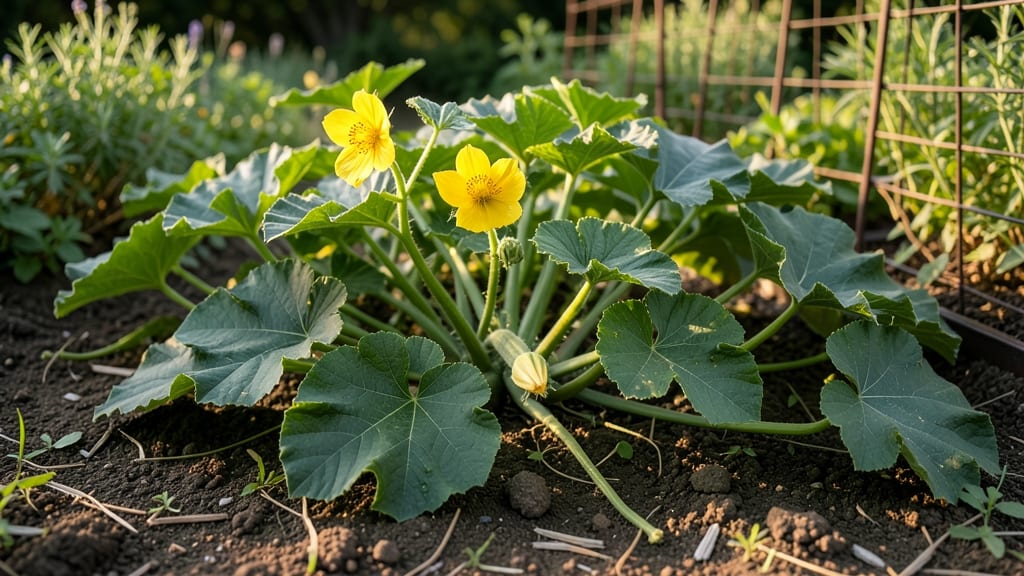
To distinguish male and female squash blossoms, look at their base: male flowers grow on long, slender stems without any swelling, while female flowers develop a small squash at the blossom's base before opening. This visual difference is your key identifier.
Understanding these differences is crucial for gardeners who want to maximize fruit production or harvest blossoms for cooking. 🌱 Male flowers focus solely on pollination, with their pollen-heavy stamens, while female flowers carry the ovary that will develop into the squash.
The tiny fruit bump at the base of female blossoms is actually the early-stage squash forming—this is your telltale sign when picking flowers for dishes like squash blossom fritters.
Here's a pro tip: harvest female blossoms in the morning when they're freshest, but leave some males to ensure proper pollination. The male flowers tend to open earlier in the day, making them easier to spot for pollination purposes.
This gender distinction isn't just academic—it directly impacts your garden's yield and what you can cook with!
💡 In This Article
- Anatomy of Squash Blossoms: Male vs Female Flower Structure
- When and How to Harvest Squash Flowers for Pollination or Cooking
Anatomy of squash blossoms: male vs female flower structure
The most striking difference between male and female squash blossoms lies in their reproductive anatomy. Male flowers develop on long, slender stems—typically 1-2 inches in length—with no visible swelling at the base.
These stems are often 1/8-inch thick and bear only the flower's reproductive male parts: five stamens topped with bright yellow pollen sacs. The petals themselves are usually 2-3 inches wide and trumpet-shaped, with a delicate, almost papery texture that makes them perfect for fritters or tempura.
Female flowers, on the other hand, reveal their purpose through a tiny, marble-sized swelling at the blossom's base—this is the ovary, which will eventually develop into the squash fruit.
The stem connecting female flowers is usually shorter (about 1/2-inch) and slightly thicker (1/4-inch diameter) than male stems, giving it a more robust appearance.
The petals are slightly larger (3-4 inches wide) and often have a slightly more robust structure, reflecting the energy needed to support both pollination and fruit development. 🌿
What makes this identification even clearer is the pollen production cycle. Male flowers open early in the morning (around 7-8 AM) with fully exposed stamens, releasing pollen that bees carry to female flowers.
Female flowers typically open later in the day (around 10 AM) and remain open for 12-18 hours, giving pollinators ample time to transfer pollen to their ovaries.
This timing difference explains why you'll often see more male flowers in the early morning and female flowers persisting into the afternoon.
Another subtle but important distinction is the scent profile. Male flowers tend to have a more pronounced, slightly sweet aroma that attracts pollinators, while female flowers often emit a milder, more earthy scent—likely an evolutionary adaptation to signal their readiness for pollination without competing with the males.
This sensory difference can be helpful when harvesting: if you're looking for flowers with the most delicate flavor for cooking, male blossoms generally have a cleaner taste profile due to their lack of developing fruit tissue.
For gardeners, understanding these anatomical differences is crucial for maximizing fruit production. Each female flower can develop into a squash, but they require successful pollination from male flowers.
A healthy squash vine typically produces 3-5 male flowers for every female flower, which is why removing excess male flowers can actually reduce fruit yield. The key is maintaining balance—enough males to pollinate all females, but not so many that they overwhelm the plant's resources. 🌱
When examining blossoms closely, you might also notice that female flowers often have slightly darker green stems compared to the lighter green of male stems. This color difference is due to the increased vascular activity supporting the developing ovary.
The petals of female flowers may also appear slightly thicker and more leathery, another adaptation to support fruit development. These subtle visual cues become more apparent when comparing freshly opened blossoms side by side.