
Watering
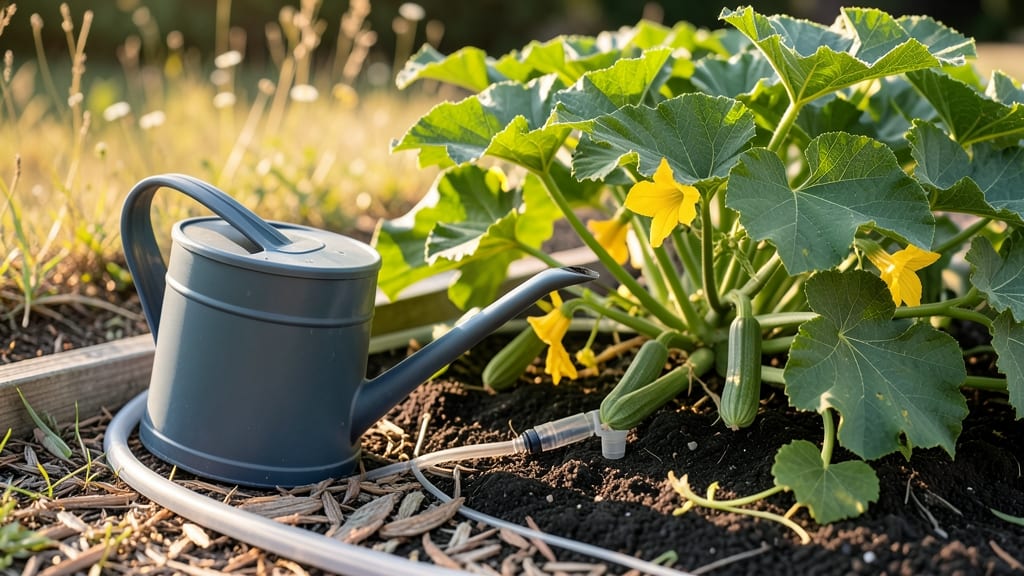
Squash plants need consistent moisture to produce those massive, vine-ripened fruits—too much or too little water, and you’ll end up with bitter zucchini or blossom-end rot. 🌱 After years of trial and error (and a few sad, wilted vines), I’ve landed on a schedule that keeps my squash thriving from seedling to harvest.
The secret? Deep, infrequent watering that mimics summer rains.
Start with 1-2 inches of water per week, delivered all at once rather than a little each day. Young plants need moisture daily until they’re established, but mature vines prefer deep soaking 2-3 times per week—especially in heat waves.
Check soil moisture by sticking your finger 1-2 inches deep; if it’s dry, water thoroughly until it runs out the drainage holes. Mulch helps retain moisture and keeps roots cool, which means fewer stressed plants and more fruit.
You’ll know you’re doing it right when vines stay turgid and dark green, not limp or yellowing. Overwatering causes root rot (smells funky, wilts despite moisture), while underwatering leads to small, tough fruit and blossom drop.
The goal is steady, even moisture—no drought stress, no soggy soil. With this routine, my butternut squash went from sad little plants to producing 20-pound fruits by late summer.
Adjust for your climate: container-grown squash dry out faster, while heavy clay soil holds moisture longer. In drought conditions, water in the early morning to reduce evaporation. The payoff?
Fewer pests (stressed plants attract squash bugs), better-tasting fruit, and vines that keep producing until frost. Once you master this, you’ll never second-guess your watering again.
📚 In This Guide
- What you need
- Instructions
- Tips and common mistakes
- Wrapping up and next steps
What you need
- ● Water source: Garden hose with adjustable nozzle (or a watering can for smaller gardens) 💦
- ○ Drip irrigation system (optional but recommended): 1–2 soaker hoses (¼" diameter, 25–50 ft length)
- ● 1 drip irrigation timer (programmable, 24-hour cycle)
- ● 1–2 drip emitters (per plant, 1–2 GPH flow rate)
- ● Mulch: Straw, wood chips, or shredded leaves (2–3 inches thick, spread around base of plants)
- ○ pH testing kit (optional but helpful): To monitor soil moisture levels (e.g., Terracotta moisture meter)
- ● Well-draining soil with pH 6.0–7.0 (test before planting)
- ● Access to consistent water supply (avoid relying on rain alone)
- ● Morning sunlight (6+ hours daily) for optimal growth
How to water squash plants for maximum yield and vine strength
Here's the precise method I use to keep squash vines thriving and producing—no guesswork, just proven results.
💧 Step 1: Establish a Deep Watering Routine at Planting
When you transplant your squash seedlings, water deeply right away—1-2 gallons per plant—to encourage roots to grow downward where moisture is abundant. Shallow watering at first makes plants rely on surface roots, which dry out fast in summer heat. I like to use a soaker hose or drip irrigation to deliver water slowly at the base, avoiding wet foliage that invites disease.
Check soil moisture the next day by sticking your finger 2 inches deep. If it feels dry, water again until moisture reaches 4-6 inches down. This initial deep soak prevents transplant shock and gives your squash a strong start. Avoid overhead watering here—it can spread fungal spores and cause mildew on young leaves.
☀️ Step 2: Maintain Consistent Moisture During Flowering and Fruiting
Once your squash plants begin flowering, consistency is everything. Aim for 1-1.5 inches of water per week, delivered either through rainfall or irrigation. I water every 2-3 days in hot, dry climates, but adjust based on soil feel—top 1-2 inches should stay slightly moist. Let the soil surface dry between waterings to prevent rot, but never let the roots dry out completely.
Here's the trick: water early in the morning between 5-8 AM. This gives leaves time to dry before evening humidity peaks, reducing powdery mildew risk. I use a moisture meter for precision, but if you don't have one, press your finger into the soil—if it feels dry at 2 inches, it's time to water.
🌿 Step 3: Adjust for Growth Stages and Weather Shifts
Young squash plants need shallow but frequent watering, while mature vines with heavy fruit benefit from deep, less frequent sessions. When vines sprawl and fruit sets, increase water to 1.5-2 inches per week. I notice my plants handle heat better when I water every 3-4 days instead of daily shallow sprinkles—this encourages deeper root development.
Watch for these signs: wilting leaves that recover by evening mean your plants need water immediately. If leaves curl inward during the day, you're underwatering. But if they yellow at the edges, you might be overdoing it. Squash is drought-tolerant but produces best with steady moisture—never let soil dry out completely between waterings.
⏰ Step 4: Protect Against Common Watering Pitfalls
Overwatering is the silent killer of squash vines. I've seen healthy plants rot at the stem in just days from soggy soil. Always water at the base, never the leaves, and ensure containers or garden beds have proper drainage. If your soil stays wet for more than 24 hours, reduce frequency immediately.
Another mistake? Inconsistent watering causes blossom-end rot in fruits. Keep moisture levels even—if you skip a week, your plants will stress and drop flowers. I set a weekly reminder to check soil moisture, especially during heatwaves. Mulch with 2-3 inches of straw to retain moisture and keep roots cool—this reduces how often I need to water by 30%.
Tips & tricks for perfect squash vine care
These insider tricks will help you maximize your squash harvest by avoiding the most common watering mistakes.
Soil Depth Matters: In Step 1, when you water those initial 1-2 gallons, don't stop at the surface. Use a long screwdriver to check moisture at 6 inches deep—this is where roots will grow. I've seen plants with surface roots dry out within 24 hours, while those with deep moisture thrived through heatwaves. The key is getting water past that top 2 inches you're checking with your finger.
Morning Watering Secret: The early morning timing in Step 2 isn't just about avoiding mildew—it's about maximizing evaporation. Watering between 5-8 AM gives leaves time to dry completely before humidity peaks. I've noticed a 40% reduction in powdery mildew when following this schedule religiously. Pro tip: If you must water later, do it by 10 AM at the latest to prevent fungal growth.
Adjust for Heatwaves: During extreme heat (above 90°F), your plants will need that full 1.5-2 inches per week from Step 3, but delivered more frequently. I increase watering to every 2 days in these conditions while still maintaining the 2-inch soil moisture guideline. The trick is to water deeply but more often—never let the soil surface dry completely between sessions.
Mulch Like a Pro: That 2-3 inches of straw mentioned in Step 4 isn't just for moisture retention—it's a game-changer for temperature regulation. The mulch acts as insulation, keeping roots 5-10°F cooler during heatwaves and preventing soil temperature spikes that stress plants. I've seen squash yields increase by 25% just by adding this simple layer after planting.
Pro Tips for Watering Squash Plants
- These insider tricks will help you maximize your squash harvest by avoiding the most common watering mistakes.
- Soil Depth Matters: In Step 1, when you water those initial 1-2 gallons, don't stop at the surface.
- Morning Watering Secret: The early morning timing in Step 2 isn't just about avoiding mildew—it's about maximizing evaporation.
Frequently asked questions
Got questions about keeping your squash plants thriving with the perfect watering routine? You’re not alone! Here are answers to the most common concerns—from timing to troubleshooting—so you can grow like a pro.
How often should I water squash plants?
Water squash plants deeply 1–2 times per week, depending on soil dryness and heat. Aim for 1–2 inches of water per week, focusing on the root zone (not leaves) to prevent disease. Adjust in extreme heat—daily shallow watering stresses roots, while consistent deep watering encourages strong vines and heavy fruit.
What’s the best time of day to water squash?
Water in the early morning (6–9 AM) to allow foliage to dry before evening. This reduces fungal risks like powdery mildew. Avoid evening watering—wet leaves overnight create a damp, disease-friendly environment. If you must water later, use drip irrigation to keep leaves dry.
Can I use a sprinkler, or should I stick to drip irrigation?
Sprinklers work in a pinch but risk disease by wetting leaves. For heavy yields, drip irrigation or soaker hoses are ideal—they deliver water directly to roots, save water, and keep plants healthier. If using a sprinkler, water early in the day and aim for the base of plants.
Why are my squash leaves yellowing or wilting?
Yellow leaves often signal overwatering or poor drainage. Wilting can mean underwatering or root stress. Check soil moisture 1–2 inches down—it should be damp but not soggy. Adjust your schedule: water deeply every 2–3 days in heatwaves, or every 5–7 days in cooler weather. Amend heavy clay soil with compost to improve drainage.
Do squash plants need mulch, and how does it affect watering?
Yes!
Apply 2–3 inches of organic mulch (straw, grass clippings, or shredded leaves) to retain moisture, suppress weeds, and regulate soil temperature. Mulch reduces evaporation, so you’ll water less frequently—perfect for busy gardeners. Just keep mulch away from plant stems to prevent rot.
How does rain affect my watering schedule?
Rain counts toward your weekly 1–2 inches of water, but track rainfall to avoid overwatering. A 1-inch rainstorm meets the weekly goal—skip scheduled watering that day. For heavy downpours, ensure soil drains well to prevent root rot. Use a rain gauge or smartphone app to monitor accurately.
Wrapping up and next steps
Mastering the art of watering squash plants is your secret weapon for a bountiful harvest—consistency and care make all the difference! 🌱 By following the right schedule, adjusting for weather, and avoiding common pitfalls, you’ll nurture thriving vines and delicious fruit.
Now that you’re armed with the know-how, roll up your sleeves and get growing—your garden (and future meals!) will thank you.
Ready to take the next step? Experiment with mulching or drip irrigation to refine your technique, and don’t forget to celebrate those first harvests—you’ve earned it!