
Picking
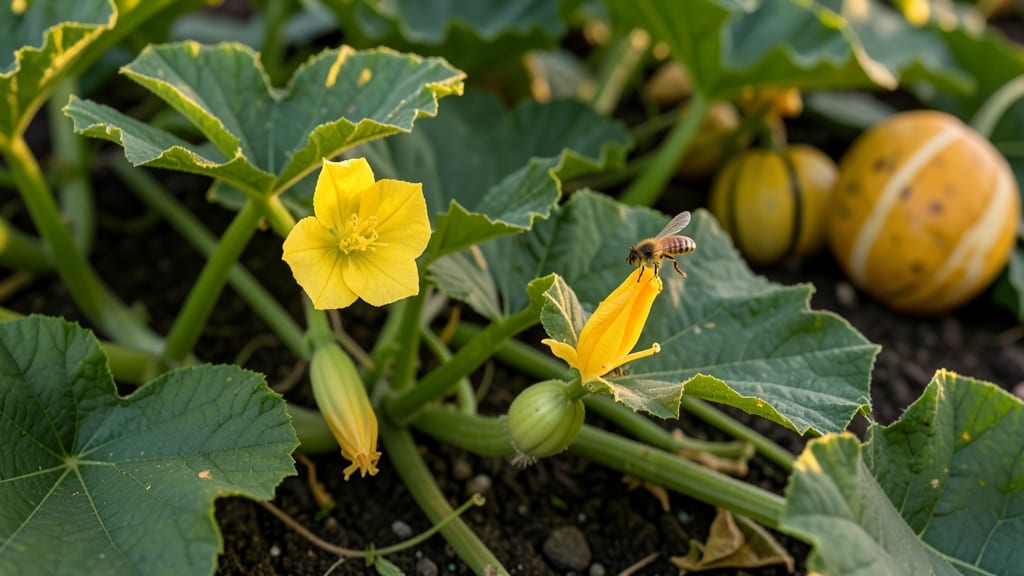
Understanding the pollination of squash is key to growing healthy fruit, as it requires pollen transfer from male flowers to female flowers—usually by bees or wind—to start fruit development. Female flowers have tiny bulges at their base, while male flowers grow on long stems without them.
Squash plants rely on this process to develop fruit, and without proper pollination, flowers often drop off without forming any harvestable produce. 🌿 The male flowers produce pollen that must reach the female flowers' stigma, which is why bees and other pollinators play such a crucial role.
If you notice your squash plants producing lots of male flowers but few female ones, it could signal an issue with pollination success.
Even in wind-pollinated varieties, environmental factors like humidity or lack of airflow can interfere with pollen transfer. This is why many gardeners hand-pollinate squash when bees are scarce, using a small paintbrush to transfer pollen from male to female flowers.
The timing matters too—pollination must happen within 24 hours of the female flower opening for successful fruit set.
💡 In This Article
- Squash Flower Anatomy and Pollination Process
- Troubleshooting Poor Squash Fruit Set
Squash flower anatomy and pollination process
Squash plants produce two distinct flower types: male and female. Male flowers grow on long, leafless stems and lack the small bulbous base that identifies female flowers. This base is actually an immature fruit called an ovary, which houses the ovules that will develop into seeds after fertilization.
The female flower's stigma—a fuzzy, feathery structure—must receive pollen to trigger fruit formation. 🌸
Bees are the primary pollinators, drawn to squash flowers by their sweet nectar and abundant pollen. When a bee lands on a male flower, it collects pollen on its body, then transfers it to female flowers as it searches for nectar. Wind can also carry pollen, though less efficiently.
The pollen must land on the female stigma within 24 hours of the flower opening, or the flower will wilt and drop without setting fruit. This rapid timeline explains why gardeners often need to intervene when pollinators are scarce.
The fertilization process begins when pollen grains land on the stigma and germinate, forming pollen tubes that grow down through the style to reach the ovary. Once the ovules are fertilized, the ovary begins expanding into the recognizable squash fruit.
This transformation takes about 7-10 days to become visible as a small, round fruit. The flower itself will typically wilt and fall off once fertilization occurs, leaving the developing fruit behind.
Interestingly, some squash varieties produce more male flowers early in the season to ensure ample pollen is available before female flowers appear. This biological strategy maximizes the plant's reproductive success.
The nectar in squash flowers isn't just a bee attractant—it also contains sugars that provide energy for pollinators, creating a mutually beneficial relationship. Without this nectar reward, bees might bypass squash flowers entirely in favor of more profitable sources.
Temperature plays a crucial role in this process too. Squash flowers generally open between 7:00 AM and 10:00 AM on warm days (70-85°F), when bees are most active. Cooler mornings or cloudy days can delay opening or reduce pollinator activity, leading to poor fruit set.
This is why gardeners in cooler climates often need to supplement with hand-pollination or choose varieties better adapted to their conditions.
What most gardeners don't realize is that squash flowers are actually monoecious—meaning both male and female flowers grow on the same plant. This contrasts with dioecious plants (like pumpkins) that have separate male and female plants.
The male flowers typically appear first, followed by female flowers about 1-2 weeks later. This staggered blooming ensures there's always pollen available when female flowers open.