
Picking
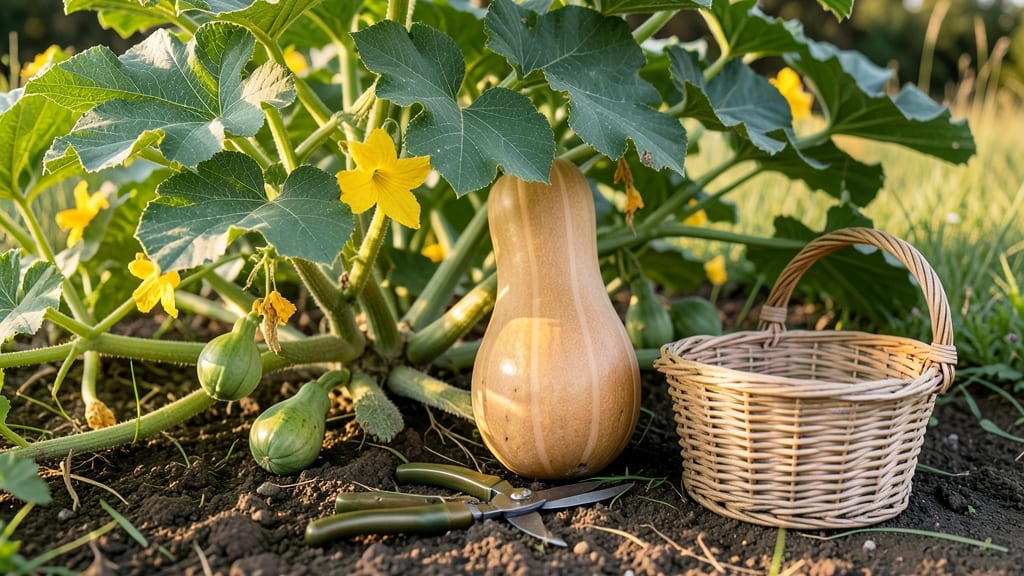
To pick a huge butternut squash, look for firm, heavy fruit with a hard rind, dull beige color, and an intact stem. Harvest when the vine yellows and the squash feels dense—aim for 8-12 pounds for maximum size.
Butternut squash size depends on genetics and growing conditions, with some varieties naturally producing larger fruit. 🌱 The vine turning yellow signals maturity, while warm days and cool nights boost sugar content and size.
I've found that well-drained soil and consistent watering help prevent cracking, which can limit growth. For best results, harvest in the morning when the squash is coolest and firmest.
When harvesting, use a sharp knife to cut the stem—never pull the squash from the vine. 🌿 Store them in a dry, well-ventilated space at 50-55°F for up to 3 months.
Avoid washing before storage, as moisture speeds up spoilage. A common mistake is harvesting too early, which results in smaller, less flavorful squash.
💡 In This Article
- Science Behind Butternut Squash Growth and Ripeness
- Step-by-Step Guide to Harvesting Giant Butternut Squash
Science behind butternut squash growth and ripeness
The size of a butternut squash is primarily determined by genetics, but environmental factors play a crucial role in maximizing growth. Varieties like 'Giant Buttercup' or 'Sugar Loaf' naturally produce larger fruit, often reaching 10-12 pounds when conditions are ideal.
The key factor is the plant's ability to photosynthesize efficiently, which relies on 6-8 hours of direct sunlight daily and well-drained soil rich in organic matter. Without sufficient sunlight, the plant diverts energy to leaf production instead of fruit development, resulting in smaller squash.
Vine yellowing is a clear biological signal that the squash has reached maturity. As the plant prepares for winter, it stops producing chlorophyll, causing the leaves to turn yellow—a process called senescence. This typically occurs around 90-110 days after planting, depending on the variety and climate.
The squash itself stops growing when the stem hardens and the rind develops a dull, matte finish. Interestingly, the sugar content peaks during this phase due to starch conversion, which happens more efficiently in cooler nights (50-60°F) and warm days (75-85°F).
Temperature fluctuations also influence size and flavor. Extended periods above 90°F can cause sunburn or cracking, while sudden temperature drops below 50°F slow down growth.
I've noticed that squash grown in regions with moderate climates—like the Pacific Northwest or New England—tend to be larger and sweeter than those in extreme heat or cold. This is because the plant can focus energy on fruit development rather than stress responses.
Another critical factor is soil moisture. Overwatering leads to blossom-end rot or cracked squash, both of which limit growth. Instead, maintain 1-1.5 inches of consistent moisture per week, allowing the top inch of soil to dry between waterings.
The squash's weight-to-size ratio is a good indicator of ripeness—a fully mature 10-pound squash should feel surprisingly heavy for its size, thanks to dense flesh and minimal water content. 🌱
Nutrient availability also plays a role. Butternut squash are heavy feeders, requiring balanced fertilization with nitrogen, phosphorus, and potassium. A soil test can reveal deficiencies, but most gardeners benefit from adding compost or a 10-10-10 fertilizer at planting and again when flowers appear.
The plant's ability to uptake these nutrients directly impacts cell development, which determines both size and texture.
Finally, the stem's condition is a non-negotiable indicator of maturity. A dry, woody stem means the squash has fully matured and stopped growing. If the stem is still green or soft, the squash may need 2-3 more weeks to reach peak size.
This is why harvesting at the right time is crucial—waiting too long can lead to overripe fruit that's prone to rot.