
Plants
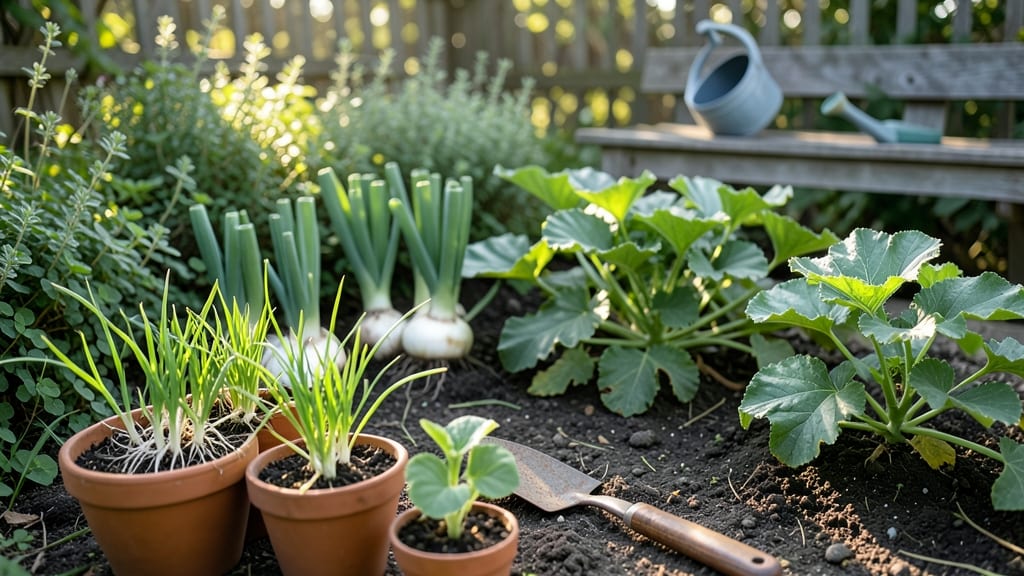
You can plant onions with squash safely, as the onions naturally repel squash bugs and improve soil health while preventing fungal diseases, but keep them spaced properly to avoid nutrient competition and overcrowding.
Onions act as natural pest deterrents for squash plants, particularly against destructive squash bugs and vine borers. 🌱 Their strong scent confuses these pests while also releasing compounds that suppress fungal growth in the soil.
This makes them excellent companion plants, but proper spacing is crucial—squash plants need generous room to sprawl, while onions prefer tighter quarters. I recommend planting onion sets 4-6 inches apart and squash vines 12-18 inches apart in well-draining soil with plenty of organic matter.
The key to success lies in timing—plant onions first in early spring, then transplant squash seedlings nearby after the soil warms. This staggered approach gives onions a head start while preventing early competition for water and nutrients.
Just avoid planting them too close to beans or peas, as onions can stunt their growth through allelopathic chemicals.
💡 In This Article
- Why Onions and Squash Make a Smart Companion Planting Pair
- Proper Spacing and Planting Techniques for Onion-Squash Gardens
Why onions and squash make a smart companion planting pair
The onion's secret weapon against squash pests lies in its sulfur-containing compounds, particularly disulfides and thiosulfinates, which are released when the plant is damaged or crushed.
These volatile compounds create a strong aroma that masks the scent of squash plants, confusing squash bugs and vine borers that rely on olfactory cues to locate their hosts.
Studies show these same compounds can reduce squash bug populations by up to 70% when onions are planted nearby, creating a natural pest barrier without chemicals. 🔥
Beyond pest control, onions contribute to soil health by suppressing fungal pathogens like powdery mildew, which commonly affects squash. Their fibrous roots help loosen compacted soil while releasing beneficial organic matter as they decompose. This creates an ideal environment for squash vines to establish strong root systems.
The onion's shallow root structure also prevents it from competing directly with squash's deep taproots, allowing both crops to thrive in the same space when properly spaced.
What most gardeners don't realize is how onions act as a living mulch for squash. When planted in a checkerboard pattern, the onion foliage shades the soil surface, reducing evaporation and keeping roots cool during hot summer months.
This is particularly valuable in regions with 85°F+ temperatures, where squash vines can become stressed. The onion's broad leaves also create microclimates that deter ground-dwelling pests like cucumber beetles, which prefer open, exposed soil.
However, this beneficial relationship has one critical caveat: onions are heavy feeders that require consistent nitrogen. If planted too close to squash, they'll compete for the same nutrients, particularly nitrogen and potassium.
Squash plants typically need 1-2 pounds of nitrogen per 100 square feet during their growing season, while onions require 0.5-1 pound per 100 square feet**. When combined, this can lead to stunted growth in both crops if soil isn't properly amended with compost or organic fertilizer before planting.
The science extends to the plants' growth habits too. Onions grow best in cool seasons (spring and fall), while squash thrives in warm weather.
This natural growth cycle means you can plant onions early in the season, then add squash seedlings after the soil warms to 60°F, creating a staggered planting system that maximizes space utilization.
The onion's early growth provides immediate pest protection while its later decline allows squash vines to expand unobstructed. ✨
For maximum effectiveness, consider planting red or yellow onion varieties, which have been shown to produce higher levels of sulfur compounds than white onions. The strong aroma of these varieties creates a more potent pest deterrent effect.
Just remember to harvest onions before they bolt (typically 90-120 days after planting), as their declining health can reduce their protective benefits for squash.