
Vegetables
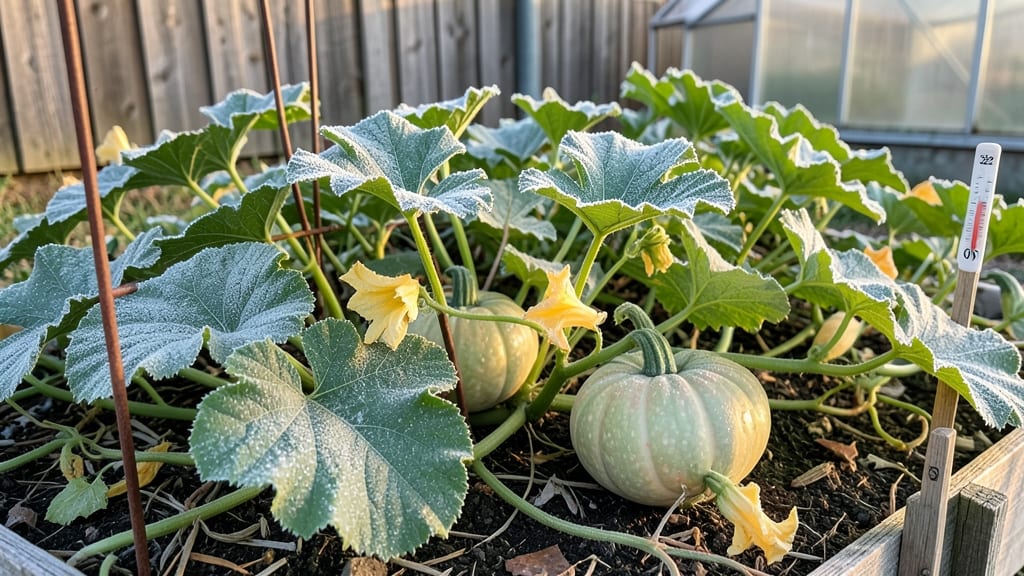
Winter squash can survive light frost if mature and hardened off, but prolonged freezing temperatures below 28°F will damage vines and stored fruit. Protect plants with row covers or mulch before frost arrives for best results.
Mature winter squash plants develop natural cold resistance through a process called hardening off, where their cell walls thicken and sugar content increases to act as a protective antifreeze. 🌱 However, young plants and vines are far more vulnerable, often suffering irreversible damage when temperatures dip below 32°F.
The key difference lies in the plant's maturity—fully developed squash can endure brief chills, while tender vines will blacken and die in sustained cold. For gardeners in USDA Zones 4-6, this means planning for early harvests or protective measures well before the first frost date.
Even hardy varieties like butternut squash benefit from extra protection when nighttime temperatures approach freezing. A thick layer of straw mulch (4-6 inches) or lightweight row covers can raise soil temperatures by 5-10°F, while cold frames create microclimates that extend the growing season by several weeks.
I've seen gardeners in Zone 5 successfully overwinter squash by combining these methods with a late-season planting schedule—just be sure to remove protective coverings during the day to prevent overheating.
💡 In This Article
- Winter Squash Frost Tolerance by Variety and Growth Stage
- Protecting Winter Squash from Frost: Practical Season-Extension Strategies
Winter squash frost tolerance by variety and growth stage
Winter squash varieties exhibit different levels of cold hardiness due to variations in their natural antifreeze compounds and cell wall structures. 🌱 For example, butternut squash—with its thick rind and high sugar content (up to 12% in mature fruit)—can tolerate brief exposures to 25°F without significant damage, thanks to its ability to convert starches into protective sugars during hardening.
Acorn squash, while slightly less cold-resistant, still fares better than pumpkins when fully mature, as its smaller size allows for more efficient heat retention.
The key difference lies in their growth stages: young plants with tender stems lack these protective adaptations and will suffer irreversible cell membrane damage when temperatures drop below 32°F.
The science behind this tolerance involves two primary mechanisms: sugar accumulation and cell wall reinforcement.
As winter squash mature, they increase their soluble sugar content (like fructose and sucrose), which lowers the freezing point of their cellular fluids—similar to how salt melts ice on roads. 🥜 Meanwhile, their cell walls thicken with lignin, a woody polymer that prevents ice crystals from piercing cell membranes.
This process is why a 3-week-old seedling will wilt in 40°F conditions, while a fully ripened butternut squash can survive a 24-hour frost at 28°F.
Variety selection plays a crucial role in frost resilience.
For instance, 'Waltham Butternut' consistently outperforms 'Sugar Pie' pumpkin in cold climates because its elongated shape retains heat better, and its rind remains firm even after exposure to 20°F for short periods. 🍂 However, all winter squash share one vulnerability: their vines.
Even hardy varieties will lose their foliage when nighttime temperatures fall below 30°F, though the fruit itself may remain salvageable if protected. This is why gardeners in USDA Zone 4 often prioritize early-maturing varieties like 'Early Butternut' over slower growers.
What most gardeners overlook is the role of soil temperature in frost survival. Cold soil accelerates heat loss from squash vines, making them more susceptible to damage.
Maintaining soil temperatures above 50°F through mulching or black plastic can create a buffer zone that protects young plants during light frosts. 🌡️ This is particularly important for acorn squash, which has thinner rinds and requires consistent warmth to develop properly.
The contrast between soil and air temperatures explains why a 30°F night might harm young plants while mature squash remain unaffected.
Here's what happens at the cellular level during frost exposure: when temperatures drop below 32°F, ice crystals form in the plant's extracellular spaces. In tender vines, these crystals grow rapidly, piercing cell membranes and causing irreversible damage.
Mature squash, however, have developed mechanisms to slow this process—including proteins that act as nucleators, controlling where ice forms and preventing membrane rupture. 🧬 This biological adaptation is why a fully ripened butternut squash can often recover from a 24-hour frost at 28°F, while its vines may still show signs of damage.
For practical application, this means timing your harvest carefully. In Zone 5, aim to pick winter squash when they've reached 75-85% of their final size and their rinds have hardened—typically 2-3 weeks before the first frost date.
Curing them at 80-85°F for 10 days further enhances their cold resistance by increasing their sugar content. This preparation allows stored squash to remain viable for months, even in unheated spaces where temperatures fluctuate between 35-50°F.