
Pests
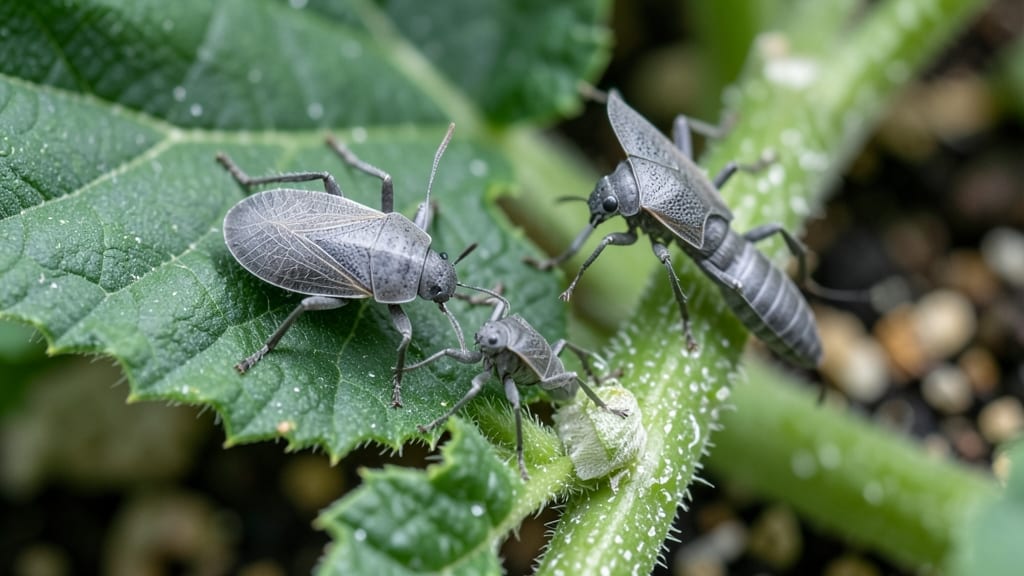
Gray squash bugs on plants turn your thriving vines into a chewed-up mess faster than you can say "harvest failure." 🌿 These shield-backed pests are the sneakiest squash garden saboteurs, and I've learned their telltale signs the hard way—after watching my zucchini plants wilt overnight.
The moment you spot their distinctive gray bodies (about 1/2 inch long) clustered on undersides or see tiny black eggs glued to stems, you know it's time to act.
Here's the thing—these bugs aren't picky. They'll attack squash, pumpkins, cucumbers, and even melons, leaving behind yellowing leaves, stunted growth, and that dreaded "honeydew" residue. The damage starts small but escalates fast, especially in hot, dry weather when they multiply like crazy.
My first year, I ignored them until my plants looked like lace—don't let that happen to you.
Good news: you can kick them out organically without sacrificing your harvest. I've used neem oil sprays, row covers, and hand-picking (yes, really) to save entire gardens. The key is acting at the first sign—these bugs don't wait for permission to wreck your plants.
Within 3-5 days of consistent treatment, you'll see new growth pushing through, and those shielded pests will be history.
Works for both backyard gardens and container growing—just scale the method to your space. The secret weapon? Prevention: rotate crops, remove last year's vines, and check plants weekly. Trust me, your future self will thank you when you're feasting on homegrown squash instead of watching them get devoured.
Root Causes Of Gray Squash Invaders
Gray bugs on your squash plants aren’t just a random annoyance—they’re usually the work of squash bugs (Anasa tristis) or their close relatives, like the spotted cucumber beetle (Diabrotica undecimpunctata).
These pests thrive in specific conditions, and understanding why they show up helps you stop them before they ruin your harvest. Here’s a breakdown of the most common triggers:
Squash bugs love shady, damp, and cramped environments—think of them as the squash garden’s version of a hoarder. When you plant squash, pumpkins, or cucumbers too closely together, the foliage stays thick and humid, creating the perfect breeding ground.
Poor airflow also slows drying after rain or watering, leaving sticky dew that attracts these pests.
Why it matters:
- Moisture buildup makes eggs stick to leaves, ensuring a fresh hatch of nymphs every season.
- Thick canopies shield bugs from natural predators (like birds or parasitic wasps) and pesticides.
- Stressed plants (from overcrowding) produce weaker defenses, making them easier targets.
💡 Pro Tip: Space vining plants (like zucchini) 3–4 feet apart and bush varieties (like pattypan squash) 2–3 feet apart. Prune lower leaves to improve airflow—this disrupts the bugs’ cozy hideouts.
Squash bugs and their eggs need water to survive. Heavy rain, overwatering, or poorly drained soil create a paradise for them. Eggs laid on leaves hatch faster in damp conditions, and adult bugs seek shelter under wet mulch or leaf litter.
Even morning dew can extend their lifespan by keeping them hydrated.
Why it matters:
- Egg viability drops below 50% if soil stays dry for 3+ days—moisture is their lifeline.
- Adult bugs thrive in humidity above 70%, slowing natural die-off.
- Fungal diseases** (like powdery mildew) often tag along, weakening plants further.
🌡️ Actionable Fix:
- Water at the base of plants in the morning to reduce leaf wetness.
- Use drip irrigation instead of overhead sprinklers to avoid soaking foliage.
- Apply a 2–3 inch layer of straw mulch (not wood chips, which retain too much moisture).
Squash bugs don’t have many enemies in the garden—but when they do, those predators (like stink bugs, parasitic wasps, and ground beetles) often vanish due to pesticide use, habitat loss, or monoculture farming. If your garden is a bug-free zone thanks to chemical sprays, squash bugs move in unchecked.
Why it matters:
- Parasitic wasps lay eggs inside squash bug eggs, killing them before they hatch—but sprays wipe these out too.
- Birds and toads avoid gardens with no hiding spots (like tall grass or leaf litter).
- Beneficial nematodes (soil-dwelling microbes) die in treated soil, leaving squash bugs to feast.
✨ Eco-Friendly Boost:
- Plant companion flowers like marigolds or dill to attract predator insects.
- Avoid broad-spectrum pesticides (neonicotinoids, malathion) for 30 days before/after squash planting.
- Leave some leaf litter near plants—it shelters ground beetles and spiders.
Squash bugs are cold-hardy but prefer warm springs and summers. They overwinter as adults in garden debris, mulch, or stone walls, emerging when soil temps hit 50°F (10°C). If your last frost is late (like in Zones 7–10), they get a head start on laying eggs before you even plant.
Why it matters:
- Early planting (before soil warms) gives bugs time to establish colonies before you notice.
- Hot, dry summers force bugs to seek shade under leaves, increasing egg-laying.
- Sudden temperature drops (like spring frosts) can kill adults, but their eggs may still survive.
📅 Strategic Timing:
- Start squash indoors or use floating row covers until soil temps are consistently 60°F (15°C)+.
- Plant trap crops (like bush beans) 2 weeks before squash to lure bugs away.
- Monitor for adults in April–May—handpick them before they lay eggs!
Healthy squash plants resist pests better. If your soil lacks key nutrients, plants become stressed and produce weak foliage—an all-you-can-eat buffet for squash bugs. Specifically, they target plants deficient in:
| Nutrient | Why It Matters | Signs of Deficiency |
|---|---|---|
| Nitrogen (N) | Boosts leaf growth and pest resistance. | Yellowing lower leaves, stunted growth. |
| Potassium (K) | Strengthens cell walls, making plants tougher. | Brown leaf edges, weak stems. |
| Silica | Hardens plant tissues, deterring chewing pests. | Soft, brittle stems, easy leaf damage. |
💪 Fertility Fix:
- Test soil in early spring and amend with compost or balanced fertilizer (10-10-10).
- Side-dress with banana peels (potassium) or wood ash (calcium) mid-season.
- Avoid over-fertilizing with nitrogen—it encourages soft, bug-loved growth.
Quick Fixes for Squash Plant Pests
Gray invaders on your squash plants? Don’t panic—these pests are manageable with the right approach! Below, we’ll tackle the most common causes of gray bugs (like squash bugs, aphids, or spider mites) and provide practical, organic solutions to restore your garden’s health.
Whether you’re dealing with eggs, nymphs, or adults, these fixes will help you reclaim your squash patch without harsh chemicals.
Squash bugs are the sneakiest offenders, and their gray, shield-shaped adults can wreak havoc if left unchecked. Here’s how to stop them in their tracks:
🍳 Step 1: Handpick Adults and Eggs
- When? Early morning (bugs are sluggish and easier to spot).
- How? Wear gloves and inspect the undersides of leaves, stems, and near the soil.
Squash bugs love to hide in leaf litter. - Action: Drop adults into soapy water (1 tbsp dish soap + 1 gallon water) to kill them instantly. Scrape off egg clusters (look for small, grayish ovals on leaves) and crush them or soak in soapy water.
👨🍳 Step 2: Use Row Covers for Prevention
- Why? Row covers (lightweight fabric) create a physical barrier that blocks adults from laying eggs.
- How? Install covers before planting or as soon as you spot the first bugs. Secure edges with soil or weights to prevent gaps.
🥘 Step 3: Trap Crops and Rotate Plants
- Trap crops: Plant nasturtiums or marigolds near your squash—the bugs will flock to these instead. Once infested, remove and destroy the trap plants.
- Crop rotation: Avoid planting squash, cucumbers, or melons in the same spot next year.
Squash bugs overwinter in the soil, so rotation breaks their life cycle.
🔪 Step 4: Organic Sprays (When Needed) If handpicking isn’t enough, try these non-toxic sprays: - Neem oil: Mix 1 tbsp neem oil + 1 tsp mild soap + 1 quart water. Spray early morning or late evening (avoid direct sun, which can burn leaves).
Reapply every 5–7 days. - Kaolin clay: Creates a protective film that repels bugs. Mix 2 tbsp clay + 1 gallon water, stir well, and spray on leaves. - Beneficial nematodes: For soil-dwelling eggs, apply heterorhabditis bacteriophora nematodes to the base of plants. Water deeply after application.
Tiny gray aphids or spider mites (often mistaken for bugs) can suck the life out of your squash. Here’s how to evict them:
💡 Step 1: Blast Them Off with Water
- How? Use a strong stream of water from a hose to knock aphids off leaves. For mites, a gentle spray disrupts their webs.
- Pro tip: Do this every 2–3 days until they’re gone. Early intervention is key!
🎯 Step 2: Introduce Beneficial Insects Nature’s pest control is the easiest fix:
- Ladybugs: Release them in the afternoon (they’re less active in the heat).
- Lacewings: Their larvae devour aphids.
Buy eggs or adults online. - Predatory mites: Like Phytoseiulus persimilis, these hunt spider mites. Apply when you first spot webbing.
✨ Step 3: Homemade Sprays for Fast Relief
- Soap spray: Mix 1 tsp castile soap or dish soap (like Dawn) with 1 quart water. Spray directly on bugs (avoid flowers to protect pollinators).
- Garlic spray: Blend 2 cloves garlic + 1 quart water, strain, and spray.
Garlic’s sulfur compounds repel soft-bodied pests. - Insecticidal soap: Store-bought versions (like Safer®) work well but avoid overusing—stick to every 3–4 days.
Once you’ve dealt with the current infestation, prevent future attacks with these habits:
- 🌱 Healthy soil = strong plants: Amend soil with compost and mycorrhizal fungi to boost plant resilience.
- 🌿 Mulch properly: Use straw or grass clippings (not wood chips) to deter squash bugs from laying eggs at the soil line.
- 🕒 Plant at the right time: Avoid early spring plantings—cooler temps slow plant growth, making them easier targets.
- 🌞 Monitor regularly: Check plants 2–3 times a week, especially the undersides of leaves and stems.
- 🗑️ Clean up debris: Remove old vines and plant matter after harvest to eliminate hiding spots for overwintering bugs.
If your squash plants are severely damaged (yellowing, wilting, or heavy egg masses), consider:
- Pyrethrin spray (derived from chrysanthemums) for a last-resort organic knock-down.
- Consult a local extension office for region-specific advice or pest scouts.
Remember: The key to beating gray bugs is speed and consistency. Act at the first sign of trouble, and your squash plants will bounce back stronger than ever! 🍉💪
Frequently asked questions
What do gray squash bugs look like up close?
Adult gray squash bugs have a distinctive grayish-brown, shield-shaped body about 1/2 inch long with a jagged edge along their back. Their heads are black and pointed, and they leave behind yellowish-brown droppings on leaves. Nymphs (baby bugs) are flat, gray, and oval-shaped, often clustered together on leaf undersides.
Are those gray bugs actually squash bugs or something else?
Gray bugs on squash could be squash bugs, spotted cucumber beetles (which have black spots), or even aphids/mites (tiny, soft-bodied). Check for: shield-shaped bodies (squash bugs), black-and-yellow stripes (beetles), or webbing (mites). Squash bugs are the most common culprits and cause the most damage.
How quickly will my squash plants recover after removing gray bugs?
With immediate action, you’ll see new growth within 3-5 days as the plant focuses energy on recovery. Severe damage may take 2-3 weeks to fully bounce back, but consistent care (watering, pruning dead leaves) speeds up healing. The key is stopping egg-laying—adults can lay hundreds of eggs in a season, so act fast!
Can I still harvest squash if there are gray bugs present?
Yes, but only if the bugs aren’t on the fruit itself. Squash bugs target leaves/stems, not the edible part. Wash fruits thoroughly before eating, and check for damage. If bugs are crawling on the squash, remove and discard that fruit immediately. The plant’s health matters more—focus on treating the bugs first!
What’s the best time of day to check for gray bugs?
Early morning (before 9 AM) is ideal—bugs are sluggish and easier to spot. They hide in leaf litter during the day, so check undersides of leaves, stems, and soil crevices. Avoid checking in hot afternoons when bugs blend into foliage. A flashlight can help reveal hidden egg clusters in shaded areas.