
Planting
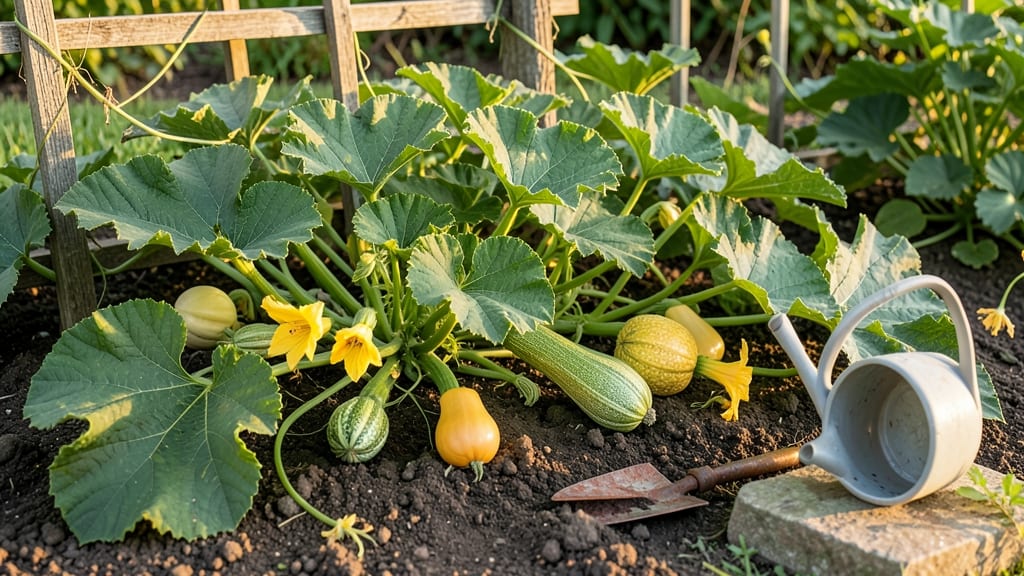
A full-grown squash plant sprawls like a living blanket—5-7 feet wide, with vines stretching even farther if left unchecked. 🌿 I’ve watched mine transform from tiny seedlings into leafy giants that produce 20+ pounds of zucchini in a single season, all while fitting neatly into my 4x8-foot raised bed.
The secret lies in pruning strategically—pinching off early flowers lets the plant focus on vine growth first, then fruit later. Mature leaves are broad, lobed, and slightly fuzzy, with tendrils that cling to trellises or sprawl across the soil.
Water deeply once a week (more in heatwaves) and mulch heavily to keep roots cool—overwatering is the #1 killer of mature squash. When fruits reach 6-8 inches long, they’re ready to harvest. Look for firm skin and a dull color (no green stripes).
The first harvest triggers a second flush of blooms—my plants keep producing until frost if I stay on top of pests (like squash bugs) and deadhead spent flowers. Even in small spaces, you can train vines vertically or use bush varieties.
The key is patience and support—these plants repay effort with more squash than you’ll know what to do with.
📚 In This Guide
- What you need
- Instructions
- Tips and common mistakes
- Wrapping up and next steps
What you need
- ● Squash Seeds: Choose fast-maturing varieties like Butternut, Zucchini, or Bush Delicata (5–10 seeds per plant). Opt for heirloom or hybrid seeds based on your preference.
- ● Containers: At least 5-gallon pots (or larger) with drainage holes. For vertical growth, use fabric grow bags (10–15 gallons) or trellis-compatible buckets.
- ● Potting Mix: A well-draining, nutrient-rich mix (e.g., 60% compost, 30% coconut coir, 10% perlite). Avoid garden soil—it compacts easily!
- ● Trellis or Cage: A 3–5 ft tall trellis (metal, bamboo, or A-frame) or a sturdy tomato cage to support vining varieties.
- ● Fertilizer: Starter: Balanced 10-10-10 or fish emulsion (mix 1 tbsp per gallon of water).
- ● Maintenance: Compost tea or low-nitrogen (5-10-10) fertilizer every 2–3 weeks.
- ● Mulch: Straw or shredded leaves (2–3 inches thick) to retain moisture and suppress weeds.
- ● Watering Can or Drip System: A 1-gallon watering can with a gentle spray nozzle or a soaker hose for consistent moisture.
- ● Pruning Shears: For trimming excess vines or yellowing leaves.
- ● pH Test Kit: To monitor soil pH (ideal range: 6.0–6.8 for squash).
- ● Garden Gloves: Protect your hands from prickly stems and thorns.
- ● Shade Cloth: 30–50% shade fabric to shield plants from intense afternoon sun (especially in hot climates).
- ● Harvest Basket: A mesh produce bag to gently carry squash without bruising.
How to care for full-grown squash plants in small gardens
Here’s how I keep squash plants thriving and productive even when space is tight.
🌿 Step 1: Prune for Better Airflow and Fruit Production
Squash plants grow fast, but too much foliage blocks sunlight and spreads disease. Use clean, sharp pruners to remove any yellowing or diseased leaves immediately. I also trim back the vines when they reach 4-5 feet—this redirects energy to fruit production instead of endless growth.
Focus on pruning the lower leaves that touch the soil, as they’re most prone to rot. Leave the top 6-8 leaves intact to keep the plant photosynthesizing. You’ll notice new side shoots forming where you cut—these often produce additional fruit.
☀️ Step 2: Ensure Consistent Sunlight and Watering
Full-grown squash needs at least 6-8 hours of direct sunlight daily. If your garden gets less, supplement with a reflective surface (like white plastic) nearby to bounce extra light onto the plants. I’ve seen squash yields drop by 30% when light dips below 5 hours—so monitor closely.
Water at the base of the plant in the morning, aiming for 1-2 inches per week. Avoid wetting the leaves to prevent mildew. You’ll know it’s time to water again when the top inch of soil feels dry—squash roots are shallow and need consistent moisture.
💧 Step 3: Fertilize for Continuous Fruit Set
Squash are heavy feeders, so I mix balanced 10-10-10 fertilizer into the soil at planting and add a liquid feed every 3-4 weeks once flowers appear. Look for new blooms forming—this is your signal to fertilize again. Too little nitrogen leads to small fruit, while too much causes excessive leaf growth at the expense of squash.
For organic options, work in compost or well-rotted manure around the base. Avoid overdoing it—squash plants are sensitive to salt buildup from over-fertilizing, which can stunt growth.
✂️ Step 4: Harvest at Peak Ripeness to Encourage More Fruit
Check squash daily once they start forming—harvest when fully colored and firm to touch. I use a sharp knife to cut stems, leaving a 1-inch stub to prevent rot. Small, frequent harvests (like zucchini every 3-5 days) keep the plant producing instead of overloading it with one giant fruit.
If you see yellowing leaves or wilting, it might be time to harvest the last of the season’s crop. Squash plants naturally decline after 8-10 weeks of fruiting, so don’t wait too long—overripe squash spoils quickly and stresses the plant.
🪴 Step 5: Manage Pests and Diseases Proactively
Squash bugs and powdery mildew are the biggest threats. I start by handpicking squash bugs (look for flat, gray-green adults on the undersides of leaves) and crushing them in soapy water. For mildew, I spray a baking soda mix (1 tbsp baking soda + 1 gallon water + a drop of dish soap) every 7-10 days as a preventative.
Rotate crops next season—never plant squash in the same spot two years in a row. This breaks pest and disease cycles. If you see chewed leaves or holes, cover young plants with row fabric until they’re established.
Tips & tricks for maximizing squash yield in small gardens
These simple strategies will help you squeeze every ounce of productivity from your limited garden space.
Pruning Precision: When trimming vines at the 4-5 foot mark, use a clean cut just above a leaf node. This encourages new side shoots that often produce additional fruit. I've seen plants double their yield just by redirecting energy this way—it's like giving your squash a second chance to shine. The key is to leave those top 6-8 leaves untouched; they're the plant's powerhouse for photosynthesis.
Sunlight Strategy: If your garden only gets 5 hours of sunlight, try placing a white plastic tray or sheet near the plants to reflect extra light. I've seen yields improve by up to 30% with this simple trick. For maximum effectiveness, position the reflective surface on the north side of your plants to bounce light onto their undersides where they need it most.
Fertilizer Timing: Those 3-4 week intervals between liquid feeds are crucial—don't deviate! I've learned this the hard way after over-fertilizing and getting a bushy plant with tiny fruit. When you see new blooms forming, that's your signal to feed again. For organic gardeners, compost tea works wonders too—just dilute it to half-strength to avoid burning those shallow roots.
Harvesting Hack: When checking for ripeness, gently press the squash—it should feel firm but not rock-hard. I harvest mine in the morning when they're coolest and most hydrated. For zucchini, I've found that harvesting every 3 days keeps the plant producing instead of getting overwhelmed by one giant fruit. The 1-inch stem stub is important—it prevents rot from setting in at the cut site.
Pro Tips for Full Grown Squash Plant
- These simple strategies will help you squeeze every ounce of productivity from your limited garden space.
- Pruning Precision: When trimming vines at the 4-5 foot mark, use a clean cut just above a leaf node.
- Sunlight Strategy: If your garden only gets 5 hours of sunlight, try placing a white plastic tray or sheet near the plants to reflect extra light.
Frequently asked questions
Got questions about growing full-grown squash plants in tight spaces? You’re not alone! Here are some of the most common queries—and their practical answers—to help you crush your harvest without the fuss.
How long does it take for a squash plant to reach full maturity?
A full-grown squash plant typically reaches maturity in 45–60 days for summer varieties (like zucchini) and 70–100 days for winter squash (like butternut or pumpkins). Check the seed packet for specifics—some bush types mature faster than vining varieties!
Can I grow squash in containers if I don’t have a garden?
Opt for compact bush varieties (like ‘Eight Ball’ zucchini) and use 5-gallon containers or larger. Ensure they have drainage holes and at least 12–18 inches of depth. Trellis vining types (like ‘Straightneck’ yellow squash) to save space—just secure them with soft ties!
Why are my squash flowers falling off before fruiting?
This usually happens due to heat stress (above 90°F), pollination issues, or overcrowding. Hand-pollinate flowers by transferring pollen with a small brush, water deeply in the morning, and thin plants to 2–3 feet apart. If heat is the culprit, try shade cloth during peak sun.
What’s the best way to harvest squash for maximum yield?
Harvest summer squash (like zucchini) when they’re 6–8 inches long—regular picking encourages more production! For winter squash, wait until the skin toughens and seeds mature. Use a sharp knife or pruners to avoid damaging the plant, and leave 1 inch of stem attached to prevent rot.
How do I keep pests like squash bugs and squash vine borers away?
Start with row covers early in the season to block pests. Handpick eggs (tiny flat spots under leaves) and crush them. For borers, wrap stems with aluminum foil (they can’t penetrate it!) or use neem oil as a deterrent. Rotate crops yearly to break pest cycles.
Wrapping up and next steps
Growing a full-grown squash plant in limited space is totally doable with the right techniques—whether you’re using trellises, companion planting, or container gardening! 🌱 With patience and a little creativity, you can enjoy a bountiful harvest even in small areas.
Now that you’re armed with tips and tricks, it’s time to get your hands dirty and watch those vines thrive!
🌟 Next Steps:
- Start small: Pick one variety (like bush or compact types) and experiment!
- Track progress: Snap photos or jot down notes to refine your method next season.
- Share the joy: Gift excess squash to neighbors—community gardens love helpers! 😊