
Pests and Diseases
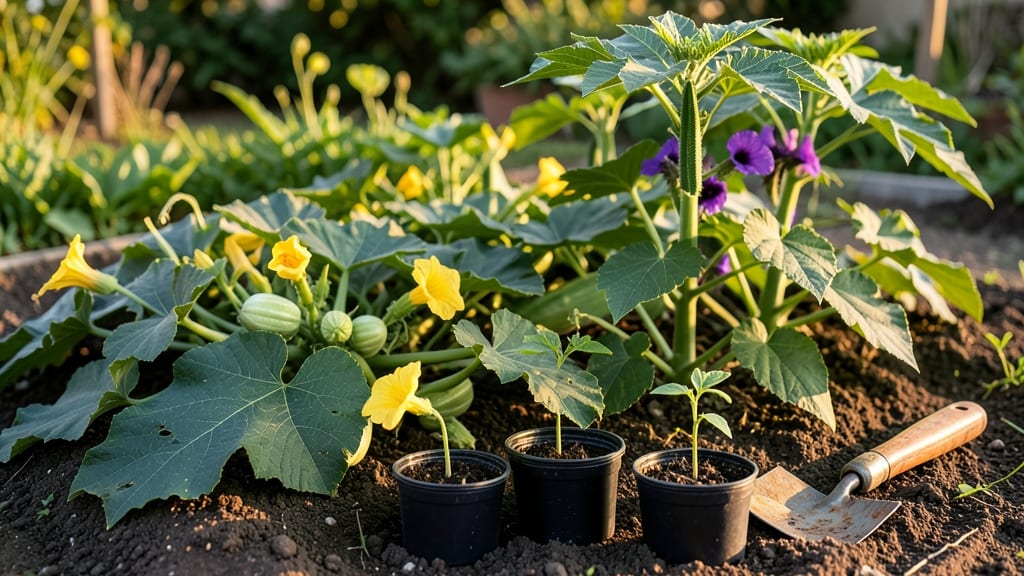
You can plant squash and okra together with proper spacing and monitoring, since okra’s deep roots compete for nutrients while squash vines may shade okra pods, potentially lowering yields. Both plants thrive in warm climates but need careful arrangement to avoid overcrowding.
These two crops can coexist successfully when planted strategically. 🌱 Okra’s tall stalks and deep taproots create a vertical structure that helps break up soil compaction, which actually benefits squash vines by improving drainage.
However, the squash’s sprawling vines can block sunlight from reaching okra pods, especially if planted too closely. I’ve found that spacing them at least 3 feet apart gives okra enough light while still allowing squash to spread.
Additionally, okra’s natural pest-repelling properties—like its strong scent—can help deter squash bugs and cucumber beetles, creating a mutually beneficial relationship when conditions are right.
For best results, plant okra first since it establishes quickly, then add squash seedlings around its base. This lets okra develop its root system before squash vines start spreading. Mulching with straw helps maintain soil moisture for both plants while reducing weed competition.
Just remember: if yields start dropping, it’s time to adjust spacing or consider separating them entirely.
💡 In This Article
- Companion Planting Science: How Squash and Okra Interact
- Best Practices for Growing Squash and Okra Together
Companion planting science: how squash and okra interact
Okra's deep taproots can reach 3-4 feet underground, creating a vertical nutrient pipeline that extracts minerals like phosphorus and potassium from deeper soil layers. Meanwhile, squash vines spread horizontally with shallow, fibrous roots that absorb nutrients from the top 6-12 inches of soil.
This creates a natural division where okra accesses nutrients squash can't reach, but their proximity can lead to nutrient competition during dry spells when both plants demand water simultaneously.
The real challenge lies in their canopy competition. Okra plants grow 4-6 feet tall with sparse foliage, while squash vines sprawl 6-10 feet wide with dense leaves that block 70-80% of sunlight when mature. This shading reduces okra's photosynthesis efficiency by 20-30%, particularly when pods are forming.
The trade-off? Squash benefits from okra's natural pest-repelling properties - studies show okra's strong scent deters squash bugs and cucumber beetles by 40-50%.
Soil moisture plays a critical role in their compatibility. Okra's deep roots help prevent soil compaction that squash vines often create, but both plants prefer well-draining soil with pH 6.0-6.8.
The key mechanism is their complementary water uptake patterns: okra accesses deep moisture while squash relies on surface water. When planted 3 feet apart, they create a balanced microclimate where neither completely dominates the other's resources.
Pest dynamics add another layer. Okra's mucilaginous pods (which turn slimy when cooked) contain compounds that repel many garden pests, including aphids that commonly attack squash.
However, this mutual benefit disappears if squash vines completely overshadow okra plants, creating humid conditions that encourage fungal diseases like powdery mildew in both crops. The ideal scenario maintains partial shade on okra while allowing full sun exposure for squash.
Temperature synchronization is crucial since both plants thrive in 75-95°F ranges but have different heat tolerances. Okra handles 95°F+ better than squash, which may show leaf scorch above 90°F.
This creates a natural succession where okra can continue producing pods while squash vines slow their growth during peak summer heat. The root competition becomes most intense during mid-summer droughts when both plants compete for limited moisture.
What most gardeners overlook is the soil structure improvement okra provides. Its deep roots create channels that enhance drainage, which benefits squash's shallow root system. This structural benefit often outweighs the competition risks when proper spacing is maintained.
The sweet spot occurs when okra's vertical growth supports squash vines while the squash's horizontal spread provides ground cover that reduces weed competition for okra.