
Vegetables
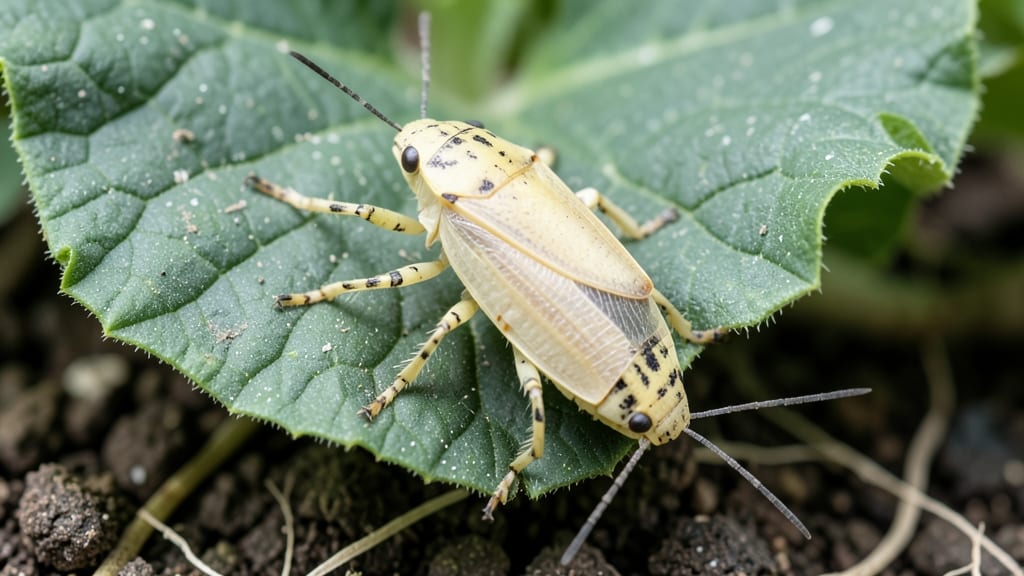
Yellow squash bugs are small, yellow-green insects that feed on squash plants, causing wilting, yellowing leaves, and stunted growth. They excrete sticky honeydew, attracting mold and ants. Early identification and natural control are key to protecting your garden.
These sap-sucking pests thrive in warm weather and can devastate your garden if left unchecked. 🌿 The adults are about 1/4-inch long with a distinctive yellow-green color, while their nymphs appear as tiny, flat, oval-shaped creatures clinging to the undersides of leaves.
What makes them particularly troublesome is their ability to reproduce rapidly—females can lay up to 1,000 eggs at a time, which hatch within a week under ideal conditions.
Unlike many garden pests, yellow squash bugs don't just feed—they weaken plants by injecting toxins while sucking out vital fluids. This leads to the characteristic wilting and yellowing you'll notice on leaves, often accompanied by the telltale sticky residue from their honeydew secretions.
The good news? With vigilance and the right organic methods, you can keep these invaders from ruining your harvest.
💡 In This Article
- Identifying Yellow Squash Bugs and Their Life Cycle
- Organic Control Methods for Yellow Squash Bug Infestations
Identifying yellow squash bugs and their life cycle
Yellow squash bugs start their life cycle as tiny, oval-shaped eggs laid in clusters on the undersides of leaves. Females glue these eggs to plant surfaces using a sticky substance, making them difficult to remove without disturbing the plant.
The eggs are about 1/16-inch long and appear yellowish, often arranged in neat rows of 50-100. Under ideal conditions (warmth and humidity), these eggs hatch in just 5-7 days, releasing flat, yellow-green nymphs that immediately begin feeding on plant sap.
The nymphs are the most challenging stage to spot because they're only about 1/8-inch long and perfectly camouflaged against the leaf surface. As they grow, they go through five distinct molts, each time increasing in size and developing more pronounced yellow-green coloring.
The adults emerge after roughly 3-4 weeks and are easily identifiable by their 1/4-inch length, elongated oval shape, and distinctive yellow-green color with black markings along the edges. Adults can live for up to 60 days, during which a single female may lay multiple batches of eggs.
What makes these bugs particularly damaging is their feeding behavior. They insert their straw-like mouthparts into plant tissue to extract sap, simultaneously injecting toxins that disrupt the plant's normal functions. This dual attack causes the characteristic wilting and yellowing of leaves, often concentrated along the veins where feeding occurs.
The damage typically starts at the edges of leaves and progresses inward, creating a "scorched" appearance that spreads rapidly during hot weather. 🌱
Seasonal timing is crucial for effective control. In most regions, yellow squash bugs become active in early summer when temperatures consistently exceed 70°F. They complete one generation per year, with peak activity occurring between June and August.
This means early intervention—such as monitoring plants weekly during these months—can prevent infestations from spiraling out of control. Look for the telltale signs: clusters of eggs on leaf undersides, tiny nymphs along leaf veins, or adults hiding under leaves during the hottest parts of the day.
One often-overlooked detail is their movement pattern. Adults and nymphs tend to cluster in sheltered areas like the undersides of leaves or along leaf stems, where they're protected from predators and direct sunlight.
This behavior makes them particularly vulnerable to physical removal methods like handpicking or using a strong stream of water to dislodge them. Their slow movement (about 1 inch per minute) also makes them easy targets for natural predators like birds and beneficial insects when given the chance.
The life cycle's rapid progression means that once you spot eggs, you have less than a week to act before nymphs emerge and begin feeding. This is why gardeners often recommend treating plants with preventive measures like neem oil or insecticidal soap before squash plants begin flowering.
The key is catching these pests early—when they're most vulnerable and before they've had a chance to establish large populations. 🔍