
Plants
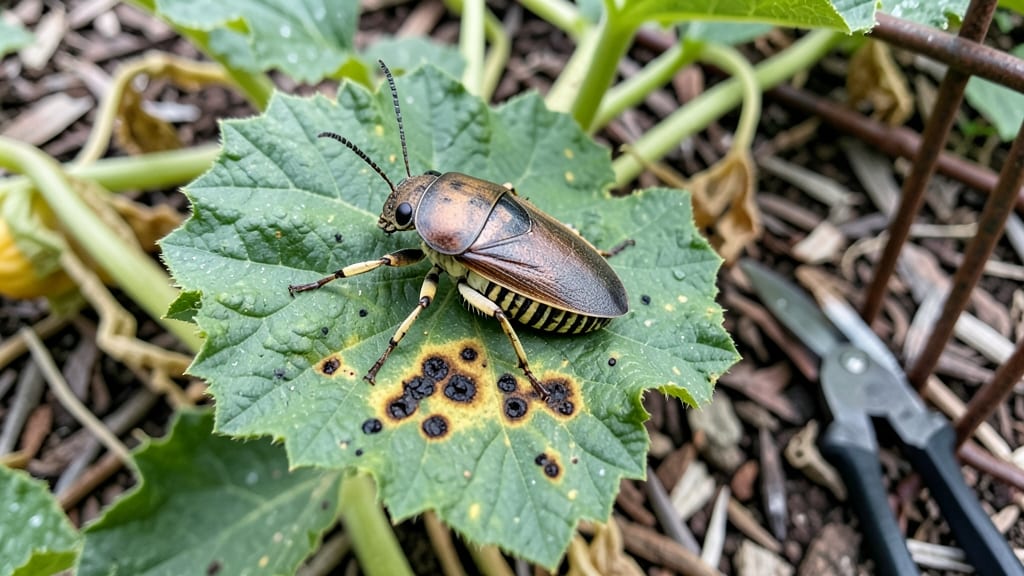
Squash bug damage starts with tiny black spots on leaves that multiply into skeletonized patterns. 🌿 I remember finding my zucchini plants looking like lace curtains—chewed edges and wilting vines that made me think I’d overwatered until I spotted the culprits hiding under leaves.
These bugs leave behind a sticky mess called honeydew, which turns into black sooty mold that smothers foliage.
The first sign is often yellowing leaves that curl at the edges, followed by wilting stems that snap easily. Unlike aphids or beetles, squash bugs don’t just nibble—they pierce plant tissue, causing brown, irregular patches that spread quickly.
If you see alligator-like nymphs or shield-shaped adults, you’ve got a full-blown infestation on your hands.
What sets squash bug damage apart is the combination of skeletonized leaves, honeydew residue, and black mold—a trio no other pest leaves behind.
The damage weakens plants so much that they can’t recover without intervention. Once you spot these signs, act fast to save your pumpkins, squash, and cucumbers.
Prevention is easier than cleanup: use row covers early, handpick adults, and rotate crops yearly. For existing damage, neem oil or insecticidal soap can help, but severe cases may require systemic treatments. The key is catching it early before your plants turn into a squash bug buffet.
The Hidden Triggers Behind Squash Bug Attacks
Squash bugs (Anasa tristis) are sneaky pests that thrive in warm, humid conditions—especially in gardens teeming with cucurbits like squash, pumpkins, and zucchini. Their damage isn’t just random; it’s the result of specific behaviors and environmental factors that turn your prized plants into a buffet.
Let’s break down the real reasons these pests strike and why your plants become their target.
Squash bugs love shady, dense foliage—it’s their natural camouflage. When plants like squash or pumpkins grow too close together, they create:
- Thick canopies where bugs hide undetected during the day.
- Moist microclimates (from overlapping leaves) that mimic their tropical origins.
- Limited airflow, making it harder for natural predators (like birds or parasitic wasps) to spot them.
Why it matters: Bugs feed at night, then retreat to these cozy hideouts. By the time you notice yellowing leaves or black fecal spots, they’ve already laid eggs in the soil or on the undersides of leaves.
Squash bugs aren’t picky eaters—they’ll dine on any plant debris left in your garden. Here’s how it happens:
- Decaying organic matter (like rotting leaves or old vines) releases sugars and nutrients that attract them.
- Egg-laying hotspots: Females prefer to deposit eggs in damp, sheltered areas, such as under mulch or leaf litter.
- Overwintering havens: Adults hide in garden debris during cold months, emerging in spring to resume feeding.
Actionable fix: Clear fallen leaves and plant residue before squash bugs emerge in early summer. A quick raking can cut their numbers by 50%!
Squash bugs hate cold soil but love warm, compacted ground. Here’s the science:
- Soil temperature >60°F (15°C) signals it’s time to hatch and feed.
- Poor drainage keeps soil moist longer, extending their active season.
- Heavy mulch layers trap heat and humidity, making it easier for nymphs (baby squash bugs) to survive.
Key insight: If your garden soil stays warm into late fall, squash bugs may linger longer, leading to multiple generations of damage in one season.
Healthy plants can tolerate some squash bug feeding, but stressed plants are vulnerable. Common stressors that attract bugs:
- Nutrient deficiencies (especially nitrogen or potassium), which weaken plant defenses.
- Waterlogged roots from overwatering, making leaves softer and easier to pierce.
- Disease pressure (like powdery mildew), which squash bugs exploit by feeding on already compromised tissue.
Pro tip: Preventative care—like balanced fertilization and proper spacing—reduces the appeal of your plants to squash bugs. Think of it as plant armor!
Squash bugs face few enemies in a typical garden. Here’s why their populations explode:
- Few birds hunt them due to dense foliage.
- Parasitic wasps (their natural predators) struggle in monoculture gardens (e.g., rows of only squash).
- Pesticide use often kills beneficial insects first, leaving squash bugs unchecked.
Solution: Encourage biodiversity! Plant companion crops like nasturtiums or marigolds to attract predators, or introduce beneficial nematodes to target squash bug eggs.
How to Fix Squash Bug Damage
Now that you’ve identified the telltale signs of squash bug damage—those black, sticky excrement spots, yellowing leaves, or wilted vines—it’s time to take action. Squash bugs may be sneaky, but with the right strategies, you can protect your plants and restore their health.
Below are targeted solutions based on the root cause of the problem, from quick fixes to long-term prevention.
Squash bugs reproduce rapidly, so eliminating adults and eggs is critical to stopping further damage.
- 🔥 Handpick Adults (Best Early Morning)
- Squash bugs are sluggish in the cool hours. Wear gloves and crush them between your fingers or drop them into soapy water.
- Check the undersides of leaves, stems, and leaf axils (where leaves meet stems)—this is where they hide.
- Pro Tip: 💡 Use a magnifying glass to spot tiny eggs (pale yellow, football-shaped) laid in clusters on the undersides of leaves.
- 🍳 Soap Spray for Eggs & Nymphs - Mix 1 tsp. mild liquid soap (like Castile soap) + 1 quart of water in a spray bottle. - Spray directly on egg masses and nymphs (small, flat bugs).
Avoid overspraying healthy foliage, as soap can burn plants. - Reapply every 3–5 days until no more eggs are visible.
Squash bugs love to climb, so blocking their access can save your plants.
- 👨🍳 Row Covers or Collars
- Use floating row covers (lightweight fabric) over young plants to prevent adults from laying eggs.
- For established plants, wrap cardboard collars (cut from a box) around stems to trap bugs inside, then remove and dispose of them daily.
- 🥘 Mulch Strategically
- Apply straw or grass clippings around the base of plants to disrupt egg-laying sites and make it harder for bugs to hide.
- Avoid thick mulch piles, as they can harbor pests—keep it 2–3 inches deep.
If squash bugs have already taken hold, you may need stronger measures.
- 🌡️ Neem Oil (Organic & Effective) - Mix 1 tbsp neem oil + 1 tsp mild soap + 1 quart of water. Spray evenly on all plant surfaces, focusing on undersides. - Reapply every 5–7 days until bugs are gone.
Neem oil disrupts their life cycle and deters new infestations. - ⚠️ Warning: Apply in the early morning or late evening to avoid harming bees.
- 🎯 Pyrethrin Sprays (Fast-Kill, Short-Term)
- Derived from chrysanthemums, pyrethrin kills squash bugs on contact. Use spray bottles for targeted application.
- Limit use: This is a last-resort option—it kills beneficial insects too. Reapply only as needed.
- 💪 Chemical Insecticides (When All Else Fails)
- Imidacloprid (systemic) or carbaryl (Sevin) can be effective but should be used sparingly.
- Follow label instructions precisely—overuse can harm pollinators and lead to resistance.
- Best for: Large-scale infestations where organic methods haven’t worked.
The key to avoiding future squash bug damage is proactive garden hygiene and smart planting.
- 🔥 Rotate Crops Annually
- Squash bugs target the same family (squash, pumpkins, cucumbers). Don’t plant these in the same spot year after year.
- Alternative: Interplant with marigolds, basil, or nasturtiums—these repel squash bugs naturally.
- 🌡️ Early Planting & Vigilance
- Start seeds indoors and transplant after the last frost to give plants a head start before squash bugs emerge.
- Inspect plants weekly, especially in late summer (peak squash bug season).
- 🌿 Trap Cropping
- Plant a sacrificial patch of zucchini or pumpkins far from your main garden. Squash bugs will infest these first—remove and destroy them before they spread.
- 🧹 Clean Up Debris
- Squash bugs overwinter in leaf litter and garden trash. Rake and remove debris in fall and spring to starve out hiding spots.
If your plants are already struggling, give them a fighting chance with these revival tips:
- 🥗 Prune Damaged Foliage - Cut off yellowed, wilted, or heavily spotted leaves to redirect the plant’s energy to new growth. - 💧 Hydrate & Fertilize - Squash bugs weaken plants by feeding on sap. Water deeply and use a balanced fertilizer (10-10-10) to help recovery. - 🌿 Boost Beneficial Insects - Attract ladybugs, lacewings, and parasitic wasps—they prey on squash bug eggs and nymphs.
Plant dill, fennel, or yarrow to draw them in.
By combining early detection, physical barriers, and targeted treatments, you can minimize squash bug damage and keep your garden thriving. Stay consistent—squash bugs don’t give up easily, but neither should you! 🚜🌱
Frequently asked questions
How do I tell if my plants have squash bug damage vs. aphids or beetles?
Squash bug damage is distinct: look for skeletonized leaves (veins remain but tissue is chewed away) and black, sticky honeydew with sooty mold. Aphids leave curling leaves and white residue, while beetles create irregular holes—not the lace-like pattern squash bugs create. Check undersides of leaves for shield-shaped adults or alligator-like nymphs.
Can squash bugs damage fruits or just leaves?
They primarily target leaves and stems, but severe infestations can weaken vines so much that fruits fail to develop or become deformed. If you see yellowing vines that snap easily, the plant is stressed enough that fruit production suffers. The real danger is the honeydew attracting mold, which can ruin harvests even if bugs aren’t eating the fruit directly.
Why does my garden get squash bugs every year?
Squash bugs overwinter in garden debris and return to the same spots year after year. If you plant cucurbits (squash, pumpkins, cucumbers) in the same location annually, you’re creating a perfect buffet. The solution? Crop rotation and thorough fall cleanup—remove all plant residue and mulch to break their life cycle.
Will neem oil work if I already see sooty mold?
Neem oil helps prevent new squash bug activity and can reduce honeydew production, but it won’t instantly remove existing sooty mold. First clean leaves with a damp cloth, then apply neem oil to stop fresh honeydew and deter new bugs. For stubborn mold, mix 1 tsp baking soda + 1 quart water + a drop of soap and spray lightly.
Can I save a heavily damaged squash plant?
It depends! If the plant still has green leaves and sturdy vines, prune all damaged foliage and give it extra water/fertilizer. For plants with blackened stems or no new growth, it’s likely too late—they’ll need replacement. Focus on protecting nearby plants with row covers or handpicking bugs immediately.