
Plants
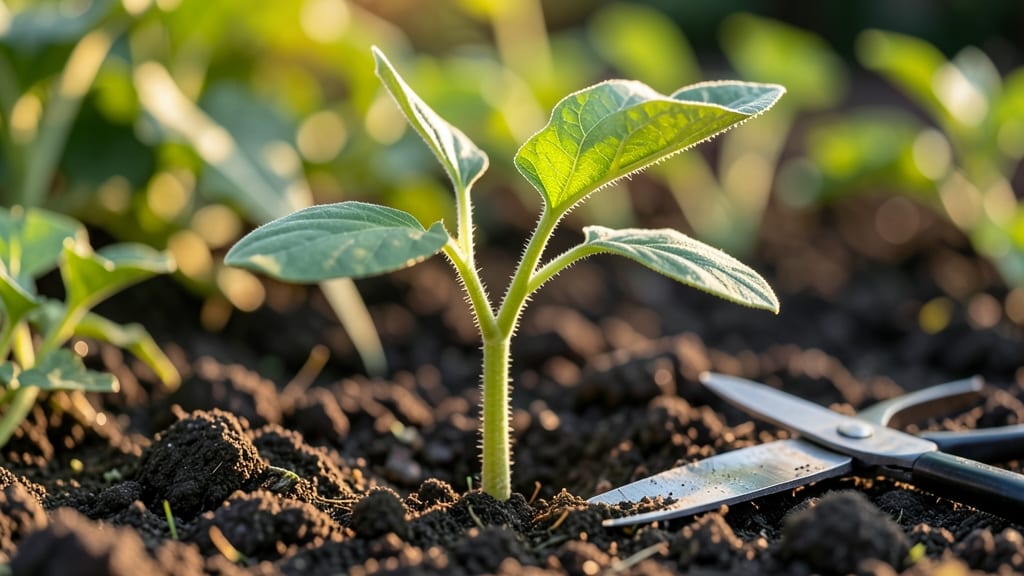
Squash sprouts look like tiny, delicate vines with fuzzy stems and broad leaves that start light green and gradually darken. Their early leaves often have jagged edges, mimicking the shape of mature squash foliage in miniature form.
These young plants typically emerge with two small, rounded cotyledons that quickly give way to true leaves—slightly lobed and hairy along the stems. 🌱 The key identifier is how they develop: squash seedlings grow low to the ground with a bushy habit, unlike their vine-like cousins.
I always check for these fuzzy stems and broad leaves when distinguishing them from weeds or other seedlings in my garden beds.
One common mistake is confusing squash sprouts with morning glory or cucumber seedlings, but squash leaves are distinctly broader and more rounded. The hairiness on the stems is another telltale sign—this fuzzy texture helps young plants retain moisture in their early growth stages.
💡 In This Article
- Identifying Squash Sprout Stages from Seedling to Transplant
- Tips for Properly Recognizing Squash Seedlings in the Garden
Identifying squash sprout stages from seedling to transplant
The journey from seed to transplant begins with the cotyledons—those first two tiny, rounded leaves that emerge within 5-10 days of planting. These seed leaves are smooth-edged and light green, often with a slightly waxy texture that helps conserve moisture.
What's fascinating is how these cotyledons act as the plant's first energy source, storing nutrients from the seed until the true leaves develop. 🌱
Within 1-2 weeks, the first true leaves appear—these are where the real identification magic happens. True squash leaves start as 1-2 inches wide with jagged, lobed edges that resemble miniature versions of mature squash foliage.
The stems develop fine, downy hairs that create a fuzzy texture, a key distinguishing feature from cucumber seedlings which have smoother stems. These hairs serve a practical purpose: they help reflect sunlight and reduce water loss during the vulnerable early growth phase.
As the plant matures toward transplant size (3-4 weeks), the leaves grow broader and more rounded, with the edges becoming less jagged and more lobed. The stem hairs become less dense but remain visible under close inspection.
At this stage, you'll notice the leaves develop a darker green color on top while maintaining a lighter underside—a trait shared with many squash varieties that helps regulate temperature through transpiration.
The entire plant stays low to the ground, forming a bushy growth habit rather than climbing like cucumbers or melons.
One common point of confusion is distinguishing squash seedlings from morning glory vines, which also have broad leaves. The key difference lies in the growth pattern: squash leaves grow directly from the stem in a spiral pattern, while morning glory leaves alternate along the vine.
Additionally, squash stems are typically thicker and more rigid at the base, while morning glory stems are more slender and flexible. 💫
For gardeners working with multiple squash varieties, leaf shape can vary slightly—some like butternut squash develop more deeply lobed leaves earlier, while others like zucchini maintain broader, simpler shapes. The stem hairiness remains consistent across varieties, though, making it a reliable identification feature.
This hairiness isn't just for show; it's an evolutionary adaptation that helps young plants survive in their natural environments where they might face drought conditions.
When transplanting, look for seedlings with 3-4 true leaves and stems that are at least 1/8 inch thick at the base. These plants have developed enough root structure to handle transplantation without shock.
The leaves should be vibrant green without yellowing, indicating healthy chlorophyll production and proper nutrient uptake from the soil.