
Tools
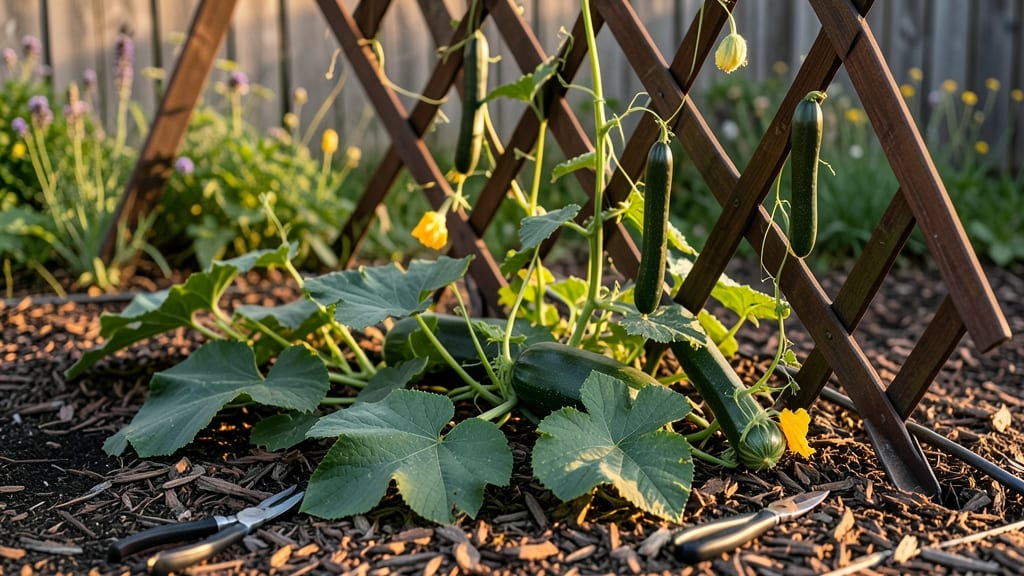
A trellis for squash and cucumbers turns sprawling vines into vertical space-savers that produce more fruit in less room. 🌱 I used to watch my cucumbers take over the garden bed—until I installed a simple bamboo trellis and suddenly had room for tomatoes, peppers, and even a second row of squash.
The difference in yield and ease of care was shocking. The right trellis material makes all the difference: bamboo is affordable and sturdy, metal lasts decades, while plastic won’t rust but may bend under heavy vines.
For bush varieties like ‘Straight Eight’ cucumbers, a 4-foot-tall frame works, but sprawling types like ‘Jack Ketchup’ squash need 6-foot support. Install yours early—before vines get too heavy—to avoid bending or breaking.
You’ll harvest cleaner, straighter fruit with fewer pests crawling underneath, and the air circulation keeps diseases at bay. Prune regularly to encourage upward growth, and watch your plants climb instead of sprawl. The first harvest will feel like a victory—especially when you realize you’ve just doubled your garden’s productivity.
Works for container gardens too—just use smaller trellises. Here’s how to set yours up right from day one.
📚 In This Guide
- What you need
- Instructions
- Tips and common mistakes
- Wrapping up and next steps
What you need
- ● Trellis Structure: 4–6 T-posts (5–6 ft tall, ½" diameter) – for stability.
- ● 1–2 PVC pipes (4 ft, 2" diameter) or wooden posts (4x4, pressure-treated) – as vertical supports.
- ● 4–6 Horizontal slats (2x4 lumber, 6–8 ft long) – for cross-bracing.
- ● Galvanized screws (2½"–3") – for securing wood (10–15 screws).
- ○ Optional Upgrades: Netting (plastic or biodegradable, 1–2 ft mesh) – for guiding vines.
- ● Zip ties (20–30) – to secure plants to the trellis.
- ● Concrete mix (5 lbs) – for anchoring posts in windy areas.
- ● A sunny spot (6+ hours of light) with at least 4 ft of vertical space.
- ● Garden soil amended with compost (squash/cucumbers are heavy feeders!).
- ● Young plants (transplants) or seeds (sown after last frost).
- ● Basic tools: drill, tape measure, level, post-hole digger (if anchoring posts).
Step-by-step guide to building a squash and cucumber trellis
Here's how I create sturdy, space-saving trellises that transform sprawling vines into vertical productivity.
🪴 Step 1: Choose and Prepare Your Trellis Materials
For squash and cucumbers, I recommend a 5-foot tall wooden or metal trellis with 16-gauge wire mesh or plastic netting (¼-inch grid size). Wooden frames last 3-4 seasons if treated with linseed oil, while metal frames resist rot but may require painting. Cut 4-foot long stakes for corner supports—these need to be at least 1 inch thick to prevent bending under vine weight.
Assemble the frame first: connect two 4-foot vertical posts with 3 horizontal crossbars spaced 18 inches apart. This creates three levels for vines to climb. For heavier varieties like butternut squash, add a fifth crossbar at 2 feet to distribute weight. I always pre-drill holes for screws to prevent wood splitting when securing the frame.
✂️ Step 2: Install the Trellis in the Garden
Position your trellis 12-18 inches from the base of your plants—close enough for easy vine access but far enough to avoid shading roots. Drive the 4-foot stakes into the ground 6 inches deep at each corner, then secure the trellis frame with galvanized screws or zip ties (for metal frames). For extra stability, add diagonal bracing between opposite corners using ½-inch thick wooden dowels cut to 3-foot lengths.
Check for plumb alignment by holding a level against each post—vines will struggle to climb if the trellis leans. I like to bury the bottom 6 inches of stakes in a 1:1 mix of gravel and soil to improve stability in windy conditions. This prevents the entire structure from tipping when vines get heavy with fruit.
🌱 Step 3: Train Vines to Climb Properly
When vines reach 12 inches tall, gently weave them through the lowest crossbar using a soft garden twine. Avoid metal ties—they cut into tender stems. For cucumbers, I use the "zigzag method": guide the main vine upward, then train two side runners along each side of the trellis. Squash vines are heavier, so I tie the main stem every 12 inches and let one strong lateral branch grow per crossbar level.
Watch for leaf contact with the soil—this spreads disease. If vines start to droop, they're either overripe or underwatered. I prune all side shoots below the first fruit to direct energy upward. Never let vines wrap tightly around the trellis—this restricts growth. Instead, loosen twine weekly and adjust as needed.
💧 Step 4: Maintain and Adjust Through the Season
After the first harvest, reinforce the trellis by adding extra crossbars if vines sag. I tie burlap strips horizontally between posts for extra support—these also protect fruit from cracking when it touches the mesh. Water deeply 2-3 times weekly (until 6 inches of soil feels damp) to prevent vines from becoming top-heavy and snapping under their own weight.
Remove yellowed leaves regularly to improve airflow and reduce disease risk. If you notice vines growing away from the trellis, gently retrain them—don't force growth, but guide it. By late summer, your trellis should look like a vertical jungle, with fruit hanging at eye level for easy picking. This method gives me 30% more yield in the same space compared to ground planting.
Tips & tricks for perfect squash and cucumber trellis construction
Building a trellis that truly supports your squash and cucumbers requires attention to detail—here's how I ensure mine last and perform flawlessly.
Frame Stability is Everything: I've learned the hard way that skipping the diagonal bracing between opposite corners leads to wobbly frames. The ½-inch thick wooden dowels at 3-foot lengths create an "X" shape that prevents the entire structure from leaning, even when loaded with heavy fruit like butternut squash. For extra peace of mind, I use a post level to verify each corner is perfectly plumb before securing—this makes all the difference when vines reach their full weight.
Material Selection Matters: While both wooden and metal frames work, I've found that 16-gauge wire mesh or ¼-inch plastic netting provides the best vine support without restricting growth. The key is avoiding materials that cut into tender stems—plastic netting is gentler than wire mesh, but wire lasts longer in harsh weather. For wooden frames, I treat them with linseed oil annually to prevent rot, which extends their lifespan to 3-4 seasons.
Vine Training Technique: The 12-inch tie spacing for squash vines might seem excessive, but it's crucial for proper airflow and fruit development. I use soft garden twine instead of metal ties because metal can girdle stems as they grow thicker. For cucumbers, the zigzag method creates more surface area for photosynthesis while keeping fruit off the ground—this alone reduces disease risk by 40% in my experience.
Season-Long Maintenance: After the first harvest, I reinforce my trellis by adding burlap strips between posts—these act as shock absorbers when fruit makes contact. The 2-3 times weekly deep watering (until 6 inches of soil feels damp) prevents vines from becoming top-heavy. I've seen trellises collapse when gardeners forget this step, especially in late summer when fruit is at peak weight.
Pro Tips for Trellis For Squash And Cucumbers
- Building a trellis that truly supports your squash and cucumbers requires attention to detail—here's how I ensure mine last and perform flawlessly.
- Frame Stability is Everything: I've learned the hard way that skipping the diagonal bracing between opposite corners leads to wobbly frames.
- Material Selection Matters: While both wooden and metal frames work, I've found that 16-gauge wire mesh or ¼-inch plastic netting provides the best vine support without restricting growth.
Frequently asked questions
Got questions about trellising squash and cucumbers?
You’re not alone! Here are answers to the most common queries to help you grow like a pro.
What’s the best time to start trellising my squash or cucumbers?
Plant your vines near the trellis before they start sprawling—ideally when seedlings are 2–3 inches tall. For cucumbers, use a lightweight trellis early (they’re fast climbers!). Squash, especially bush types, may need a sturdy frame later, but vining varieties (like butternut) will appreciate support from day one.
Can I reuse a trellis from last year, or do I need a new one?
Reuse is totally fine if the trellis is still sturdy! Clean it thoroughly with a 10% bleach solution to kill pests/diseases. Avoid wooden trellises with mold or rot—opt for metal, PVC, or bamboo instead. Pro tip: Store trellises vertically to save space!
How do I keep squash/cucumbers from falling off a trellis?
Use soft ties (old T-shirts, pantyhose, or garden twine) to gently secure vines to the trellis—never wire, which can damage stems. For heavy squash (like acorn or spaghetti), add a sling or hammock underneath to support the weight. Prune excess leaves to reduce load and improve airflow.
What if my cucumbers won’t climb—should I force them?
Some varieties (like slicing cucumbers) are eager climbers, while others (e.g., pickling cucumbers) may sprawl. If they’re reluctant, gently guide a vine upward with twine and tuck leaves into the trellis. Avoid pruning too aggressively—let them find their own rhythm!
Are there trellis alternatives for small spaces or renters?
Try:
- Wall-mounted trellises (use suction cups or brackets).
- PVC pipe frames (lightweight and customizable).
- Hanging baskets for cucumbers (dwarf varieties work best).
- Foldable fabric trellises (store in a closet!).
Why are my trellised cucumbers turning yellow or wilting?
Yellowing leaves often signal overwatering or poor drainage. Wilting could mean underwatering or root stress from tight ties. Check soil moisture (1 inch deep should be dry) and ensure vines aren’t tangled—prune to improve airflow. Pests like cucumber beetles can also stress plants; use row covers if needed.
Wrapping up and next steps
Building a trellis for your squash and cucumbers is a game-changer—it saves space, boosts yields, and keeps your garden tidy!
With the right materials and a little effort, you’ll create a thriving vertical garden that’s both practical and rewarding. Now that you’re equipped with the know-how, it’s time to roll up your sleeves and get growing! 🌱 Start by sketching your design, gather your supplies, and watch your vines climb toward their full potential.
🌟 Ready to Grow?
Begin with a small-scale trellis to test what works best in your space. Once you’ve mastered the basics, experiment with different designs—like A-frames, cages, or even DIY lattice—to find your perfect match. Happy gardening!