
Picking
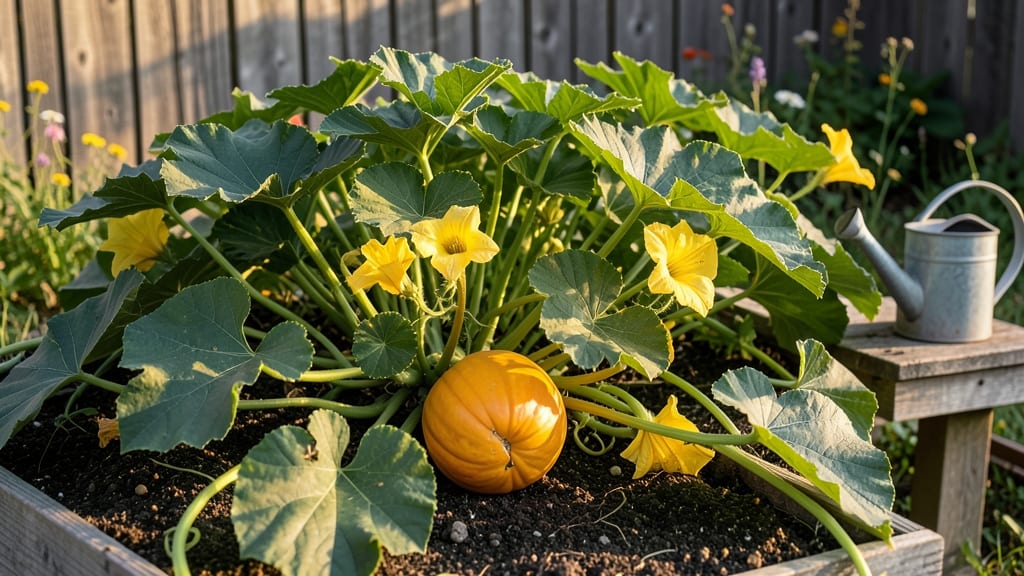
Growing Sunshine Kabocha squash in containers just got easier with this cold-resistant variety. 🌱 I’ve grown squash in pots for years, and Sunshine Kabocha stands out because it thrives in cooler temperatures than most—ideal for early spring or late fall starts.
The grafted roots mean fewer diseases and stronger plants, even in small spaces. You’ll need a 5-gallon container (or larger for multiple plants), well-draining soil mixed with compost, and 6-8 hours of sunlight daily.
Space plants 12-18 inches apart to avoid crowding, and keep the soil consistently moist but not soggy. The graft union (where the rootstock meets the scion) should stay 1-2 inches above soil to prevent rot.
Harvest when the skin turns a deep golden-orange and feels firm when pressed—usually 80-90 days after transplanting. Store in a cool, dry place for 2-3 months, or cook fresh for rich, sweet flesh.
These squash handle cooler temps better than traditional varieties, making them perfect for short seasons or container gardening. This variety pairs well with bush beans, nasturtiums, or thyme to deter pests naturally. Avoid planting near potatoes or other squash to prevent disease spread.
With the right care, you’ll enjoy a bountiful harvest even in less-than-ideal conditions!
📚 In This Guide
- What you need
- Instructions
- Tips and common mistakes
- Wrapping up and next steps
What you need
- ● Sunshine Kabocha Squash Seeds – 3–5 seeds (or 1–2 grafted seedlings if available). Look for Cucurbita maxima varieties labeled "sunshine" or "kabocha."
- ○ Grafted Seedlings (Optional but Recommended) – If starting from seed, expect a 70–90 day harvest time. Grafted plants mature faster and resist cold better!
- ● Containers or Garden Beds – Containers: 5-gallon pots or larger (minimum 18" diameter/width for vining). Use fabric pots for better aeration.
- ● Garden Beds: Well-draining soil in a sunny spot (6+ hours of light daily). Raised beds are ideal for cold climates.
- ● High-Quality Potting Mix – 10–15 lbs (or a blend of 60% compost, 30% coconut coir, 10% perlite for drainage). Avoid garden soil—it compacts and retains too much moisture.
- ● Slow-Release Fertilizer – 1–2 cups of 10-10-10 or organic options like worm castings or composted manure.
- ○ Trellis or Cage (Optional but Helpful) – A 4–5 ft tall tomato cage or wire trellis to support vines and improve airflow.
- ● Mulch – Straw or shredded leaves (2–3 inches) to retain moisture and regulate soil temperature.
- ● Drip Irrigation or Watering Can – Consistent moisture is key! Aim for 1–2 inches of water per week.
- ● Pruning Shears – For trimming excess vines or yellowing leaves.
- ● Garden Gloves & Sunscreen – Because gardening is hands-on (and squash leaves love to burn!).
- ● Last Frost Date – Wait until soil temps are at least 60°F (15°C) before planting. Use row covers if early planting is unavoidable!
- ● Sun Exposure – Full sun (6+ hours daily). Partial shade may reduce yield.
- ● Cold Resistance – Sunshine kabocha is grafted for resilience, but still protect young plants from late frosts with cloches or frost blankets.
- ● Patience – Grafted plants may take 2–3 weeks to establish roots before vigorous growth begins.
Step-by-step instructions for growing Sunshine kabocha squash in containers
Here’s how to cultivate this cold-hardy, grafted variety successfully in limited space.
🌱 Step 1: Select the Right Container and Grafted Seedlings
Choose a container at least 18 inches deep and 24 inches wide—kabocha squash roots spread aggressively, and grafted plants need extra room for the rootstock to thrive. I prefer fabric grow bags because they allow roots to breathe and prevent waterlogging, which grafted plants hate. Fill the container with a well-draining potting mix (avoid garden soil—it compacts and suffocates roots).
Plant your grafted Sunshine Kabocha seedlings 2-3 weeks after your last frost date when soil temperatures reach at least 60°F. The graft union (where the scion meets the rootstock) should be 1-2 inches above the soil line—burying it invites rot. Gently firm the soil around the base to eliminate air pockets, but don’t compact it tightly. This ensures the graft heals properly and the plant establishes strong root systems quickly.
☀️ Step 2: Provide Warmth, Light, and Protection
Sunshine Kabocha thrives in full sun (6-8 hours daily), but young grafted plants need extra warmth to prevent shock. Use a floating row cover or mini greenhouse tent for the first 10-14 days to maintain soil temperatures above 65°F. Without this, the graft union weakens, and the plant may reject the rootstock entirely.
Position your container where it gets morning sun and afternoon shade during the hottest months—kabocha squash tolerates heat better than many varieties, but 90°F+ temperatures can scorch leaves. Watch for yellowing at the graft union—this is your first sign of stress. If you notice it, move the container to a slightly shadier spot and water deeply to cool the roots.
💧 Step 3: Water Deeply and Maintain Consistent Moisture
Water your grafted Sunshine Kabocha deeply 2-3 times per week, ensuring the top 6 inches of soil stay evenly moist but not soggy. Grafted plants are particularly sensitive to fluctuating moisture levels, so I use a moisture meter to check before watering. The key is consistency—let the top inch dry out between waterings, but never allow the soil to become bone-dry.
Mulch with 2-3 inches of straw or shredded leaves to retain moisture and regulate soil temperature. Avoid organic mulches like wood chips—they can compact and suffocate the graft union over time. You’ll know your watering routine is right when the leaves stay deep green and the vines grow steadily without wilting. If leaves curl or yellow, you’re either overwatering or underwatering.
✂️ Step 4: Prune and Train Vines for Maximum Yield
Once vines reach 12-18 inches long, gently train them along a trellis or sturdy cage to save space and improve air circulation. Kabocha squash is a vining variety, so pruning isn’t critical, but removing any suckers (side shoots) below the first 3 leaves helps direct energy to fruit production. Use clean, sharp pruners to avoid tearing the vines—rough cuts invite disease.
Watch for male and female flowers—female flowers have a tiny squash at their base, while males don’t. Hand-pollinate by transferring pollen from male to female flowers with a small brush if bees are scarce. This ensures better fruit set, especially in container gardens where pollinators may not visit as frequently. Harvest when the skin turns hard and dull (usually 80-100 days after transplanting).
⏰ Step 5: Extend the Season and Prepare for Storage
Sunshine Kabocha’s cold resistance lets you harvest well into fall, but protect mature plants with a frost blanket when nighttime temps drop below 40°F. The grafted rootstock handles cooler soils better than traditional squash, but hard frosts will still kill the vines. Harvest before the first killing frost—waiting too long risks rotting fruit in the ground.
Cure harvested squash by placing them in a warm, dry spot (80-85°F) for 7-10 days to harden the skin. Store in a cool (50-55°F), dark place where they’ll keep for 3-6 months. If you notice any soft spots or mold, remove them immediately—kabocha squash stores best when dry and undamaged. This variety’s cold tolerance makes it perfect for late-season harvests even in cooler climates.
Tips & tricks for growing Sunshine kabocha squash in containers
Here's what I've learned after growing this resilient variety—these tricks will help you avoid common pitfalls and maximize your harvest.
Container Size Matters: The 18-inch depth and 24-inch width aren't just suggestions—they're non-negotiable for grafted kabocha. I've seen roots spread aggressively beyond these dimensions, especially in fabric grow bags. If you're using a larger container, add extra drainage holes to prevent waterlogging, which grafted plants absolutely despise. The extra space also gives the rootstock room to establish without competing with the scion.
Graft Union Protection: That 1-2 inch graft union placement above soil isn't just about aesthetics—it's critical for survival. I learned this the hard way when my first attempt buried it too deep, leading to rot. Use a small marker or flag to track the graft line if you're unsure. Also, avoid heavy mulch directly against the stem, which can suffocate the graft and cause it to fail.
Temperature Management: The 60°F soil temperature requirement is your baseline, but don't stop there. Use a soil thermometer to verify—especially in early spring or fall. For those first 10-14 days with row covers, aim to keep soil temps consistently above 65°F. I've found that a simple thermometer placed in the soil gives me peace of mind. If temps drop below 60°F, even briefly, the graft union can weaken dramatically.
Harvest Timing: The 80-100 day range for harvest is your target window, but don't rely solely on days—watch the skin closely. When it turns dull and hard (not shiny), it's ready. I've found that harvesting in the morning gives me the freshest squash, as the skin firmness is most pronounced then. Also, use clean, sharp pruners to cut the stem—never tear it, as this creates entry points for rot.
Pro Tips for Sunshine Kabocha Squash
- Here's what I've learned after growing this resilient variety—these tricks will help you avoid common pitfalls and maximize your harvest.
- Container Size Matters: The 18-inch depth and 24-inch width aren't just suggestions—they're non-negotiable for grafted kabocha.
- Graft Union Protection: That 1-2 inch graft union placement above soil isn't just about aesthetics—it's critical for survival.
Frequently asked questions
Got questions about growing sunshine kabocha squash? You’re not alone! Here are some of the most common queries—plus straightforward answers to help you succeed in your container garden.
How cold can sunshine kabocha squash tolerate before it’s at risk?
This variety is cold-resistant compared to other squash, but it still needs warmth to thrive. Seedlings can handle light frosts (30–35°F) but may struggle below 25°F. For containers, move pots indoors or under cover if temps dip near freezing. Start seeds indoors 2–3 weeks before last frost for best results.
How long does it take for sunshine kabocha squash to mature?
From seed to harvest, expect 85–100 days for full maturity. However, you can harvest smaller, “baby” kabocha (1–2 lbs) as early as 60–70 days for tender, sweeter flesh. Monitor vines for blooms—female flowers (with tiny squash at the base) signal it’s time to check for ripeness!
Can I grow sunshine kabocha in containers, and what size pot do I need?
This grafted variety is perfect for containers. Use pots at least 12–15 inches deep and wide (bigger is better for stability). Ensure drainage holes are present, and pair with a lightweight, well-draining mix. One plant per container works well—just prune excess vines to keep them contained.
What can I do if my sunshine kabocha flowers but no fruit forms?
No fruit? It’s often due to pollination issues or stress. Hand-pollinate by transferring pollen from male (long stems) to female (tiny squash at base) flowers with a paintbrush. Ensure plants get 6+ hours of sun, consistent water, and balanced fertilizer (like 10-10-10). Heatwaves or pests (like squash vine borers) can also hinder fruit set—keep an eye out!
What’s the best way to store harvested sunshine kabocha squash?
Store whole, uncut squash in a cool (50–55°F), dry, and dark place (like a pantry) for 2–3 months. Avoid refrigeration—it can spoil the texture. For cut pieces, wrap tightly in plastic and refrigerate for up to 5 days. Freezing cooked kabocha is also an option for long-term storage!
Wrapping up and next steps
Growing sunshine kabocha squash in containers is a rewarding way to enjoy sweet, cold-resistant harvests—even in small spaces! This vibrant variety thrives with minimal fuss, offering delicious results for gardeners of all levels.
Whether you’re a beginner or a seasoned pro, its adaptability makes it a must-try for your next planting season.
Ready to plant your sunshine kabocha? Start by gathering your supplies, then follow the steps above to get your container garden flourishing. Happy growing! 🌱✨