
Plants
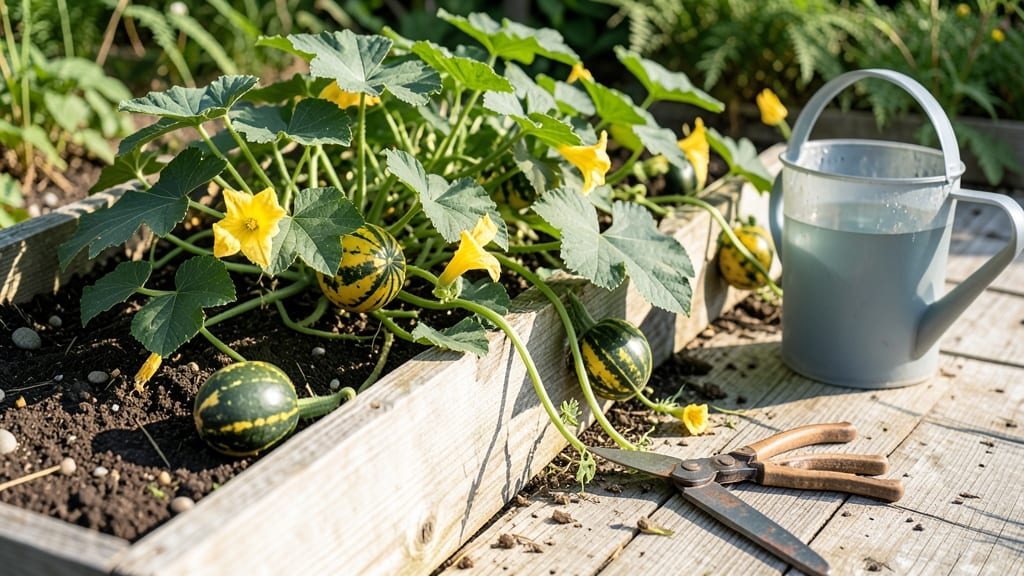
Growing squash that looks like watermelon transforms your garden into a fairy tale. 🌱 These striking Cucurbita maxima varieties—like 'Turk's Turban' or 'Hubbard'—start as fuzzy green gourds and ripen into striped, ribbed masterpieces that weigh 20+ pounds.
The moment you spot their unique shape, you'll know why gardeners plant them year after year. The secret to success begins with soil: rich, well-draining earth with plenty of compost. Plant seeds after the last frost when soil reaches 60°F, spacing them 3-4 feet apart for vines to sprawl.
These squash thrive in full sun (6+ hours daily) and need consistent moisture—never soggy, never dry. Mulch helps retain water and keeps fruits clean. By midsummer, you'll see the first hints of their signature striped patterns emerging.
With proper care, these beauties mature in 80-100 days, staying crisp and flavorful for weeks. The texture is dense and sweet, perfect for roasting or carving. For a showstopper display, plant near tall sunflowers or trellis them vertically. Their dramatic presence turns ordinary gardens into conversation starters.
Ready to grow your own? Let's get those seeds in the ground!
The Science Behind Warped Growth
When your squash starts resembling a watermelon—with its swollen, misshapen vines and oddly rounded fruit—it’s usually a sign that something’s gone awry in the garden’s ecosystem. Understanding the root causes (literally!) helps you correct the issue before your harvest turns into a botanical joke.
Here’s why your squash might be taking this bizarre turn:
Squash plants are sprawlers, but when they’re crammed too close together, their roots compete for nutrients, water, and space. This competition triggers a stress response in the plant, causing it to produce abnormally shaped vines and fruit as it stretches for survival.
- How it happens: Poor airflow, tangled vines, and root-bound conditions force the plant to prioritize vine growth over fruit development. - Actionable fix: Give squash plants plenty of space (at least 3–5 feet between vines) and use trellises or cages to elevate them off the ground.
This improves circulation and reduces disease risk.
Squash plants thrive on consistent moisture, but uneven watering—whether from drought or overwatering—can lead to cellular swelling and deformities. Too little water causes stunted growth, while too much triggers root rot, both of which distort the plant’s structure.
- How it happens:
- Drought stress → Leaves curl, vines thicken, and fruit swells unevenly.
- Overwatering → Roots suffocate, leading to blossom-end rot (common in squash) and misshapen growth.
- Actionable fix:
- Water deeply 1–2 times per week (depending on climate).
- Use mulch to retain moisture and regulate soil temperature.
- Avoid wetting the leaves to prevent fungal diseases.
Squash plants are heavy feeders, and a lack of key nutrients—especially nitrogen, potassium, or calcium—can lead to bizarre growth patterns.
For example: - Too much nitrogen → Excessive leafy growth with small, deformed fruit. - Calcium deficiency → "Blossom-end rot" (dark, sunken spots) that warps squash shape. - Phosphorus deficiency → Weak stems and stunted vines.
- How it happens: Poor soil quality, compacted dirt, or incorrect fertilizer ratios throw off the plant’s development.
- Actionable fix:
- Test your soil and amend with compost or balanced fertilizer (10-10-10 or 5-10-10).
- Side-dress with kelp meal or bone meal for phosphorus and calcium.
Certain pests and pathogens manipulate plant growth by feeding on sap, injecting toxins, or disrupting hormone production.
Common culprits include: - Cucumber beetles → Transmit bacterial wilt, causing vines to swell and yellow. - Squash vine borers → Larvae burrow into stems, leading to weak, gnarled growth. - Powdery mildew → Fungal infection that distorts leaves and fruit, making them look lopsided.
- How it happens: Infestations or infections force the plant to redirect energy toward defense, stunting normal development.
- Actionable fix:
- Use row covers early in the season to block pests.
- Apply neem oil or copper fungicide preventatively.
- Remove and destroy infected plants to prevent spread.
Squash plants prefer warm, stable conditions (70–90°F).
When temperatures soar above 95°F or drop suddenly, the plant’s enzymes and hormones get thrown off, leading to: - Heat stress → Blossoms drop, and remaining fruit swells unevenly. - Cold snaps → Stunted growth and misshapen vines as the plant struggles to recover.
- Actionable fix:
- Provide afternoon shade in scorching climates.
- Use black plastic mulch to warm soil in cool springs.
- Choose heat-tolerant varieties like ‘Straight Eight’ or ‘Golden Boomer’.
Not all squash that looks like watermelon is a sign of trouble—some varieties are bred for unique shapes! If you’re growing a hybrid or heirloom squash, it might naturally have:
- Bulbous vines (e.g., ‘Watermelon Squash’ or ‘Delicata’).
- Round, ribbed fruit (like ‘Sweet Dumpling’).
- How to tell: Check your seed packet or plant tags. If it’s a known variety, embrace the quirks!
- Actionable fix: If you didn’t plant intentionally odd squash, reassess your seed source or start with certified organic seeds.
Track watering, fertilizing, and pest events to spot patterns. If your squash keeps looking like a watermelon year after year, you’ll pinpoint the exact trigger—and fix it for good!
Fixing Your Melon-Like Squash
Got squash vines producing fruit that resembles watermelon? While this isn’t necessarily a problem, it can be confusing—or even frustrating—if you’re expecting traditional squash shapes. Here’s how to diagnose and address the issue, whether you’re dealing with genetic quirks, environmental factors, or simple growing mistakes.
🔍 Cause: Some squash varieties naturally have watermelon-like shapes, stripes, or textures. 🛠 Fix:
- Check your seed packets or plant tags for descriptions like "melon-shaped," "striped," or "ornamental." Varieties such as ‘Watermelon Squash’ (Cucurbita pepo) or ‘Melon Squash’ are bred to resemble watermelons.
- If you’re unsure, research the plant’s characteristics online or consult a local gardening forum.
💡 Pro Tip: If you’re growing heirloom or saved seeds, the fruit may have reverted to an ancestral watermelon-like form. Embrace it—these can be delicious and visually striking!
💧 Cause: Overwatering or inconsistent moisture can cause squash to develop uneven, watermelon-like ridges or puffiness. 🛠 Fix: - Water deeply but infrequently—aim for 1–1.5 inches per week, including rainfall.
Use a soaker hose or drip irrigation to keep soil evenly moist. - Avoid wetting the leaves (especially in humid climates) to prevent fungal diseases like powdery mildew, which can distort fruit. - Mulch heavily with straw or shredded leaves to retain moisture and regulate soil temperature.
✨ Bonus: If your squash is developing soft spots, reduce watering immediately—overhydration can lead to rot.
🌱 Cause: Too much nitrogen (common in fresh manure or over-fertilizing) can lead to leafy growth at the expense of proper fruit development, sometimes resulting in lopsided or melon-like shapes. 🛠 Fix:
- Test your soil (a simple DIY kit from a garden center works) to check nitrogen, phosphorus, and potassium levels.
- Switch to a balanced fertilizer (like 10-10-10) or a low-nitrogen, high-phosphorus option (e.g., 5-10-10) once flowers appear.
- Add compost or aged manure instead of fresh—it provides slow-release nutrients without burning plants.
🎯 Target Goal: Phosphorus (P) encourages root and fruit development, while potassium (K) helps with overall plant health.
🌿 Cause: Poor airflow or shade from overcrowded vines can lead to misshapen fruit, including watermelon-like textures or colors. 🛠 Fix:
- Prune aggressively if your squash is sprawling:
- Remove suckers (side shoots) to focus energy on the main vine.
- Thin vines so they’re 12–18 inches apart for bush varieties or spread 3–5 feet apart for vining types.
- Train vines onto a trellis or cage if needed—this improves sunlight exposure and reduces disease risk.
🔥 Warning: Avoid pruning too late in the season, as it can stress the plant and reduce yield.
🐛 Cause: Squash bugs, cucumber beetles, or fungal infections (like powdery mildew) can distort fruit, sometimes mimicking watermelon patterns. 🛠 Fix: - Handpick pests early in the morning when they’re sluggish.
Drop them into soapy water. - Use row covers (floating fabric) to block beetles during early growth. - Spray neem oil or baking soda solution (1 tbsp baking soda + 1 quart water + a drop of dish soap) weekly for fungal prevention. - Rotate crops next season—don’t plant squash in the same spot for at least 3 years to break disease cycles.
💪 Prevention Tip: Healthy plants resist pests better! Ensure your squash gets 6–8 hours of sunlight daily and well-draining soil.
⏰ Cause: Leaving squash on the vine too long can cause it to overripen, sometimes developing a watermelon-like texture or color. 🛠 Fix:
- Harvest when mature—check variety guidelines (e.g., summer squash like zucchini when 6–8 inches; winter squash like butternut when hard-skinned).
- Use a sharp knife or pruners to avoid damaging the vine.
- Store properly: Cure winter squash (harden skin in sunlight for 10 days) before storing in a cool, dry place.
🥘 Cooking Tip: Even if your squash looks unusual, it’s likely delicious! Try roasting, grilling, or spiralizing it—texture often improves with cooking.
To avoid future "watermelon squash" surprises: ✅ Start with the right seeds—research varieties before planting. ✅ Monitor soil moisture—consistency is key. ✅ Fertilize wisely—less nitrogen, more phosphorus. ✅ Prune and space plants for airflow. ✅ Inspect regularly for pests/diseases.
Remember: Sometimes, nature’s quirks are just nature’s way of keeping things interesting! If your squash is edible and healthy, enjoy the unique harvest—it might just become your garden’s signature star. 🌱🍉
Frequently asked questions
What are the most common squash varieties that resemble watermelons?
Look for 'Watermelon Squash' (Cucurbita pepo) or 'Turk's Turban'—both have striped, ribbed fruit with watermelon-like textures. 'Delicata' also has a watermelon-striped exterior but is smaller and sweeter. These varieties are bred specifically for their unique shapes and are perfect for both decoration and eating!
Can I grow watermelon-like squash in containers?
Choose compact varieties like 'Sweet Dumpling' or 'Table Queen'—they thrive in 5-gallon containers with well-draining soil. Place them in full sun and ensure the container has drainage holes. Just be prepared to harvest smaller fruit, as vining types need more space to sprawl.
How do I tell if my squash is ready to harvest?
For watermelon-like squash, check for a hard rind (press your fingernail—it should dent slightly but not pierce). The stem should dry and shrink where it meets the fruit. Summer squash (like zucchini) is ready when 6-8 inches long, while winter varieties (like butternut) need 80-100 days to mature fully.
Why does my squash have weird bumps or ridges?
This often happens from uneven watering or nutrient imbalances. Too much nitrogen causes leafy growth with lumpy fruit, while calcium deficiency (blossom-end rot) creates sunken spots. Try adjusting your fertilizer to 5-10-10 once flowers appear, and water consistently—1-2 inches per week—without wetting the leaves.
Can I save seeds from watermelon-like squash?
Yes! Let the fruit fully ripen on the vine, then scoop out seeds, rinse them, and dry on paper towels for 3-5 days. Store in a cool, dry place. Just note: heirloom varieties may revert to their original traits, sometimes producing even more watermelon-like shapes in future generations!