
Vegetables
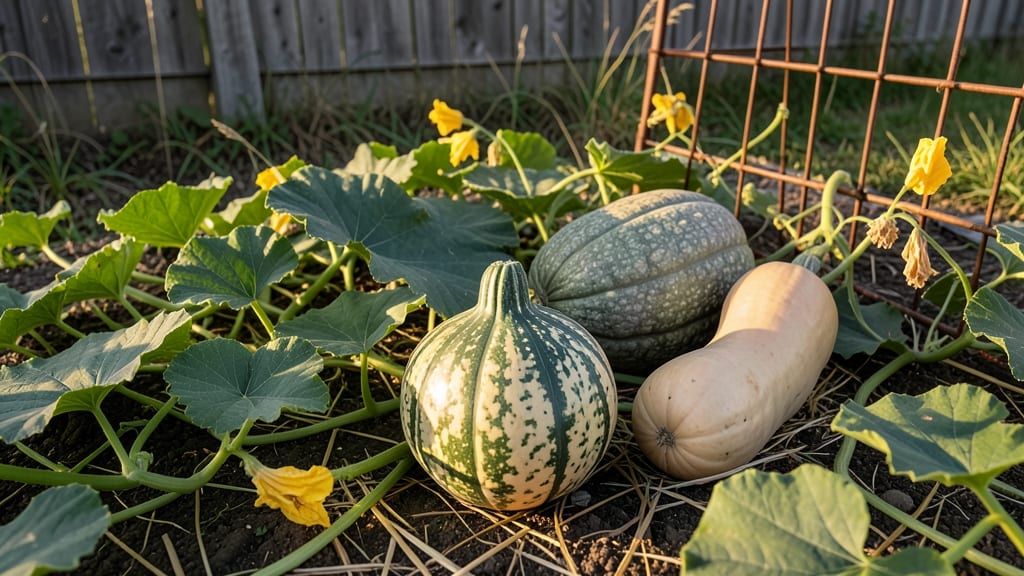
The first time I grew these heirloom squash types, my garden exploded in golden Crown Prince, crown-shaped Turk’s Turban, and deep purple Blue Hubbard—each a flavor explosion waiting to be sliced. 🌻 your garden into a showstopper while filling your kitchen with unique tastes.
Growing them is easier than you’d think: all need full sun, well-drained soil, and 12-24 inches of spacing depending on the type. Water consistently but avoid soggy soil—blossom-end rot is the last thing you want.
Most mature in 80-100 days, so start seeds indoors 4-6 weeks before last frost for a summer-long harvest.
Each type has its own magic—Crown Prince stores for months, Turk’s Turban has nutty sweetness, and Blue Hubbard is a winter staple. They’re perfect for roasting, soups, or even carving into jack-o’-lanterns. Plus, their vines add ornamental drama to any garden bed.
Cool climates? No problem—plant after frost or use row covers. Warm zones? Succession plant for continuous harvests. The key is patience: let them ripen fully on the vine for the best flavor. Trust me, your taste buds will thank you.
📚 In This Guide
- What you need
- Instructions
- Tips and common mistakes
- Wrapping up and next steps
What you need
- ● Seeds: Choose 5–10 heirloom squash varieties (e.g., Cocozelle, Turban, Delicata). Buy from reputable seed suppliers for quality and diversity.
- ● Growing Space: Outdoor: Full sun (6–8 hours daily), well-draining soil, and space (squash vines spread 3–6 feet wide).
- ● Container: Large pots (15+ gallons) with drainage holes for compact varieties like Table Queen.
- ● Soil: 1–2 cubic yards of rich, compost-amended soil (pH 6.0–6.8). Mix in 5–10 lbs of organic compost per 100 sq ft.
- ● Fertilizer: Balanced organic fertilizer (10-10-10) or compost tea. Apply 1–2 lbs per 100 sq ft at planting and mid-season.
- ● Watering Supplies: Drip irrigation or soaker hoses (avoid overhead watering to prevent disease). Aim for 1–2 inches of water per week.
- ● Mulch: Straw or shredded leaves (2–3 inches thick) to retain moisture and suppress weeds.
- ● Trellis or Cages: For bush varieties like Eight Ball to save space and improve air circulation.
- ● Row Covers: Lightweight fabric to protect young plants from pests and cool temperatures.
- ● Pruning Shears: For trimming excess vines or removing diseased leaves.
- ● Harvest Tools: Sharp knife or pruners for clean cuts when harvesting.
- ● Food Storage: Mesh bags or cardboard boxes with holes for curing squash post-harvest.
- ● Knowledge: Basic gardening skills (planting depth, spacing, and pest management).
- ● Time: 60–100 days from seed to harvest, depending on the variety.
- ● Patience: Squash plants are heavy feeders—consistent care pays off!
How to select and grow four stunning heirloom squash varieties
These four heirloom squash types bring vibrant color and texture to your garden—here's how to grow them successfully.
🌱 Step 1: Choose Your Varieties Based on Growing Conditions
Start with four heirloom varieties that complement your climate: Blue Hubbard (cool-season, slow-growing), Crown of Thorns (warm-season, decorative), Turk's Turban (heat-tolerant, unique shape), and Sweet Dumpling (bush-type, early harvest). Blue Hubbard thrives in 50-70°F ranges and needs 90-120 days to mature, while Turk's Turban demands 75-90°F and 100-110 days. I always plant Crown of Thorns last—it handles late-season heat better than most.
Check your last frost date and count backward: plant Blue Hubbard 4-6 weeks before frost, while Turk's Turban and Sweet Dumpling go in 2-3 weeks after frost. Crown of Thorns is the most flexible—it tolerates light frosts and can be direct-sown 3-4 weeks after your last frost. Watch for soil temperature to reach 60°F before planting seeds.
☀️ Step 2: Prepare Soil and Plant Seeds for Optimal Growth
Heirloom squash roots 12-18 inches deep, so amend your soil with 3-4 inches of compost mixed into the top 12 inches of bed. These varieties hate soggy soil—amend heavy clay with sand or perlite to improve drainage. I test soil pH first; aim for 6.0-6.8. If your soil is too acidic, add lime two weeks before planting.
Plant 4-5 seeds per hill, spaced 2-3 inches apart, and 1 inch deep. Hills should be 4-6 feet apart for vining types (Hubbard, Crown of Thorns) and 3-4 feet apart for bush types (Sweet Dumpling). Thin to 2-3 strongest seedlings per hill once first true leaves appear. Here's the thing—don't rush thinning. Wait until seedlings are 2-3 inches tall to minimize shock.
💧 Step 3: Maintain Consistent Moisture and Fertility
Water deeply 2-3 times per week, aiming for 1-1.5 inches per week. Use drip irrigation or soaker hoses to keep foliage dry—powdery mildew is the #1 enemy of heirloom squash. You'll know moisture is right when top 2 inches of soil feel damp but not wet. Mulch with straw or shredded leaves to retain moisture and suppress weeds.
Feed every 3-4 weeks with a balanced organic fertilizer (10-10-10) or compost tea. Blue Hubbard and Turk's Turban are heavy feeders—look for large, dark green leaves as a sign they're thriving. If leaves yellow between veins, that's magnesium deficiency—side-dress with Epsom salt (1 tbsp per plant). Real talk: Over-fertilizing leads to lush foliage but few squash. Balance is key.
✂️ Step 4: Prune and Support for Maximum Yield
Remove suckers (side shoots) from vining types to direct energy to fruit production. I prune Crown of Thorns aggressively—cut back 25% of vines once they reach 4 feet to improve airflow. For Sweet Dumpling, pinch off first flowers to encourage bushier growth and larger squash later. Harvest when skin hardens and stem separates easily—this prevents sunscald and disease.
Use cages or trellises for Blue Hubbard and Turk's Turban to keep fruit off damp soil. I've seen Hubbard squash rot overnight when left on wet ground. Support also prevents fruit deformities—a common issue with heirloom varieties. Harvest every 3-5 days during peak season to encourage continuous production. Don't wait until squash are fully mature to pick—overripe heirlooms develop wooden rinds and lose flavor.
🌿 Step 5: Handle Pests and Diseases Proactively
Watch for squash vine borers—tiny holes in leaves or frass (sawdust-like droppings) mean larvae are tunneling through stems. I wrap stems with aluminum foil at the base to deter egg-laying. For powdery mildew, spray neem oil every 7-10 days once you see white powder on leaves. Rotate varieties yearly to prevent soil-borne diseases like cucumber mosaic virus.
Crop rotation is non-negotiable. Never plant squash in the same spot two years in a row. If you must, wait three years. I also interplant with nasturtiums—they repel pests naturally. Remove yellowed or diseased leaves immediately and compost them far from the garden to prevent reinfection. Here's the moment that matters: Prevention saves your harvest—don't wait until pests arrive to act.
Tips & tricks for growing stunning heirloom squash
Here's what I've learned after years of growing these showstopping varieties—small details that make all the difference.
Variety-Specific Planting Timing: The 4-6 week window for Blue Hubbard before your last frost is critical—don't rush it. I've seen seedlings fail when planted too early in cool climates. For Turk's Turban and Sweet Dumpling, those 2-3 weeks after frost give them enough warmth to establish roots before summer heat peaks. Crown of Thorns' flexibility means you can direct-sow it 3-4 weeks after frost without worrying about cold damage.
Soil Preparation Secret: That 12-18 inch root depth means you can't skimp on soil prep. I mix my compost into the top 12 inches because roots will follow nutrients downward. For heavy clay, blend in sand or perlite to create pockets for air—soggy soil is the #1 killer of heirloom squash. Test your pH first; I've had to add lime twice when my soil tested below 6.0, and the difference in plant vigor was dramatic.
Thinning Technique: Waiting until seedlings reach 2-3 inches tall before thinning prevents shock, but here's the real trick: use sharp scissors to cut rather than pull. This reduces disease entry points and gives you cleaner hills. I thin to 2-3 strongest plants per hill—any more and they'll compete for nutrients, leading to smaller fruit.
Pest Prevention: The aluminum foil wrap around stems is my go-to for squash vine borers. I apply it at planting and replace it if it tears. For powdery mildew, I've found that neem oil works best when applied preventatively every 7-10 days starting when plants hit 6 inches tall—not when you see the first signs. The key is keeping foliage dry with drip irrigation, which also prevents fungal spores from splashing onto leaves.
Pro Tips for Heirloom Squash Types
- Here's what I've learned after years of growing these showstopping varieties—small details that make all the difference.
- Variety-Specific Planting Timing: The 4-6 week window for Blue Hubbard before your last frost is critical—don't rush it.
- Soil Preparation Secret: That 12-18 inch root depth means you can't skimp on soil prep.
Frequently asked questions
Got questions about heirloom squash? You’re not alone!
Whether you’re a first-time gardener or a seasoned chef, these answers will help you grow, store, and enjoy these vibrant varieties like a pro.
What’s the easiest heirloom squash to grow for beginners?
Start with butternut or acorn squash—they’re hardy, fast-growing, and forgiving of mistakes. Delicata (sweet potato squash) is another great pick because its skin is edible, so no peeling required! Look for disease-resistant varieties labeled "beginner-friendly" on seed packets.
How long does it take for heirloom squash to mature?
Most heirloom squash varieties mature in 80–120 days, but timing varies:
- Summer squash (zucchini, pattypan): 45–60 days—harvest young for tender flesh!
- Winter squash (butternut, pumpkin): 90–120 days—wait until rinds harden before picking.
Can I substitute heirloom squash for regular squash in recipes?
Heirloom varieties like butternut or spaghetti squash work 1:1 in soups, roasts, or stuffing. However, acorn or delicata have sweeter, denser flesh—perfect for baking or candying. For textural differences, adjust cooking times (e.g., heirloom skin may need longer to soften).
Where’s the best place to buy heirloom squash seeds?
For the widest selection, try:
- Specialty seed companies: Baker Creek Heirloom Seeds, Seeds of Change, or Territorial Seed Co. (all offer organic/non-GMO options).
- Local farmers’ markets: Ask vendors for heirloom varieties—they often carry unique regional types!
- Avoid big-box stores: Their seed racks rarely feature true heirlooms (look for "heirloom" or "open-pollinated" labels).
How do I store heirloom squash long-term?
Most winter squash (like butternut or hubbard) stores for 2–6 months in a cool (50–55°F), dark, and dry spot. Avoid refrigeration—it speeds up spoilage! Cure them first: Place whole squash in sunlight for 7–10 days to harden skins. For summer squash, store unwashed in the fridge for up to 1 week.
Wrapping up and next steps
From vibrant Cinderella pumpkins to sweet Delicata squash, heirloom varieties bring a burst of color, flavor, and history to your garden and kitchen. Whether you’re a seasoned gardener or a curious beginner, these unique squashes offer endless culinary possibilities and a rewarding growing experience.
Now that you’re inspired, why not plant a few seeds this season? Start small—try one or two varieties—and let your garden (and taste buds) flourish! 🌱
- Next step: Pick your favorite heirloom squash and check out our growing guide for tips on planting and care.