
Planting
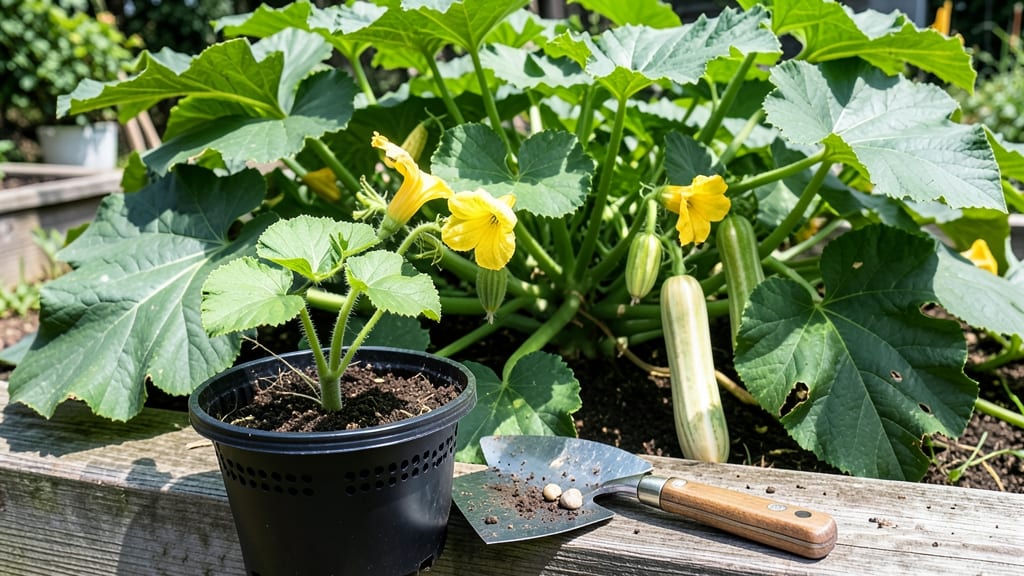
To plant squash seeds properly, aim for 1 inch deep in well-drained soil—any deeper risks stunted growth, while shallower planting exposes seeds to drying or pests.
Squash seeds need that 1-inch depth because it balances moisture retention with oxygen access—critical for germination. 🌱 Too shallow means seeds dry out before sprouting, while excessive depth forces seedlings to push harder through soil, weakening their stems.
I’ve found that loose, well-drained soil (like compost-amended garden beds) helps maintain consistent moisture, especially in hot climates where evaporation is rapid.
For cool, moist regions, you can plant slightly shallower (½ inch) since the soil stays damp longer. Conversely, in hot, dry areas, add a thin mulch layer after planting to lock in moisture.
Pro tip: Pre-soak seeds overnight if your soil is sandy—this gives them a head start against dry conditions.
💡 In This Article
- Squash Seed Germination Science: Why Depth Matters
- Best Practices for Planting Squash Seeds by Region
Squash seed germination science: why depth matters
Squash seeds require a delicate balance of moisture, oxygen, and warmth to germinate successfully.
When planted at the ideal 1-inch depth, they receive just enough soil coverage to retain moisture while still allowing oxygen to reach the seed through tiny air pockets. 🌱 The seed's outer shell contains enzymes that break down stored nutrients, but this process needs consistent moisture—too shallow (½ inch) causes seeds to dry out before sprouting, while depths beyond 2 inches force seedlings to expend energy pushing through compacted soil, often resulting in weak stems.
Temperature plays a crucial role too. Squash seeds germinate best in soil that stays between 70-90°F. Planting too deep can create a cooler microclimate around the seed, slowing germination. Conversely, shallow planting in hot climates risks exposing seeds to rapid moisture loss.
The 1-inch rule accounts for this by providing enough soil insulation while maintaining optimal conditions for root development. For example, in Arizona's desert heat, I've seen seeds planted at 1.5 inches struggle to sprout until rainfall increased soil moisture.
Seedling strength also depends on how the cotyledons (first leaves) emerge. When planted correctly, the emerging shoot pushes through soil with minimal resistance, developing a sturdy stem. However, deep planting forces the seedling to grow upward at an angle, creating a weak "knee" where it bends to reach light.
This is why you'll often see squash seedlings with a pronounced curve near the soil line when planted too deep—a clear sign of stress. 💛 Proper depth ensures straight, robust growth from the start.
Soil texture affects how depth impacts germination. In sandy soil, which drains quickly, seeds need slightly more coverage (1.25 inches) to maintain moisture. Clay soil, on the other hand, holds water well, so ½ inch may suffice in cool, damp regions.
The key is ensuring the seed stays in contact with moist soil while allowing oxygen circulation—this is why loose, well-aerated soil (like compost-amended beds) performs better than compacted ground.
One often-overlooked factor is the seed's natural position. Squash seeds are typically planted with the flat side down and pointed end up, which aligns with their natural orientation in the plant.
When buried too deep, this orientation becomes less important, but shallow planting (¼ inch) can cause seeds to roll or become exposed. The 1-inch depth provides enough stability while maintaining the seed's natural alignment for optimal germination.
For gardeners in high-altitude areas (above 5,000 feet), where cooler temperatures prevail, planting ½ inch deep with a protective mulch layer can improve germination rates. The cooler soil requires shallower depths to maintain warmth near the seed.
In contrast, tropical regions benefit from slightly deeper planting (1.25 inches) to prevent seeds from overheating during the day. 🌿 These adjustments show how depth isn't a one-size-fits-all measurement—it's a dynamic variable influenced by climate and soil conditions.