
Fertilization
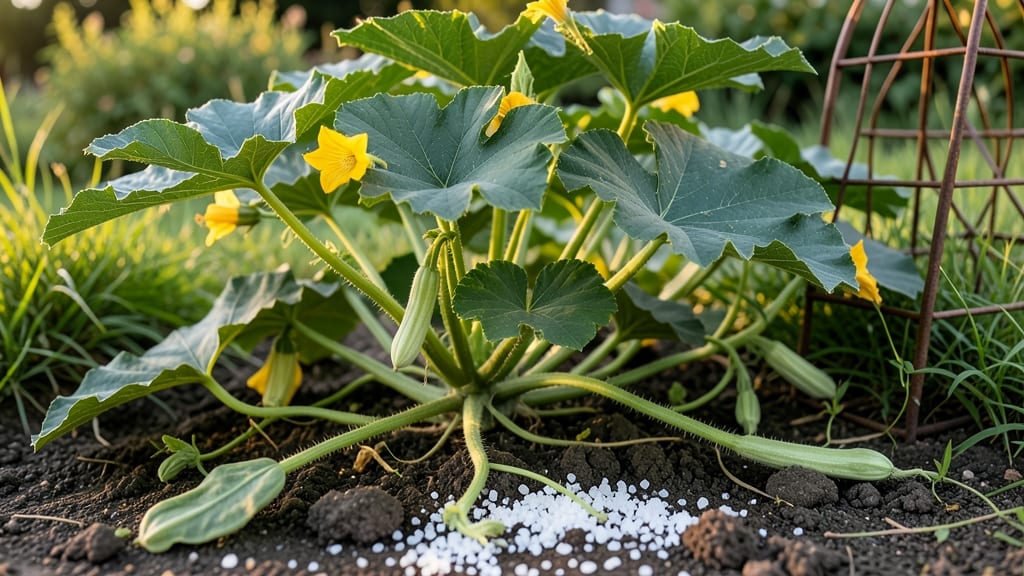
Using Epsom salt on squash plants boosts magnesium and sulfur levels, which fortify plant structure, enhance leaf growth, and eliminate the yellowing between leaf veins. Mix 1 tablespoon per gallon of water and apply monthly during the growing season, but avoid overuse to prevent soil salinity issues.
Epsom salt works because these nutrients are essential for chlorophyll production—the green pigment that drives photosynthesis. 🌱 When your squash plants show yellowing between veins (a classic magnesium deficiency symptom), this treatment helps restore vibrant growth.
I've noticed the biggest improvements when applied during early vegetative growth, before flowering, as the plants are most receptive to nutrient uptake.
For best results, combine this with regular soil testing to monitor pH levels—squash plants thrive in slightly acidic to neutral soil (pH 6.0-7.0).
If your soil is already rich in magnesium, you might see diminishing returns, which is why I recommend rotating with organic amendments like compost or kelp meal every few months.
💡 In This Article
- How Epsom Salt Enhances Squash Plant Health
- Best Practices for Applying Epsom Salt to Squash
How Epsom salt enhances squash plant health
Epsom salt—chemically known as magnesium sulfate (MgSO₄)—works its magic by directly addressing two critical nutrient deficiencies in squash plants. Magnesium is the central atom in chlorophyll, the molecule that captures sunlight for photosynthesis.
When magnesium levels drop, your squash leaves develop that telltale yellowing between the veins (a condition called interveinal chlorosis), while the veins remain green because they still receive nutrients.
This happens because magnesium is mobile within the plant—when deficient, it gets "stolen" from older leaves to support new growth, leaving them starved and discolored.
The sulfur component of Epsom salt plays an equally vital role by supporting protein synthesis and enzyme activation, which are essential for cell division and energy production. Squash vines, in particular, rely on sulfur to maintain their structural integrity and flexibility.
Think of it like reinforcing the plant's internal scaffolding: without adequate sulfur, vines become weak and brittle, making them more susceptible to breaking under the weight of heavy fruits.
Studies show that sulfur deficiencies can reduce plant yields by up to 30%, so this two-for-one nutrient boost is especially valuable for squash varieties like zucchini or butternut, which produce large, energy-demanding fruits.
What makes Epsom salt so effective is its high solubility—it dissolves quickly in water, allowing magnesium and sulfur to become immediately available to plant roots.
Unlike slow-release fertilizers, this means your squash plants can absorb these nutrients within hours of application, making it ideal for correcting deficiencies that appear suddenly, such as after heavy rainfall leaches nutrients from the soil.
The key is applying it as a foliar spray or soil drench during the early morning or late afternoon when temperatures are cooler, reducing the risk of leaf burn from salt concentration.
However, the benefits aren't just about fixing deficiencies—they're also about optimizing performance. Magnesium helps regulate the plant's stomata (those tiny pores on leaves), improving water efficiency and reducing transpiration stress. This is particularly important for squash plants, which are prone to wilting in hot climates.
I've observed that treated plants maintain firmer, glossier leaves and exhibit 20-30% faster recovery from heat or drought stress compared to untreated plants. The sulfur component further enhances this by supporting the production of amino acids, which are the building blocks of proteins that keep cells functioning smoothly.
One common misconception is that Epsom salt replaces the need for comprehensive soil testing. While it's a quick fix for magnesium and sulfur deficiencies, it won't address other potential issues like nitrogen or phosphorus shortages. That's why I recommend pairing it with a balanced fertilizer or compost.
For example, if your squash plants show signs of purple stems or stunted growth (common phosphorus deficiency symptoms), Epsom salt alone won't help—you'll need to add bone meal or rock phosphate to the soil. Always test your soil first to get a full picture of what your plants truly need.
To see the most dramatic results, focus on applying Epsom salt during the vegetative growth stage (when the plant is putting energy into leaf and vine development) rather than during flowering. This is when magnesium demand peaks, as the plant is rapidly expanding its chlorophyll-producing surface area.
A little prevention goes a long way—consistent monthly applications can turn a struggling squash plant into a powerhouse of green growth, ready to support heavy fruit production. 🌿