
Picking
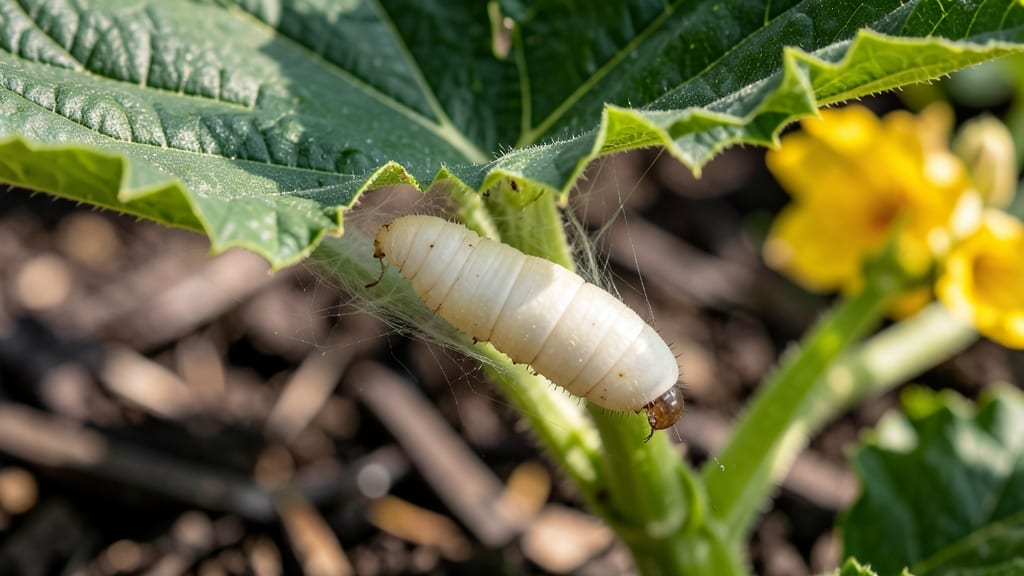
The early signs of squash vine borer strike fast—your once-vibrant vines wilt by noon, drooping like a forgotten houseplant, and I’ve seen it happen in my own garden, where thriving plants crumple overnight. suddenly droop, even when the soil stays moist.
The real giveaway? Tiny holes in stems or a trail of sawdust-like frass (that’s caterpillar poop) near the base.
Don’t wait for the plant to collapse completely—act fast. The borers tunnel inside stems, and once they’re in, you’re fighting a losing battle. Check for wilting in the hottest part of the day, when stress from the pest becomes obvious.
If you spot frass or hear a faint rustling when you tap the stem, that’s your cue to dig deeper (literally).
You’ll save the plant by slicing open the stem with a knife and pulling out the fat, white caterpillar hiding inside. Drop it in soapy water, not the compost—this pest doesn’t belong there.
For prevention, wrap stems with cardboard collars or use Bt spray (a natural bacteria that targets caterpillars) every 7-10 days during squash season.
If your garden’s a hotspot for borers year after year, consider rotating crops or choosing resistant varieties like ‘Butternut’ or ‘Zucchini ‘Defender.’
And if your entire patch is under siege, it might be time to call in a local extension service—they can recommend targeted organic or chemical solutions before the infestation spreads.
📚 In This Guide
- What you need
- Instructions
- Tips and common mistakes
- Wrapping up and next steps
What you need
- ● Hand lens or magnifying glass – A 10x magnification lens helps spot tiny frass (sawdust-like droppings) and larvae.
- ● Sharp knife or pruning shears – For carefully cutting into vines to check for borers (sterilize with rubbing alcohol first!).
- ○ Gloves (optional but recommended) – Protects hands from sap and potential irritation.
- ● White bucket or tray – Collect frass or larvae for confirmation (a 5-gallon size works well).
- ● Spray bottle with soapy water – Helps dislodge borers if found early.
- ● Notebook & pen – Record dates, plant locations, and symptoms for tracking.
- ● Burlap or cardboard – Use to wrap infested stems (if trapping borers is your strategy).
- ● Flashlight – For inspecting plants in low light (early morning or evening checks are best!).
- ● Pesticide (organic or chemical) – Like Bt (Bacillus thuringiensis) or neem oil if treatment is needed.
- ● Camera or phone – Document signs for later reference or expert advice.
- ● Plastic bags – Seal infested plant parts to contain borers.
How to identify squash vine borer infestations before it’s too late
Here's how to spot the early warning signs—before your squash plants collapse completely.
🌿 Step 1: Look for Unexplained Wilting in Healthy Leaves
Start by inspecting the upper leaves of your squash plants. Unlike wilting from heat or thirst, borer damage often begins with one or two leaves suddenly drooping while the rest of the plant looks healthy. The wilting happens midday or early afternoon, then the leaves may recover slightly by evening.
Run your fingers along the stem where the wilting occurs. You’ll often feel a soft, hollow spot—this is where the caterpillar has burrowed into the stem. Press gently: if the stem collapses inward when squeezed, larvae are already inside eating the vascular tissue.
✂️ Step 2: Check for Frass (Sawdust-Like Droppings) at Stem Base
Frass—the fine, tan sawdust left behind by the feeding larvae—is your most reliable early clue. Kneel down and examine the stem base (where the plant meets the soil) and the underside of leaves. Use a white paper or card to catch any falling frass—it’s often hard to spot on green foliage.
If you find tiny brown specks that look like ground pepper, that’s frass. A single caterpillar can produce enough in 2-3 days to create a visible trail. Check both the top and bottom of leaves—larvae often tunnel upward from the stem, leaving frass along their path.
🪴 Step 3: Inspect for Entry Holes and Sawdust-Like Trails
Use a sharp knife or scissors to carefully split open a wilting stem lengthwise. Look for small, pin-sized holes (about 1/16 inch wide) where the caterpillar entered. If you find one or two holes, the infestation is recent. If the hole is larger or oozing sap, the larvae have been feeding for 5-7 days and the plant is likely already compromised.
Inside the stem, you may see chewed plant tissue and larvae droppings (frass) mixed with greenish sap. If the stem is hollow or mushy, the borer has been feeding for over a week, and the plant may not recover without treatment.
☀️ Step 4: Monitor for Adult Moth Activity (Preventative Check)
Even if your plants look healthy, check for adult squash vine borer moths in the late afternoon when they’re most active. These moths are gray-brown, about ½ inch long, with clear wings and fringed antennae. They often rest on lower leaves or near the base of plants during the day.
If you spot even one moth, it means eggs are likely nearby. Female moths lay eggs in clusters along the stem and leaf axils (where leaves meet the stem). These eggs hatch in 3-7 days, so remove moths immediately by drowning them in soapy water or squashing them to prevent egg-laying.
💧 Step 5: Confirm with a Simple Stem Test
For a quick at-home test, take a healthy-looking stem and gently bend it. A borer-infested stem will snap easily or crush like a straw when bent at a 45-degree angle. A healthy stem will bend without breaking or require significant force to snap.
Do this test on multiple stems—if 30% or more fail, your plants are likely already under attack. This is your final warning before the borers move deeper into the plant, making treatment much harder. Act fast if you confirm infestation.
Tips & tricks for spotting squash vine borer infestations early
These key insights will help you catch squash vine borer damage before it destroys your plants completely.
Timing is Everything: Check your squash plants midday or early afternoon when wilting from borers is most noticeable. This is when the caterpillars are most active inside the stems, causing the leaves to droop noticeably. I've seen gardeners miss infestations because they only checked in the morning when wilting isn't as pronounced.
The Stem Test Trick: When you feel that hollow spot in Step 1, press firmly at the base of the wilting leaves. If the stem collapses inward, that's your definitive sign of larvae feeding. I recommend doing this test on multiple stems—if you find three or more with this issue, your plants are under serious attack and need immediate treatment.
Frass Detection Hack: For the tan sawdust-like frass mentioned in Step 2, use a white paper or card to gently brush under leaves. The contrast makes those tiny brown specks much easier to spot. I've found that checking both top and bottom of leaves catches early infestations that might otherwise go unnoticed for days.
Moth Monitoring Strategy: The 3-7 day egg hatching window in Step 4 means you have a narrow window to prevent infestation. I suggest checking for moths every other afternoon during peak squash vine borer season (late June through July). Even one moth means eggs are likely nearby, so act fast by removing them immediately.
Pro Tips for Early Signs Of Squash Vine Borer
- These key insights will help you catch squash vine borer damage before it destroys your plants completely.
- Timing is Everything: Check your squash plants midday or early afternoon when wilting from borers is most noticeable.
- The Stem Test Trick: When you feel that hollow spot in Step 1, press firmly at the base of the wilting leaves.
Frequently asked questions
Got questions about squash vine borers? You’re not alone—these pests can be sneaky! Here are answers to the most common concerns to help you act fast and protect your garden.
What are the first signs of squash vine borer infestation?
The earliest clues are frass (tiny sawdust-like droppings) near the base of stems and wilting leaves—even when the soil is moist. Later, you’ll spot small holes in stems or sawdust-like sawdust oozing from them. Check plants in late spring or early summer when borers are most active.
When is the best time to check for squash vine borers?
Start monitoring in late May to early June, as adults emerge and lay eggs. Focus on young vines (4–6 weeks old) and inspect leaves, stems, and soil for frass or wilting. Pro tip: Morning checks work best—pests hide in shade during the day!
Are there natural ways to prevent squash vine borers?
Yes! Try these organic defenses:
- Row covers (early in the season) to block adult moths.
- Handpick eggs (tiny yellow ovals on leaves) or larvae.
- Beneficial nematodes (like Steinernema carpocapsae) applied to soil.
- Diatomaceous earth around stems (reapply after rain).
For severe cases, Bt (Bacillus thuringiensis) spray can target larvae.
What should I do if I find a borer in my squash stem?
Act fast! Splitting the stem to remove larvae (wear gloves!) is your best shot at saving the plant. Afterward, apply a fungicide or wood ash to the wound to prevent rot. For heavily damaged plants, prune above the infestation—new growth may sprout from nodes.
Can squash vine borers affect other plants besides squash?
While they prefer squash, pumpkins, and cucumbers, borers may also target melons, gourds, and even tomatoes if nearby. Monitor all cucurbit family plants (check the leaf shape!) and rotate crops yearly to disrupt their life cycle.
Wrapping up and next steps
Spotting the early signs of squash vine borer—like wilting vines, frass, or sawdust-like droppings—can save your garden! 🌱 Staying vigilant and acting fast with organic controls or manual removal keeps your squash thriving. Don’t wait—check your plants regularly and take action at the first hint of trouble.
Ready to protect your harvest? Start monitoring your squash plants today! 🌿