
Vegetables
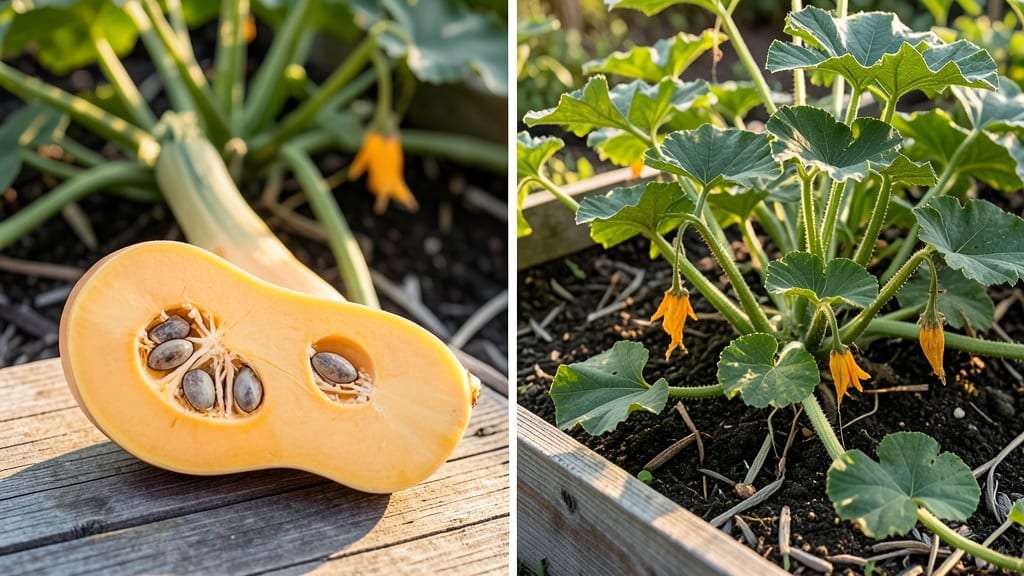
Butternut squash does have seeds—small, edible seeds nestled inside its hollow cavity, similar to other winter squash varieties. These seeds can be eaten raw or roasted, though they're often removed during meal prep.
These seeds develop naturally as part of the squash's reproductive process, forming after pollination transforms the flower into fruit. 🌱 While they're not as commonly consumed as pumpkin seeds, they offer a nutty flavor with a satisfying crunch when roasted.
Many gardeners even save these seeds to grow new plants, as they're just as viable as store-bought seeds.
Nutritionally, butternut squash seeds pack a protein punch compared to the fruit itself, containing healthy fats and minerals like magnesium and zinc. The seeds' texture and taste make them a great snack alternative—think of them as nature's tiny, flavorful rewards hidden inside the squash.
💡 In This Article
- How Butternut Squash Seeds Develop and Their Nutritional Value
- Harvesting and Preparing Butternut Squash Seeds for Cooking
How butternut squash seeds develop and their nutritional value
Butternut squash seeds form through a fascinating botanical process that begins with pollination. Bees and other insects transfer pollen from the male flowers to the female flowers at the squash's base, triggering fertilization.
This process creates tiny ovules inside the developing fruit that eventually mature into seeds over 45-60 days of growth. The seeds you find inside a fully ripened butternut squash are actually the matured ovules, each containing the plant's genetic material for reproduction.
The seeds themselves are small—typically 1/4 to 1/2 inch long—and grow in clusters within the squash's hollow cavity. Their development mirrors that of pumpkin seeds, though butternut seeds tend to be slightly flatter and more oval-shaped.
Nutritionally, these seeds are powerhouses compared to the squash flesh, containing 20-30% protein by weight—far more than the squash's 1-2% protein—along with healthy fats (including omega-3s) and minerals like magnesium and zinc.
For perspective, 1 ounce of roasted butternut seeds provides about 50% of your daily magnesium needs, similar to pumpkin seeds.
What makes these seeds unique is their flavor profile when roasted. Unlike pumpkin seeds, which have a stronger, earthier taste, butternut seeds develop a delicate nutty flavor with subtle sweetness—almost like a cross between almonds and sunflower seeds.
This nuanced taste comes from their lower fat content (40-45% fat vs. pumpkin seeds' 50% fat) and higher carbohydrate composition. The seeds also contain small amounts of fiber and antioxidants, making them a more balanced snack option than their pumpkin counterparts.
Botanically, butternut squash seeds are classified as "true seeds" (not to be confused with the squash's flesh, which is technically a berry in botanical terms).
This distinction matters because true seeds contain the complete embryonic plant, meaning they can be saved for planting with 90% germination success if properly dried and stored. Many gardeners prefer using squash seeds from homegrown produce because they're often more robust and adapted to local climates than store-bought seeds.
When comparing butternut seeds to other winter squash seeds, they stand out for their versatility. Acorn squash seeds, for example, are similar in size but have a more bitter taste, while pumpkin seeds are larger and richer in fat.
Butternut seeds offer a middle ground—mild enough for snacking but with enough substance to hold up in savory dishes. Their smaller size also makes them easier to digest for those with seed allergies, though cross-contamination is always a risk when processing them.
One surprising fact about these seeds is their role in traditional medicine. Native American tribes used roasted butternut seeds as a natural remedy for digestive issues, thanks to their high fiber and magnesium content.
Modern nutritionists now recognize these benefits, recommending butternut seeds as a post-workout snack due to their protein-magnesium combination, which aids muscle recovery. 💫