
Container Gardens
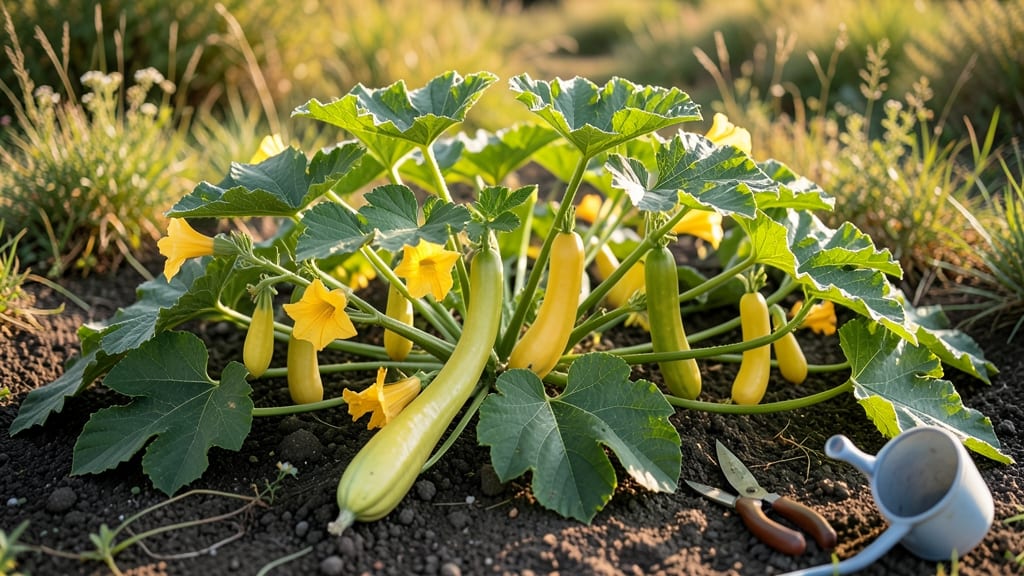
Growing crookneck squash in containers means fresh, homegrown summer squash without the garden space. 🌱 I’ve grown these vines in 5-gallon pots for years, and they produce just as well as their in-ground cousins—sometimes even better.
The key? Rich soil, consistent water, and a spot where they can sprawl without competition.
Start with well-draining potting mix mixed with compost—crookneck squash loves nutrients but hates soggy roots. Plant seeds 1 inch deep after the last frost when soil hits 60°F, or transplant young seedlings with sturdy stems.
These vines need 6-8 hours of direct sun daily, so place your containers where they’ll get plenty of warmth.
Keep soil moist but not waterlogged—dry spells lead to bitter fruit, while overwatering causes rot. Within 60-70 days, you’ll see those signature curved necks forming, and harvesting is simple: pick when firm but tender, usually 6-8 inches long. The more you harvest, the more they produce!
Watch for squash vine borers—cover young plants with row fabric if pests are a problem in your area. Crookneck squash thrives in containers but still needs space to spread, so choose a large pot or let vines trail over a trellis.
With the right care, you’ll have a steady supply of homegrown squash all summer long.
📚 In This Guide
- What you need
- Instructions
- Tips and common mistakes
- Wrapping up and next steps
What you need
- ● Container: At least 5-gallon (20+ inches deep) with drainage holes—1 per plant (or larger for multiple vines). Tip: Fabric grow bags or wooden barrels work great!
- ● Potting Mix: Sterile, well-draining blend (e.g., 60% compost, 30% coconut coir, 10% perlite). 5+ gallons per container.
- ● Seeds or Seedlings: 2–3 seeds per container (thin to 1–2 strongest plants). Choose heirloom or hybrid varieties like ‘Early Prolific’ or ‘Straightneck.’
- ● Fertilizer: Starting: Balanced 10-10-10 or 5-5-5 (1 tbsp per container at planting).
- ● Growth: Low-nitrogen (5-10-10) or compost tea every 2–3 weeks.
- ● Support: Trellis or cage (4–5 ft tall) to guide vines and prevent sprawling.
- ● Watering Can or Drip Irrigation: 1–2 gallons per watering (keep soil consistently moist but not soggy).
- ● Pruners: For trimming excess vines or yellow leaves.
- ● Mulch: Straw or shredded leaves to retain moisture and suppress weeds.
- ● pH Test Kit: Aim for 6.0–6.8 (adjust with lime or sulfur if needed).
- ● Harvest Gloves: Protect hands from prickly stems!
Step-by-step guide to growing crookneck squash in containers
Here's how to cultivate these productive vines in limited space—no backyard needed.
🌱 Step 1: Select the Right Container and Soil Mix
Crookneck squash needs at least a 5-gallon container per plant with drainage holes—larger is better for those sprawling vines. I choose fabric grow bags because they prevent root circling and allow excess moisture to evaporate. Fill the container with a sterile potting mix blended with 20% compost for fertility. The soil should feel like a damp sponge when squeezed—neither bone-dry nor waterlogged.
Add a slow-release fertilizer (5-10-10 ratio) mixed into the top 2 inches of soil. This ensures steady nutrients as vines grow. Avoid garden soil—it compacts in containers and suffocates roots. I also sprinkle a handful of gravel at the bottom for extra drainage, which prevents that dreaded rot that can kill plants overnight.
☀️ Step 2: Plant Seeds at the Right Depth and Temperature
Sow 2-3 seeds per container at a depth of 1 inch, spacing them 6 inches apart in a triangle. Crookneck squash germinates best in soil temperatures above 65°F—so if your spring is chilly, use a seedling heat mat beneath the container. Keep the soil consistently moist (not soggy) until sprouts appear, which typically takes 7-10 days.
Once seedlings emerge, thin to the strongest plant, snipping the others at the base with clean scissors. I know it seems wasteful, but crowded seedlings compete for nutrients and produce weak vines. After thinning, water gently at the base to avoid disturbing the remaining seedling’s roots.
🌿 Step 3: Provide Support and Prune for Better Airflow
Crookneck squash vines can reach 8-10 feet—way too long for most containers. Install a 5-foot trellis or tomato cage near the container and gently weave the main vine upward as it grows. This saves space and keeps fruit off the ground, reducing rot risk. Prune side shoots that form at leaf junctions, leaving only the top 3-4 leaves—this directs energy to fruit production instead of foliage.
Here’s the thing—don’t let vines sprawl. When fruit forms, tie it to the trellis with soft garden twine to prevent breakage. You’ll see the first blooms in 6-8 weeks, and those yellow flowers mean squash are on the way. Watch for male flowers (long stems, no bulb) to drop—they’re pollen donors for the female flowers (tiny squash at the base).
💧 Step 4: Water and Fertilize for Maximum Yield
Container-grown squash dries out fast, so water deeply every 2-3 days until top 2 inches of soil feel dry. Use a drip irrigation system or water at the base early in the morning to avoid fungal diseases. Overhead watering wets leaves, inviting powdery mildew—something I’ve battled in past seasons, and it’s a nightmare to treat.
Feed plants with a balanced liquid fertilizer (like 10-10-10) every 2 weeks once flowers appear. You’ll know they’re hungry when leaves yellow between veins. Stop fertilizing 2 weeks before harvest—too much nitrogen makes vines grow at the expense of fruit. Crookneck squash matures in 70-80 days, so plan accordingly if you’re in a short growing season.
✂️ Step 5: Harvest and Encourage Continuous Production
Pick squash when they’re 6-8 inches long and still firm to the touch—waiting too long makes them tough and seedy. Use pruning shears to cut the stem, leaving a 1-inch stub. This prevents damage to the vine and encourages more flowers to form. I harvest every 3-4 days during peak season, and the plant keeps producing for 2-3 months if cared for properly.
After harvest, remove any yellowed or diseased leaves immediately to prevent pests. If your season is ending, let a few squash mature fully on the vine—they’ll store for 2-3 weeks in a cool, dark place. Save seeds from the best-tasting squash for next year’s garden. Trust me, the first bite of homegrown crookneck squash—sweet, nutty, and tender—makes every step worth it.
Tips & tricks for growing crookneck squash in containers
Between us, these sun-loving vines reward patience with sweet, tender fruit—but only if you nail the details. Here’s what I’ve learned from years of growing them in limited spaces.
Soil Temperature Secret: That 65°F soil temperature threshold isn’t just a number—it’s the difference between success and waiting weeks for germination. I’ve used a soil thermometer to confirm temps before planting, especially in cooler climates. If your morning soil feels cold to the touch, a seedling heat mat is worth every penny. Pro tip: Place your containers near a sunny window indoors for a week before planting to warm the soil naturally. This jumpstarts germination without artificial heat.
Container Size Matters: While the instructions call for at least a 5-gallon container, I’ve found that 7-gallon fabric grow bags make all the difference for heavy producers. The extra space prevents root binding, which can stunt growth and reduce yields. If you’re using smaller containers, consider planting just one seed per container—crowding stresses the plants. I’ve also seen dramatic improvements when using containers with 12+ inches of depth, giving roots room to establish properly.
Pruning Strategy: When the instructions mention leaving only the top 3-4 leaves, they’re not just being arbitrary—they’re directing the plant’s energy where it counts. I’ve noticed that plants with too many leaves produce fewer flowers and smaller squash. Here’s my approach: After the main vine reaches the trellis, I remove any side shoots that form below the first 5 leaves. This creates a stronger central stem that supports heavier fruit loads. The key is consistency—prune weekly during the flowering stage.
Harvest Timing Hack: Those 6-8 inches for harvest aren’t just a suggestion—they’re the sweet spot for peak flavor. I’ve learned to check squash daily during peak season because they can grow another inch overnight. The best indicator? Gently press the squash—if it feels firm but yields slightly (like a ripe avocado), it’s ready. Waiting too long turns them tough and seedy. For continuous production, I’ve found that harvesting every 3 days during warm weather keeps the plant focused on producing new flowers.
Pro Tips for Crookneck Squash Growing
- Between us, these sun-loving vines reward patience with sweet, tender fruit—but only if you nail the details.
- Soil Temperature Secret: That 65°F soil temperature threshold isn’t just a number—it’s the difference between success and waiting weeks for germination.
- Container Size Matters: While the instructions call for at least a 5-gallon container, I’ve found that 7-gallon fabric grow bags make all the difference for heavy producers.
Frequently asked questions
Got questions about growing crookneck squash? You’re not alone! Here are answers to the most common ones—whether you’re a first-timer or a seasoned container gardener.
How long does it take for crookneck squash to grow?
From seed to harvest, expect 50–60 days for summer varieties and up to 70 days for winter types. Warm soil (70°F+) and consistent watering speed up the process. Start seeds indoors 2–3 weeks before the last frost for a head start!
Can crookneck squash grow in containers without vining everywhere?
Use a 5-gallon container or larger with trellis support to guide vines upward. Prune excess leaves to focus energy on fruit production. Just ensure the pot has drainage and room for roots to spread—no crowding!
Why are my crookneck squash flowers falling off?
This usually means pollination failure or stress. Hand-pollinate by gently brushing flowers with a paintbrush, or ensure bees visit (plant near flowers like marigolds). Check for pests (squash vine borers!) and water consistently—drought or overwatering can cause drop-off.
Do crookneck squash need full sun, or can they tolerate partial shade?
They thrive in full sun (6+ hours/day), but partial shade (4–6 hours) works in hot climates. Too little light? Vines grow leggy, and fruit may be small or misshapen. If shading is unavoidable, prioritize morning sun for best results.
What’s the best alternative if I can’t grow crookneck squash?
Try yellow straightneck squash (similar taste, easier to handle) or zucchini (faster-growing). For containers, bush varieties like ‘Eight Ball’ squash need less space. All three love containers and produce prolifically!
Wrapping up and next steps
Growing crookneck squash in containers is a rewarding adventure—packed with flavor, versatility, and the joy of watching vines flourish! 🌱 With the right space, sunlight, and care, you’ll soon be harvesting sweet, nutritious squash that’s perfect for roasting, grilling, or fresh salads.
Whether you’re a seasoned gardener or a beginner, this sun-loving plant proves that big harvests don’t need big plots.
Ready to dive in? Start small with one or two plants—pick your container, prep your soil, and let those vines climb! Soon, you’ll be swapping store-bought squash for your homegrown bounty. Happy growing! 🌞