
Vegetables
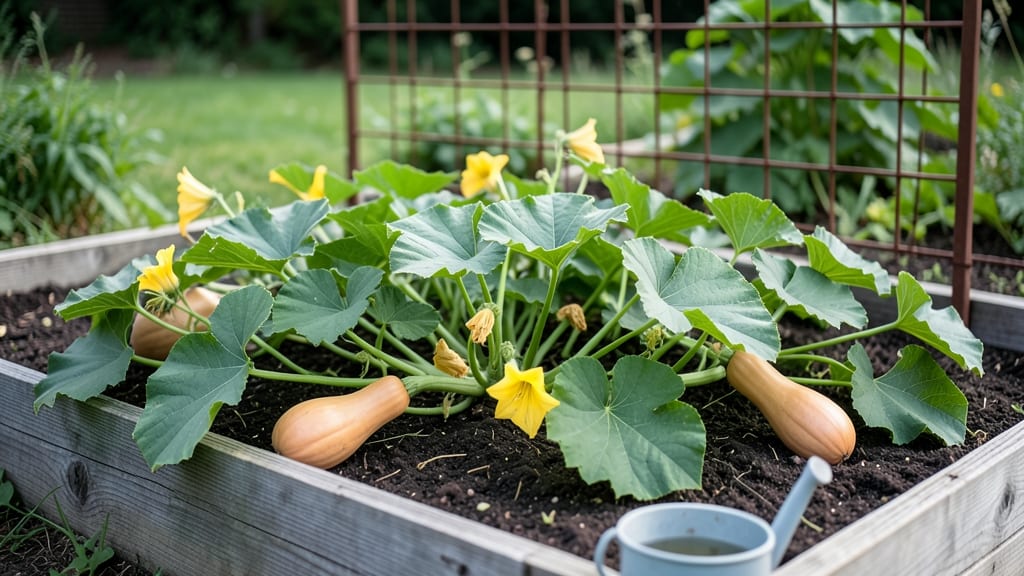
With butternut squash days to maturity ranging from 80 to 110, your spring garden transforms into a fall bounty of sweet, golden 🎃 treasures.
Want to grow butternut squash but struggling to predict when your harvest will be ready? Understanding the butternut squash days to maturity is the key to planning your garden for maximum yield and fresh autumn flavors.
Here’s the catch: those 90 days can stretch or shrink depending on your variety, climate, and even soil conditions. A 'Waltham' might hit peak ripeness faster in warm Zone 8, while cooler Zone 6a gardens could need an extra two weeks.
Below, I’ll break down how to calculate your exact harvest date, adjust for your region, and spot when your squash is truly ready—so you’re not left guessing in September.
Butternut squash days to maturity: what to expect by variety and growing conditions
Understanding the butternut squash days to maturity helps you plan your garden for a bountiful harvest. Most varieties take between 80 to 120 days to reach full maturity, but this timeline varies based on factors like variety type, climate conditions, and growing environment.
Knowing these details ensures you plant at the right time to avoid frost damage or overripe squash.
For example, 'Waltham' butternut squash, a classic variety, typically matures in 90 to 100 days, while 'Gold Rush' can be ready in as few as 80 days under ideal conditions.
Meanwhile, 'Sugar Loaf' varieties often take closer to 100 to 120 days due to their slightly slower growth rate. These differences matter when planning your planting schedule.
Your local climate plays a huge role in adjusting these timelines. In warmer regions like USDA Zones 9-11, butternut squash may mature 10-20 days faster due to longer growing seasons.
Conversely, in cooler zones (Zones 3-6), growth can slow down, extending maturity by 2-3 weeks or more. Always account for your last frost date to avoid early-season chills.
Soil quality and sunlight exposure also impact maturity timelines. Well-draining, nutrient-rich soil with a pH of 6.0-7.0 helps butternut squash grow faster, while poor soil can delay maturity by 10-15 days.
Additionally, plants need full sun (6-8 hours daily) to thrive; insufficient light can stretch out the growth cycle significantly.
Here’s a quick reference for butternut squash days to maturity by variety and growing conditions:
| Variety | Days to Maturity | Growth Habit | Climate Adjustment |
|---|---|---|---|
| Waltham | 90-100 days | Vining | +10 days in cool zones |
| Gold Rush | 80-90 days | Bush | -10 days in warm zones |
| Sugar Loaf | 100-120 days | Vining | +15 days in short seasons |
| Honey Nut | 85-95 days | Bush | Standard for most climates |
If you’re growing butternut squash in containers, expect maturity to take 5-10 days longer than in-ground plants. Containers limit root growth, which can slow down the plant’s ability to absorb nutrients and water efficiently.
To compensate, choose compact varieties like 'Gold Rush' and ensure your containers are at least 5 gallons in size.
Another critical factor is watering consistency. During the first 30 days of growth, butternut squash needs 1-2 inches of water per week.
Once flowering begins, increase watering to 2 inches per week to support fruit development. Inconsistent watering can cause blossom-end rot or stunted growth, both of which delay maturity. Use drip irrigation to keep moisture levels steady.
For gardeners in shorter growing seasons, consider starting seeds indoors 3-4 weeks before the last frost. This gives seedlings a head start, allowing them to mature faster once transplanted outdoors.
In longer growing seasons, you can often direct-sow seeds after the soil reaches 60°F (15°C), typically in late spring. Always monitor soil temperature to avoid cold-related delays.
Finally, keep an eye on pest and disease pressure, which can also affect maturity. Squash vine borers and powdery mildew are common threats that weaken plants, slowing down growth.
Use row covers early in the season and practice crop rotation to minimize risks. Healthy plants will mature faster and produce higher-quality squash.
By understanding these butternut squash days to maturity factors, you can adjust your planting schedule to ensure a successful harvest—whether you're aiming for a fall feast or storing squash for winter. Happy gardening! 🎃
How to calculate your butternut squash harvest date based on planting time
Predicting your butternut squash harvest date starts with understanding days to maturity—the time from planting to ready-to-pick fruit. Most varieties need 80–100 days, but cooler climates can stretch this to 110–120 days.
Knowing your last frost date and planting method (indoors vs. direct sowing) unlocks the perfect harvest timeline for your region.
Start by checking your USDA hardiness zone—Northern gardeners (Zones 3–5) often need to start seeds indoors 3–4 weeks before the last frost, while Southern gardeners (Zones 6–10) can direct-sow after soil warms (around 60°F).
For example, in Zone 6a, planting seeds indoors in early April ensures a September harvest before the first frost.
- 1 Days to Maturity: Most butternut squash varieties take 80–100 days from transplant to harvest. Cooler climates may need 110+ days.
- 2 Indoor Start: Begin seeds 3–4 weeks before last frost. Transplant outdoors 2 weeks after last frost when soil is 60°F+.
- 3 Direct Sowing: Plant seeds 1 inch deep after soil warms (Zone 6a: mid-May). Count 80–100 days from sowing date.
- 4 Harvest Window: Subtract days to maturity from your first frost date. Example: 100-day variety + 30-day buffer = plant by July 1 for a fall harvest.
Use a reverse-calculation method to pinpoint your ideal planting window. For instance, if your first frost arrives October 31 and your squash needs 90 days to mature, plant seeds indoors by July 15 (90 days before frost) or direct-sow by August 1 (leaving 60 days for growth after transplanting).
Adjust for shorter varieties like 'Sugar Loaf' (80 days) or longer vining types like 'Gold Rush' (100+ days).
Southern Hemisphere gardeners should flip the timeline—plant seeds indoors in August for a December–January harvest, aligning with your last frost in March. Always account for 2–3 extra weeks in cooler microclimates or high-altitude areas, where growth slows.
For example, mountainous regions might need to start seeds 6 weeks earlier than flatland gardens.
Track your progress with a growth journal or app like Gardenate to adjust for unexpected delays (e.g., pests, drought, or slow starts). If your plants lag behind schedule, consider row covers or black plastic mulch to warm the soil and speed up growth.
Remember, butternut squash thrives in warmth, so prioritize 6–8 hours of sunlight daily for consistent maturity timelines.
Once you’ve locked in your planting date, mark your calendar for harvest readiness. Aim to harvest 2 weeks before frost to avoid bitter flavors or rotting vines. Store squash in a cool, dry place (50–55°F) to extend freshness for 2–3 months after harvest.