
Picking
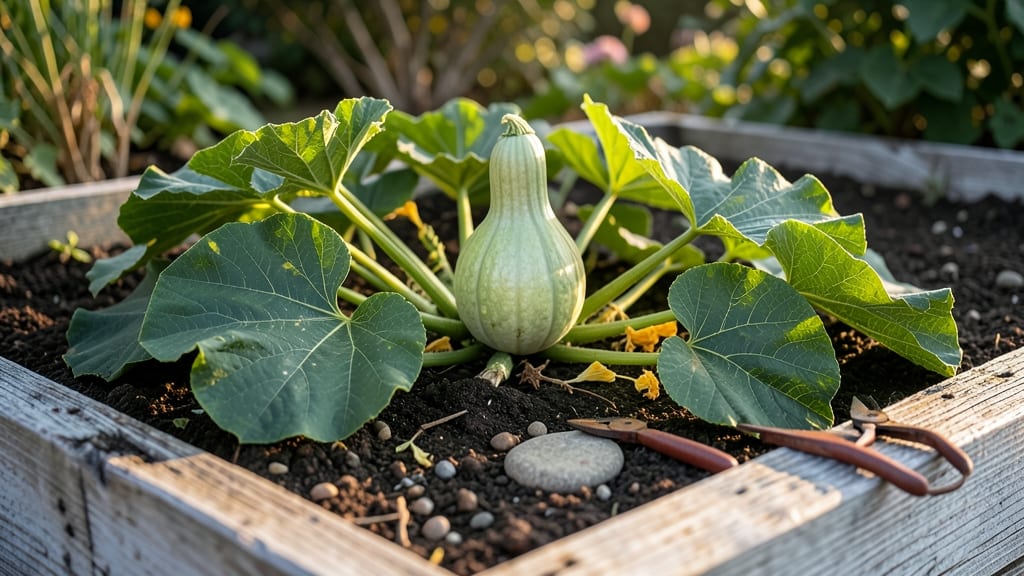
Growing bell-shaped squash in partial shade feels like unlocking a secret garden. 🌿 I've successfully grown acorn and delicata squash under trees and on north-facing patios where other vegetables struggle—here's how to do it without sacrificing harvests.
The key starts with soil: these squash love rich, well-draining soil with plenty of compost mixed in. Plant seeds 1 inch deep and 3-4 inches apart, spacing rows 3-4 feet apart to give vines room to sprawl.
Unlike sun-loving varieties, bell-shaped squash tolerate 4-6 hours of morning sun and afternoon shade, making them perfect for tricky spots.
You'll know it's working when vines spread like green rivers and the first squash appear in 75-90 days. The harvest is sweetest when skin hardens but still yields slightly to pressure—think of it like finding the perfect ripe tomato.
With proper care, you'll get 10-15 squash per plant, each with that signature bell shape.
Watch for squash vine borers (the biggest threat) and powdery mildew in humid conditions. A simple row cover or neem oil spray keeps pests at bay. These shade-tolerant varieties prove you don't need full sun for a productive garden—just the right approach.
Root Causes Of Misshapen Growth
Understanding why your squash develops that classic bell-shaped deformity (often called "bell squash" or "button squash") starts with peeling back the layers of plant biology and environmental stress. While some varieties naturally produce unique shapes, others develop this trait due to specific growing conditions.
Let’s break down the key culprits and why they trigger this quirky growth pattern.
Some squash varieties—like ‘Bell Squash’ (Cucurbita pepo) or heirloom types—are bred or selected for their distinctive, compact growth.
These plants may produce small, bell-shaped fruits as a natural trait, especially when: - Pollination is limited (e.g., hand-pollination in greenhouses or isolated patches). - The plant focuses energy on fruit development rather than vining or branching excessively. - Hybridization occurs between different squash types, leading to unexpected shapes.
Actionable fix: If you’re growing a known bell-shaped variety (like ‘Patio Star’ or ‘Eight Ball’), embrace it! But if you’re growing zucchini or other straight-fruited types, check your seeds—you may have mixed varieties.
Squash are warm-season crops, and extreme temperatures—whether too hot or too cold—can disrupt normal fruit formation.
Here’s how: - Cold nights (<50°F/10°C): Slows pollination and stunts ovary development, leading to small, malformed fruits. - Heat stress (>90°F/32°C): Causes blossom drop (flowers fall off) or poor pollen viability, resulting in underdeveloped, bell-like squash. - Rapid temperature swings: Confuses the plant’s growth hormones, causing irregular cell division in the fruit.
Actionable fix:
- Use row covers for early spring/fall planting to protect from cold snaps.
- Provide afternoon shade in scorching climates (even shade-loving varieties can overheat).
- Water deeply to stabilize soil temps—dry soil = heat stress.
Squash are thirsty but sensitive—water and nutrient fluctuations can lead to bell-shaped deformities through:
- Inconsistent watering:
- Drought stress → Small, hard fruits with poor cell expansion.
- Overwatering → Blossom end rot-like symptoms (though not the same, it causes uneven growth).
- Nitrogen-heavy soil:
- Too much leafy growth (foliage) at the expense of fruit development, leading to stunted, bell-like shapes.
- Calcium or boron deficiency:
- Boron is critical for cell wall formation—without it, fruits may split or grow abnormally.
- Calcium deficiency causes poor ovary development, resulting in small, lopsided squash.
Actionable fix:
- Water deeply 1–2x per week (1–2 inches total) and mulch to retain moisture.
- Test soil and amend with balanced fertilizer (e.g., 10-10-10) or compost for steady nutrients.
- Side-dress with crushed eggshells (for calcium) or boron-rich compost if deficiencies are suspected.
Squash rely on pollination to trigger fruit set. If pollination fails or is incomplete, the plant may produce small, bell-shaped fruits instead of full-sized ones.
Common triggers: - Lack of pollinators (bees, squash bees, or even wind in some cases). - Hand-pollination errors (if you’re doing it yourself in a greenhouse). - Male flowers dropping before female flowers open (timing mismatch).
Actionable fix:
- Attract pollinators with native flowers (marigolds, borage, or dill).
- Hand-pollinate by transferring pollen with a small brush or cotton swab (do this early morning when flowers are open).
- Space plants properly (3–4 feet apart) to ensure cross-pollination between flowers.
When squash plants compete for resources, they may redirect energy toward survival over fruit development, leading to:
- Stunted growth due to root binding.
- Weak vines that can’t support normal fruit shape.
- Nutrient theft from neighboring plants (e.g., corn, tomatoes).
Actionable fix:
- Thin seedlings to 1–2 strong plants per hill (overcrowding = stress).
- Train vines on a trellis (if variety allows) to reduce root competition.
- Avoid planting near heavy feeders (like corn) that steal nitrogen.
Physical trauma or pests can disrupt fruit development, causing bell-shaped deformities:
- Squash vine borers (larvae burrow into stems, starving the plant).
- Powdery mildew or bacterial wilt (weakens the plant, reducing fruit size).
- Hail or wind damage to young flowers (prevents proper ovary formation).
Actionable fix:
- Use row covers early to block pests like borers.
- Rotate crops to prevent soil-borne diseases.
- Prune damaged leaves to reduce fungal spread.
Not all bell-shaped squash are a failure—some varieties (like ‘Eight Ball’) are deliberately bred for this look! If your squash are: ✅ Firm and healthy (no rot or pests) ✅ Growing consistently (not shrinking over time) ✅ From a known bell-type variety
…then you might just have a unique harvest rather than a problem! Otherwise, address the root cause (literally and figuratively) for straighter, fuller squash next season.
How to Fix Deformed Squash Growth
Growing bell-shaped squash (or any squash) with a misshapen or stunted appearance can be frustrating, but the good news is that most issues have simple fixes.
Whether your squash is too small, lopsided, or just not forming properly, these targeted solutions will help you turn things around—without needing a sun-drenched garden. Let’s tackle the most common problems with practical, step-by-step fixes and prevention tips to keep your harvest looking (and tasting) perfect.
Problem: Squash that’s small, seedy, or fails to "bell out" often suffers from poor pollination, especially in low-light conditions or when bees are scarce.
How to Fix It:
- 🔥 Hand-Pollinate for Guaranteed Results Use a small paintbrush or cotton swab to transfer pollen from the male (long-stemmed) flowers to the female (tiny squash at the base) flowers in the morning. Do this for 3–5 days to ensure fertilization. Pro Tip: 💡 Male flowers open first—pollinate them early in the day when pollen is fresh.
- 👨🍳 Attract More Pollinators Plant companion flowers like marigolds, nasturtiums, or borage nearby to lure bees and other beneficial insects. Even a small bee hotel or a shallow dish of sugar water can help.
- 🌡️ Optimize Growing Conditions While bell-shaped squash tolerates shade, ensure they get at least 4–6 hours of indirect sunlight daily. Use reflective mulch (like white plastic) to bounce light onto leaves if needed.
Problem: Yellowing leaves, stunted growth, or hollow squash often signal a lack of key nutrients, especially nitrogen (for foliage) or calcium (for structure).
How to Fix It:
- 📊 Soil Test & Amend as Needed Test your soil’s pH (ideal: 6.0–6.8) and nutrient levels. For quick fixes:
- Nitrogen deficiency? Add composted manure or a balanced organic fertilizer (like 10-10-10).
- Calcium deficiency? Sprinkle crushed eggshells or use a calcium-rich amendment like bone meal around the base.
- Potassium deficiency? Use wood ash or a banana peel tea (soak peels in water for a week).
- 🥗 Feed Mid-Season for Stronger Growth Side-dress plants with compost or a liquid fertilizer (like fish emulsion) every 3–4 weeks once flowers appear. Avoid over-fertilizing—too much nitrogen = leafy squash, not fruit!
- ✨ Prevent Blossom End Rot Ensure consistent moisture (but not soggy soil) and mulch heavily to retain calcium. A light spray of diluted milk (1 part milk to 9 parts water) can also boost calcium uptake.
Problem: Squash that’s twisted, deformed, or prone to disease often struggles due to poor airflow or competition for resources.
How to Fix It:
- 🔪 Prune & Space Properly Thin seedlings to 2–3 feet apart (check seed packet guidelines). Remove excess vines or leaves blocking sunlight from the center of the plant.
- 🍳 Use Trellises for Vertical Growth If space is tight, train vines up a trellis or cage. This improves airflow, reduces disease risk, and can even encourage straighter, more uniform squash.
- 🌡️ Rotate Crops Annually Avoid planting squash (or other cucurbits) in the same spot yearly to prevent soil-borne diseases like powdery mildew, which can distort growth.
Problem: Chewed leaves, wilting vines, or odd bumps on squash are often signs of pests (squash bugs, cucumber beetles) or fungal issues.
How to Fix It:
- 🔪 Remove Infestations Early
- Squash bugs/vines: Handpick eggs (tiny flat yellow dots under leaves) and adults daily. Drop them in soapy water.
- Cucumber beetles: Cover young plants with row fabric until they’re established. Use yellow sticky traps to catch adults.
- Powdery mildew: Spray plants with a baking soda mix (1 tsp baking soda + 1 quart water + a drop of dish soap) weekly.
- 💡 Proactive Prevention
- Neem oil spray (weekly) deters pests and prevents fungal spores.
- Interplant with herbs like basil or thyme to repel insects naturally.
- Water at the base (not overhead) to keep foliage dry and reduce mildew.
To keep your bell-shaped squash thriving year after year:
- Start with healthy seeds from reputable sources (avoid old or saved seeds from deformed plants).
- Harvest promptly—overripe squash can cause the plant to focus energy on seeds instead of new growth.
- Monitor moisture—consistent watering (1–2 inches per week) prevents stress-related deformities.
- Choose the right variety—some bell-shaped squash (like ‘Caserta’ or ‘White Bush’) are bred for better uniformity in lower light.
With these fixes, your squash should start forming plump, symmetrical bells in no time—even in shadier spots! 🌟 The key is acting early, balancing care, and giving your plants the right conditions to flourish. Happy growing!
Frequently asked questions
Can bell-shaped squash grow in containers?
Yes! Varieties like 'Eight Ball' or 'Patio Star' thrive in 5-gallon containers with well-draining soil. Use a mix of compost and potting soil, and place them in a spot with 4-6 hours of morning sun. Just ensure the container has drainage holes to prevent root rot.
Why are my squash growing bell-shaped when I planted regular zucchini seeds?
This likely means your seeds were mixed or contaminated with bell-shaped varieties like 'Caserta' or 'Delicata'. Check your seed packet—if it says "heirloom" or "mixed", you may have accidentally planted a different type. Next time, buy seeds labeled specifically for your desired shape.
How do I know when bell-shaped squash are ripe?
Look for these signs: the skin should be hard but still yield slightly to gentle pressure (like a ripe avocado), and the stem should be dry and brown where it meets the squash. For varieties like acorn squash, the color will deepen to its mature hue. Harvest before they get too large or they'll become tough.
Are bell-shaped squash good for roasting?
Their compact shape makes them perfect for roasting whole. Halve smaller varieties like 'Eight Ball' and roast at 375°F (190°C) for 30-40 minutes until tender. Larger types like acorn squash take 45-60 minutes. The sweet flavor intensifies when roasted.
Can I save seeds from bell-shaped squash?
Yes, but only if you're growing a true-breeding variety (like 'Caserta'). Remove seeds from fully ripe squash, clean them, and dry completely before storing in a cool, dark place. For hybrid varieties, saved seeds may not produce the same bell shape. Always check your seed packet first.