
Vegetables
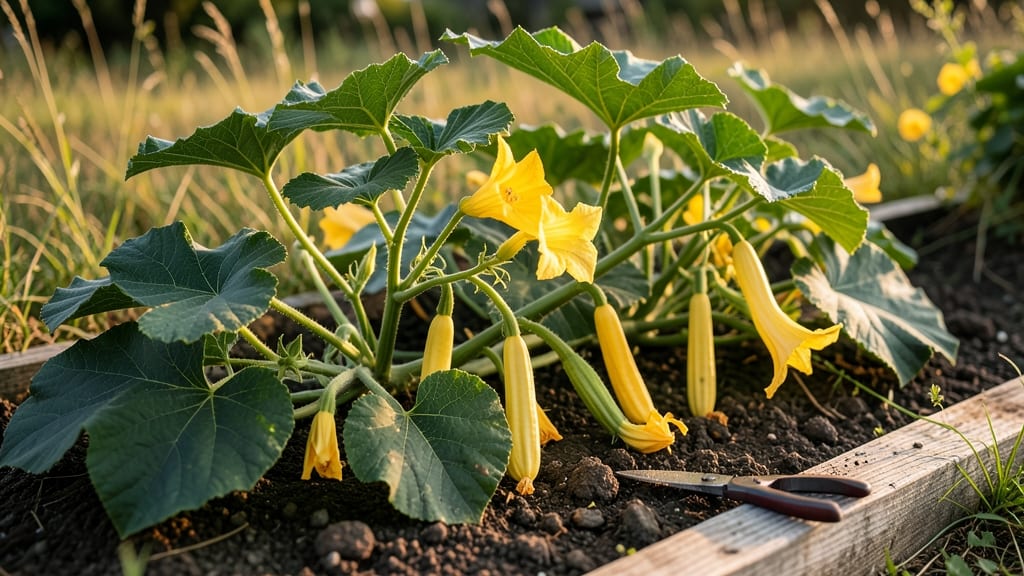
Growing flat yellow squash means summer afternoons filled with the smell of fresh, sun-warmed produce straight from your garden. 🌞 These prolific vines reward patience with bushels of tender, mild-flavored squash—if you nail the sunlight, soil, and spacing.
My first attempt yielded just three squash because I crammed the plants too close; now I get 20+ from the same patch by following a few key rules.
The secret starts with 6+ hours of direct sun daily and well-draining soil mixed with compost—think rich, crumbly loam that holds moisture but never stays soggy. Plant seeds after your last frost when soil reaches 60°F, spacing them 3-4 feet apart in hills or rows.
Water consistently at the base (not the leaves) to prevent powdery mildew, and watch those vines spread like eager gardeners.
By midsummer, you'll harvest 1-2 pound squash every 3-4 days—just snip with pruners when they're firm and glossy. The first harvests taste sweeter than store-bought, and the plants keep producing until frost. Even my black thumb can't kill these if I remember two things: sunlight and space.
Pests like squash bugs and diseases like downy mildew are the only real challenges, but a weekly check and removing damaged leaves keeps them in check. Save seeds from your best squash for next year, and you'll have a self-sustaining harvest machine. Let's grow those bushels!
What Causes Your Squash To Stay Flat
If your yellow squash vines are producing small, flat, or underdeveloped fruits instead of the plump, elongated shapes you crave, don’t panic—it’s usually fixable! Flat squash is a common frustration for gardeners, but understanding the root causes (literally and figuratively) helps you adjust your growing strategy.
Below, we break down the science behind why your squash stays flat and how to correct it.
Yellow squash plants are competitive—they need space to thrive. When vines are too close together, they fight for sunlight, water, and nutrients, leading to stunted growth. Flat squash often results from:
- Limited sunlight exposure: Squash needs 6–8 hours of direct sun daily. Overcrowding forces fruits to stretch toward light unevenly, causing them to flatten against the soil or neighboring plants.
- Reduced pollination: Bees and other pollinators struggle to navigate dense foliage, leading to poor fruit set or misshapen squash.
- Nutrient competition: Roots can’t access enough phosphorus (critical for fruit development) or calcium (essential for cell expansion).
Actionable fix: Space squash plants 2–3 feet apart in rows 4–5 feet apart. If growing in containers, use 1–2 plants per 5-gallon pot with trellising to save space.
Flat squash is often a sign of failed or incomplete pollination. Yellow squash relies on bees, butterflies, or wind to transfer pollen from male to female flowers. If this process stalls:
- Female flowers (with tiny squash at the base) don’t develop properly.
- Fruits start growing but stop expanding mid-development, resulting in a pancake-like shape.
- Extreme heat or cold (below 55°F or above 90°F) can shock pollinators into inactivity.
Actionable fix:
- 🐝 Hand-pollinate on cloudy or bee-free days: Use a soft brush or cotton swab to transfer pollen from male (long stem) to female (tiny squash) flowers.
- 🌿 Plant pollinator-friendly flowers nearby (e.g., marigolds, nasturtiums, or borage) to attract bees.
- 🌡️ Avoid late planting—aim for seeds to germinate when temps are consistently above 60°F.
Yellow squash is 90% water—consistent moisture is non-negotiable. Fluctuations in water availability cause:
- Uneven cell expansion: Drought stress triggers the plant to halt growth until conditions improve, leaving squash flat and tough.
- Blossom-end rot (calcium deficiency): Dry soil prevents calcium uptake, causing the blossom end to flatten or rot.
- Overwatering: Waterlogged roots suffocate the plant, starving fruits of oxygen and nutrients.
Actionable fix:
- 💧 Water deeply 1–2 times per week (1–1.5 inches total), focusing on the soil near the roots, not the leaves.
- 🌱 Mulch heavily (straw or grass clippings) to retain moisture and regulate soil temperature.
- 🧪 Test soil moisture—stick your finger 1–2 inches down; if dry, water immediately.
Yellow squash is a warm-season crop—it hates temperature extremes. Both heat and cold can derail fruit development:
- Cold snaps (below 55°F): Slows metabolic processes, including cell division in the squash. Growth pauses, leaving fruits small and flat.
- Heatwaves (above 90°F): Causes blossom drop (flowers fall off before pollination) or sun scald, where exposed squash turns white and stops growing.
Actionable fix:
- 🌡️ Plant at the right time: Wait until soil temps reach 60°F+ (use a soil thermometer). In hot climates, opt for heat-tolerant varieties like ‘Solar Fire’ or ‘Golden Zucchini.’
- 🌿 Provide shade cloth (30–50% coverage) during peak summer heat to protect young squash.
- ❄️ Avoid early spring planting—use row covers if frost threatens.
Squash is a heavy feeder, and nutrient deficiencies directly impact fruit shape. Flat squash often signals:
| Nutrient Deficiency | Symptoms | Solution |
|---|---|---|
| Nitrogen (N) | Stunted vines, pale leaves, slow growth | Apply balanced fertilizer (10-10-10) at planting and mid-season. |
| Phosphorus (P) | Dark green leaves, weak roots, poor fruit development | Add bone meal or compost before planting. |
| Calcium (Ca) | Blossom-end rot, flat or deformed squash | Sprinkle crushed eggshells or lime around plants; water deeply. |
| Potassium (K) | Yellow edges on leaves, weak stems, disease susceptibility | Use wood ash or greensand; avoid over-fertilizing with nitrogen. |
Actionable fix: Conduct a soil test before planting (or every 2–3 years). Amend soil with compost and a balanced fertilizer (e.g., 5-10-10) at planting, then side-dress with potassium-rich fertilizer when flowers appear.
Practical fixes for squash growth woes
If your summer squash is turning out flat and underwhelming instead of plump and vibrant, don’t toss those vines just yet! With the right tweaks, you can coax your plants into producing the golden, oblong beauties you’re dreaming of.
Let’s tackle the most common issues—and how to turn things around—with actionable fixes and prevention tips to keep your garden thriving.
Flat squash often means no fruit at all—because the flowers weren’t pollinated properly. This is especially common in cool, cloudy weather or when bees are scarce.
How to Fix It:- 🔥 Hand-Pollinate Flowers: Use a soft paintbrush or cotton swab to transfer pollen from male (long-stemmed) to female (tiny squash at the base) flowers. Do this in the morning when flowers are open.
- 👨🍳 Attract More Pollinators: Plant bee-friendly flowers like marigolds, sunflowers, or basil nearby. Avoid pesticides that harm bees.
- 🌡️ Warm Up the Garden: If nights are chilly (<50°F/10°C), use row covers or plant heat-loving varieties like Yellow Crookneck later in the season.
✨ Choose the right neighbors: Plant squash near herbs like dill or cilantro—their strong scents attract pollinators like magnets!
Squash vines sprawl, but if they’re too close together, they compete for nutrients, sunlight, and air circulation—leading to stunted, flat fruits.
How to Fix It:- 🔪 Prune Aggressively: Thin out excess vines, leaving only the healthiest stems. Aim for 2–3 main vines per plant.
- 🏡 Give Them Room: Space plants 3–4 feet apart (or 2 feet if trellising). If starting late, opt for bush varieties like Yellow Straightneck.
- 💡 Upgrade Soil: Amend the soil with compost or aged manure before planting to ensure robust growth.
🎯 Plan ahead: If your garden is small, grow squash vertically on a trellis to save space and improve airflow.
Flat squash can signal a lack of key nutrients, especially nitrogen (for leafy growth) or potassium (for fruit development). Yellowing leaves or weak stems are red flags.
How to Fix It:| Symptom | Likely Cause | Quick Fix |
|---|---|---|
| Pale, yellow leaves | Nitrogen deficiency | Apply a balanced fertilizer (10-10-10) or compost tea. Avoid over-fertilizing later in the season. |
| Weak stems, small fruit | Potassium deficiency | Side-dress with wood ash or use a fertilizer high in potassium (e.g., 5-10-10). Banana peels composted into the soil also help! |
| Stunted growth, brittle leaves | Phosphorus deficiency | Add bone meal or rock phosphate to the soil before planting. |
🌱 Test your soil: Use a DIY kit or send a sample to your local extension office to check pH and nutrient levels before planting.
Squash that stays on the vine too long becomes seedy, tough, and—you guessed it—flat. But harvesting too early means underdeveloped fruit.
How to Fix It:- 👀 Check Size & Color: Harvest when squash is 6–8 inches long and fully colored (bright yellow or green, depending on the variety). Press gently—if it yields slightly, it’s ready!
- 🔪 Use a Sharp Knife: Cut stems with a clean blade to avoid damaging the vine. Leave a 1-inch stem attached to preserve freshness.
- 📅 Pick Regularly: Encourage more production by harvesting every 2–3 days during peak season.
💡 Know your variety: Some squash (like zucchini) need frequent picking, while others (like Yellow Doolittle) can wait a bit longer.
Squash are sun-lovers, but too much heat or sudden cold snaps can warp their growth, leading to misshapen fruit.
How to Fix It:- 🌞 Shade Cloth to the Rescue: In scorching climates (above 90°F/32°C), use lightweight shade cloth (30–50%) to protect plants during peak afternoon heat.
- 🌧️ Mulch Like a Pro: Apply 2–3 inches of straw or grass clippings to keep soil temperatures stable and retain moisture.
- 🏡 Extend the Season: In cool areas, start seeds indoors 2–3 weeks before the last frost or use black plastic mulch to warm the soil.
🎯 Choose heat-tolerant varieties: Look for squash labeled as "heat-resistant," like Yellow Pattypan or Sunburst.
Frequently asked questions
Can I grow flat yellow squash in containers?
Yes! Choose a large container (at least 5-gallon size) with drainage holes. Use well-draining potting mix and plant 1-2 seeds per container. Place the container in full sun (6+ hours daily) and water consistently. Trellising helps save space and improves airflow.
How do I tell male vs. female flowers on squash plants?
Female flowers have a tiny squash at their base (like a mini fruit), while male flowers have long stems with no squash. The female flowers are what produce the squash, so focus on protecting and pollinating these. Remove male flowers if you want to save energy for fruit development.
Why are my flat yellow squash turning bitter?
Bitterness often comes from overripe squash or stress (like drought or extreme heat). Harvest when 6-8 inches long and bright yellow. Avoid letting squash stay on the vine too long—pick regularly to encourage new growth. If already bitter, use in cooked dishes where flavor won't dominate.
Can I save seeds from flat yellow squash for next year?
Yes, but choose the healthiest, most productive squash from your harvest. Let them fully mature on the vine until seeds are hard and dry. Clean, dry, and store seeds in a cool, dark place. Flat yellow squash typically produces true-to-type seeds, so you'll get similar plants next season.
What's the best companion plant for flat yellow squash?
Plant near marigolds (repels pests), nasturtiums (attracts pollinators), or beans/peas (fixes nitrogen in soil). Avoid planting with potatoes or melons, as they compete for nutrients and attract similar pests. Herbs like basil can also improve flavor and growth.