
Planting
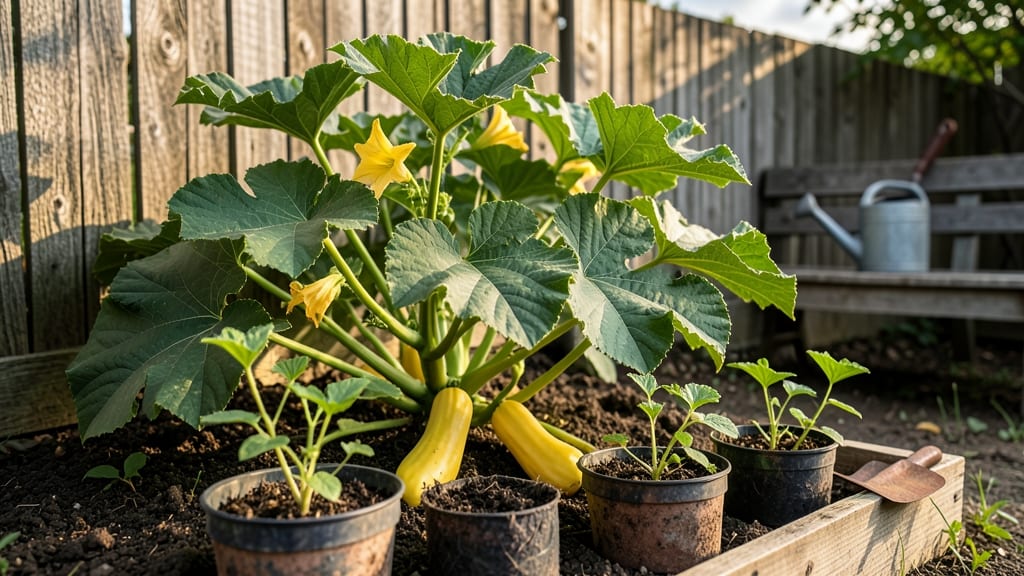
Spacing your yellow squash plants 🎃 correctly is the single biggest factor in whether you end up with a bumper crop or a sad handful of undersized squash.
Picture this: you’ve just planted your seeds, excited for the harvest, only to find your plants fighting for every scrap of sunlight and nutrients by midsummer. That’s the cost of guessing your spacing—wasted space, stunted growth, and a garden that looks more like a jungle than a productive plot.
Here’s the good news: with the right spacing, you can fit more plants per square foot while still giving each one room to thrive.
Whether you’re working with bush varieties or sprawling vines, I’ll show you exactly how to map out your rows for maximum yield—no more crowded chaos, just happy, productive plants.
You’ll learn the ideal distances for in-ground beds and raised planters, how to adjust for different squash types, and even how companion plants can boost your harvest further. Let’s turn your garden into a yellow squash powerhouse.

Optimal yellow squash spacing by planting method (rows vs. hills)
Yellow squash thrives when given the right amount of space to spread its vines and develop strong roots. Incorrect spacing leads to crowded plants that struggle with disease, poor air circulation, and reduced yields.
Whether you're planting in rows or hills, understanding the nuances of spacing will transform your harvest. Let’s break down the science behind spacing for both methods to maximize your garden’s potential.
First, recognize that yellow squash varieties fall into two main categories: bush types (compact growth) and vining types (sprawling vines). Bush varieties like 'Golden Bush' need less space, while vining types like 'Straight Eight' require room to stretch.
Your planting method—rows vs. hills—will further influence how you space plants. Hills create mounds that improve drainage and airflow, while rows offer a more structured layout for larger gardens.
For in-ground planting, the general rule is to space plants 3–4 feet apart in rows that are 4–5 feet wide. This spacing allows vines to sprawl without competing for sunlight or nutrients.
In raised beds, you can reduce row spacing to 3 feet but maintain the same plant-to-plant distance. The key is balancing vine spread with airflow to prevent fungal diseases like powdery mildew.
Here’s a quick comparison to visualize the differences between rows and hills, along with spacing guidelines tailored to your planting method:
| Planting Method | Plant Spacing | Row Spacing | Soil Depth | Best For |
|---|---|---|---|---|
| Rows (In-Ground) | 3–4 ft apart | 4–5 ft between rows | 12–18 inches deep | Large gardens, vining varieties |
| Rows (Raised Bed) | 3 ft apart | 3–4 ft between rows | 10–12 inches deep | Compact spaces, bush varieties |
| Hills (In-Ground) | 2–3 plants per hill | 3–4 ft between hills | 12–18 inches deep | Small gardens, improved drainage |
| Hills (Raised Bed) | 2 plants per hill | 2–3 ft between hills | 10–12 inches deep | Urban gardens, bush types |
When planting in hills, mound soil into small pyramids and place 2–3 seeds per hill, thinning to the strongest plant once they sprout. Hills improve drainage and reduce soil-borne diseases, making them ideal for heavy clay soils or areas with poor water absorption.
For raised beds, hills can be even more compact, allowing you to fit more plants into a smaller footprint.
Soil depth is another critical factor. Yellow squash roots need at least 12–18 inches of loose soil to thrive. In raised beds, aim for 10–12 inches of high-quality compost-amended soil. Amend your soil with compost or aged manure before planting to ensure nutrients are readily available.
Poor soil preparation leads to stunted growth and lower yields, regardless of how perfectly you space your plants.
Spacing also affects vine growth and fruit production. Vining varieties like 'Straight Eight' can produce up to 10 squash per plant if given enough space, while bush types like 'Golden Bush' yield 4–6 squash per plant.
Overcrowding forces plants to compete for sunlight, resulting in smaller fruit and increased susceptibility to pests. On the other hand, over-spacing wastes garden real estate and reduces your overall harvest.
Pro tip: Use trellises or cages for vining varieties to save space while still allowing vines to spread. This method works especially well in raised beds or small gardens. Just ensure your trellis is at least 3 feet tall to support the weight of mature vines and fruit.
For bush types, skip the trellis and focus on proper row spacing to maintain airflow.
Finally, consider your garden’s layout. If you’re short on space, interplant with fast-growing crops like radishes or lettuce in the early stages. These companions won’t compete with squash but will help maximize your garden’s productivity until the squash vines fill in.
Always prioritize air circulation and sunlight exposure—these are the cornerstones of a thriving yellow squash patch.
How to adjust spacing for different yellow squash varieties
Not all yellow squash varieties grow the same way, and their spacing needs vary dramatically. Compact varieties like 'Golden Bush' thrive in tight spaces, while vining types like 'Straight Eight' need room to sprawl.
Getting this right means the difference between a modest harvest and a bountiful yield per square foot. Let’s break down the spacing rules for each type to maximize your garden’s potential.
For compact bush varieties, think of them like dwarf tomatoes—small but mighty. These squash stay under 2 feet tall and produce fruit close to the plant’s base. Crowding them too closely leads to disease pressure and stunted growth, while spacing them too far wastes valuable garden real estate.
The key is finding that sweet spot where each plant has enough room to breathe without competing for sunlight or nutrients.
| Variety Type | Mature Size | Row Spacing | Plant Spacing | Yield Potential |
|---|---|---|---|---|
| Compact Bush (e.g., 'Golden Bush') | 1–2 ft tall | 2–3 ft between rows | 12–18 inches apart | High (fruits near base) |
| Standard Bush (e.g., 'Sunburst') | 2–3 ft tall | 3–4 ft between rows | 18–24 inches apart | Very High (multiple vines) |
| Vining (e.g., 'Straight Eight') | 3–6 ft spread | 4–5 ft between rows | 36–48 inches apart | Moderate (longer vines = fewer fruits) |
The standard bush varieties, like 'Sunburst', strike a balance between compact and vining types. They grow 2–3 feet tall and produce fruit along multiple vines, so spacing them 18–24 inches apart in rows 3–4 feet apart gives them enough room to thrive without overcrowding.
This setup also makes it easier to harvest and maintain, as you can walk between rows without disturbing the plants.
Vining varieties like 'Straight Eight' are the most demanding when it comes to space. These squash can spread 3–6 feet in all directions, so giving them 36–48 inches between plants and 4–5 feet between rows is non-negotiable.
Without this space, their long vines will tangle, leading to reduced airflow and a higher risk of powdery mildew. If space is limited, consider training vines along trellises to save room while still maximizing yield.
One common mistake I see is treating all yellow squash the same. Overcrowding any variety—especially vining types—will lead to smaller fruits and more disease issues. On the flip side, spacing plants too far apart wastes garden space and reduces your overall harvest.
The goal is to balance plant health with yield density, and the spacing guidelines above help you achieve that perfect middle ground.
Pro tip: If you’re growing a mix of varieties, plant the compact bush types closest to pathways or edges of the garden. This frees up the center for the larger vining varieties, making your layout both efficient and productive.
With the right spacing, you’ll be picking plump, disease-free squash all season long! 🌱