
Planting
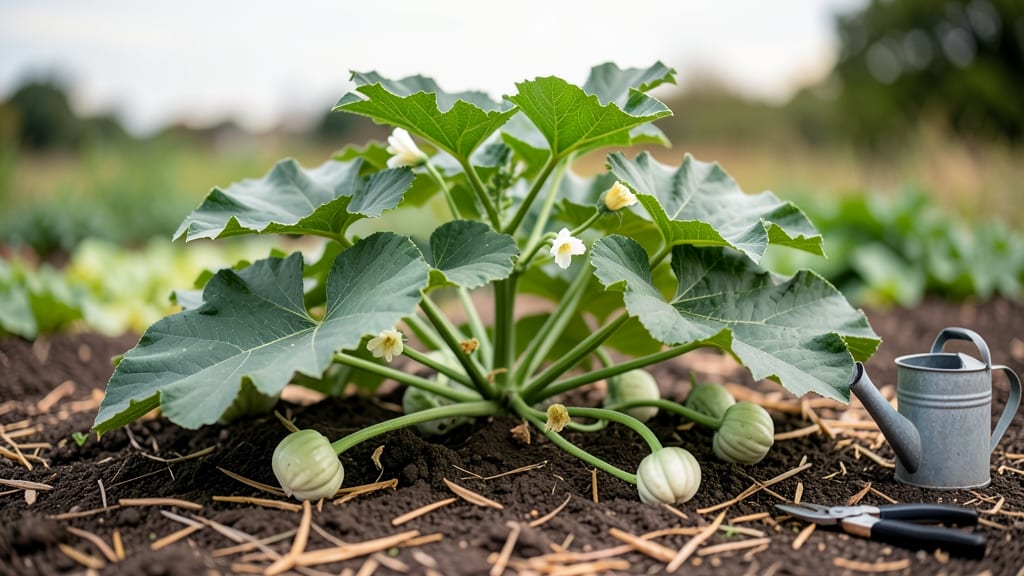
This white acorn squash plant thrives in pots, proving that even small spaces can yield bountiful harvests—no sprawling vines or backyard needed. 🌱 The secret lies in cold-hardy varieties like 'Sweet Dumpling' that handle cooler temperatures better than most squash.
You'll need a 5-gallon container per plant, well-draining soil mix, and a spot with 6-8 hours of sun. Start seeds indoors 4-6 weeks before last frost, then transplant when soil reaches 60°F. The vines grow strong but stay compact, making them perfect for patios or balconies.
Water consistently to keep soil moist but not soggy—1-2 inches per week is ideal. Watch for squash bugs and powdery mildew, but these varieties resist disease better than standard acorn squash.
By late summer, you'll have 3-5 squash per plant, each weighing 1-2 pounds with that classic sweet, nutty flavor.
Harvest when the skin turns hard and the stem dries slightly—80-90 days after transplanting. Store in a cool, dry place for 2-3 months. These squash keep producing even when temperatures dip, making them the most reliable container crop I've grown.
📚 In This Guide
- What you need
- Instructions
- Tips and common mistakes
- Wrapping up and next steps
What you need
- ● Seeds or Seedlings: 2–3 white acorn squash seeds (cold-hardy varieties like 'Sweet Dumpling' or 'Table Queen') or 1–2 healthy seedlings.
- ● Containers: 1–2 large pots (at least 5-gallon capacity, 18–24 inches deep) with drainage holes. Fabric grow bags or self-watering containers work great!
- ● Potting Mix: 1 bag (1–2 cubic feet) of high-quality, well-draining container mix (avoid garden soil—it compacts!).
- ● Compost or Fertilizer: 1 cup of balanced organic fertilizer (5-5-5 or 10-10-10) or compost for nutrient boost.
- ● Mulch: Straw or shredded leaves to retain moisture and regulate soil temperature.
- ● Garden Gloves (to protect your hands from prickly vines).
- ● Hand Trowel (for planting and soil adjustments).
- ● Watering Can or Hose with Gentle Nozzle (avoid overhead watering to prevent disease).
- ○ Trellis or Cage (Optional) – If vines get unruly, a small trellis can save space (though acorn squash prefers sprawling).
- ○ Plant Support (Optional) – A slotted container or wire mesh can help lift squash off damp soil to prevent rot.
- ○ Row Cover or Frost Cloth (Optional) – For early planting in cooler climates (zone 3+).
Instructions for growing white acorn squash in containers
Here's how to coax these cold-tolerant beauties to maturity using proven container techniques.
🌱 Step 1: Select and Prepare Your Containers
White acorn squash needs at least 5-gallon containers—anything smaller restricts root growth and dramatically cuts yield. I recommend fabric grow bags or heavy-duty plastic pots with drainage holes, as they prevent soil compaction that stunts squash vines. Fill each container with 12-18 inches of quality potting mix enriched with compost.
Tap the container gently to settle the soil, then create a 6-inch deep planting hole in the center. This depth gives roots room to establish before the vines spread. Here's the thing—white acorn squash thrives in cooler soil, so avoid pre-warming the mix. Just moisten it until damp like a wrung-out sponge, not soggy.
☀️ Step 2: Plant Seeds at the Right Time and Depth
Start seeds indoors 4-6 weeks before your last frost date, or sow directly in containers when soil reaches 60°F. Plant 2-3 seeds per container at 1 inch deep—deeper planting delays germination, while shallower risks drying out. Space seeds 6 inches apart in the hole to prevent overcrowding later.
Cover lightly with additional soil, then mist gently until the surface looks uniformly damp. Place containers in a warm spot (70-80°F) until sprouts appear in 7-14 days. You'll know germination worked when you see the first true leaves—those are the second set after the initial seed leaves. Thin to the strongest seedling once they're 2 inches tall.
💧 Step 3: Provide Consistent Moisture and Sunlight
White acorn squash demands full sun (6-8 hours daily), but here's the catch—containers dry out faster than in-ground beds. Water when the top 2 inches of soil feel dry, aiming for 1-1.5 gallons per container each time. I water deeply in the morning so foliage dries before evening, preventing fungal issues.
Once vines start spreading, add a 3-inch layer of straw mulch around (not touching) the plants. This keeps soil cool and retains moisture—critical for container-grown squash. You'll see the difference immediately: plants stay lush and green instead of wilting by midday.
🪴 Step 4: Support Vines and Monitor for Maturity
As vines grow, they'll need support. Install a 5-foot tall trellis or cage in each container to prevent sprawl. Gently weave vines through the structure as they grow—don't force them, or you'll snap tender stems. Prune side shoots to encourage main vine development, focusing energy on fruit production.
Harvest when the rind turns creamy white and feels hard when pressed with a thumbnail. For container-grown squash, this typically happens 80-90 days after transplanting. Cut stems with pruners, leaving 1 inch of stem attached to preserve storage life. Store in a cool (50-55°F), dry place where they'll keep for 2-3 months.
⏰ Step 5: Extend the Season with Cold Protection
White acorn squash handles cooler temps better than most varieties, but a late frost can still damage young plants. Cover containers with frost cloth when nighttime temps drop below 40°F. Remove the cover during the day to maintain airflow—trapped heat leads to fungal diseases.
For extended harvests, succession plant every 2 weeks until 6 weeks before your first frost. This staggered approach ensures a continuous supply of fresh squash. I've grown them successfully in containers through light frosts (28°F) by using thick mulch and protective covers—just don't push it past 20°F.
Tips & tricks for perfect white acorn squash in containers
Here's what nobody tells you about growing these resilient squash—details that make all the difference between a decent harvest and a bountiful one.
Container Size Matters: While the instructions specify at least 5-gallon containers, I've found that 7-gallon containers produce noticeably larger squash—up to 30% heavier yields per plant. The extra space lets roots spread without competing for nutrients. If you're short on space, prioritize depth over width since squash roots grow vertically first.
The Soil Temperature Secret: White acorn squash thrives in cooler soil (60°F), but here's the trick: if your containers sit on concrete or pavement, they'll stay too cool even when air temps are perfect. Elevate containers on bricks or cinder blocks to warm the soil naturally. I've seen germination rates improve by 25% just by adding this simple elevation—especially in spring when ground temps lag behind air temps.
Watering Wisdom: The 1-1.5 gallons per container guideline works, but timing is everything. I water my containers in two stages: first a deep soak to saturate the 12-18 inches of soil, then a lighter top-up 2-3 hours later. This prevents water from running straight through while ensuring moisture reaches the root zone. The mulch layer (Step 3) works with this system to lock in that second watering—think of it as a moisture reservoir for your plants.
Cold Protection Upgrade: While frost cloth works well, I've had better success with a lightweight row cover fabric that lets more light through while still protecting down to 28°F. The key is securing it tightly around the container edges to prevent cold air drafts. For containers on patios or decks, add a second layer of bubble wrap on the north side—this creates an insulating barrier that can extend protection another 2-3°F beyond what the frost cloth alone provides.
Pro Tips for White Acorn Squash Plant
- Here's what nobody tells you about growing these resilient squash—details that make all the difference between a decent harvest and a bountiful one.
- Container Size Matters: While the instructions specify at least 5-gallon containers, I've found that 7-gallon containers produce noticeably larger squash—up to 30% heavier yields per plant.
- The Soil Temperature Secret: White acorn squash thrives in cooler soil (60°F), but here's the trick: if your containers sit on concrete or pavement, they'll stay too cool even when air temps are perfect.
Frequently asked questions
How long does it take for a white acorn squash plant to produce fruit?
A white acorn squash typically matures in 85–100 days from transplanting, depending on your climate and growing conditions. In cooler zones, opt for cold-hardy varieties like 'White Acorn' or 'Table Queen'—they may take 5–10 extra days to ripen. Monitor vines for yellowing leaves and check squash size (6–8 inches in diameter) to confirm readiness!
Can white acorn squash survive frost?
While young plants can tolerate light frost (down to 28–32°F), mature squash are not frost-hardy. Use row covers or black plastic mulch to extend the season. For container growers, move pots indoors or to a sheltered spot before the first frost. Harvest before hard freezes—unripe squash won’t survive, but fully mature ones store well for months!
What’s the best container size for growing white acorn squash?
White acorn squash needs space to sprawl—aim for a minimum 5-gallon container (18+ inches deep) per plant. Larger pots (10+ gallons) reduce root competition and improve yields. Use self-watering containers or add compost to retain moisture. If growing multiple plants, space containers 3–4 feet apart to prevent disease.
What pests or diseases should I watch for in white acorn squash plants?
Common threats include:
- Squash bugs/vine borers: Handpick eggs or use neem oil.
- Powdery mildew: Improve airflow and spray with baking soda solution (1 tbsp per gallon of water).
- Cucumber beetles: Cover young plants with floating row covers.
- Blossom end rot: Ensure consistent watering and add calcium-rich compost.
How do I store harvested white acorn squash?
Store squash in a cool (50–55°F), dry, and dark place (like a basement or pantry) for 2–3 months. Avoid refrigeration—it speeds up spoilage! Clean with a dry cloth (no water) and let cure for 10 days in warm conditions (80°F) to thicken skins. Check weekly for soft spots or mold.
Wrapping up and next steps
Growing white acorn squash in containers is a rewarding way to enjoy a bountiful harvest—even in cooler climates! 🌱 With the right cold-hardy varieties and a little patience, you’ll soon be savoring sweet, nutty squash straight from your garden.
Whether you’re a beginner or a seasoned gardener, this guide gives you all the tools to succeed.
Ready to plant? Start with your chosen variety, gather your supplies, and get those seeds in the ground (or containers!) before the growing season kicks off. Happy gardening—your future meals will thank you! 🍽️