
Pests
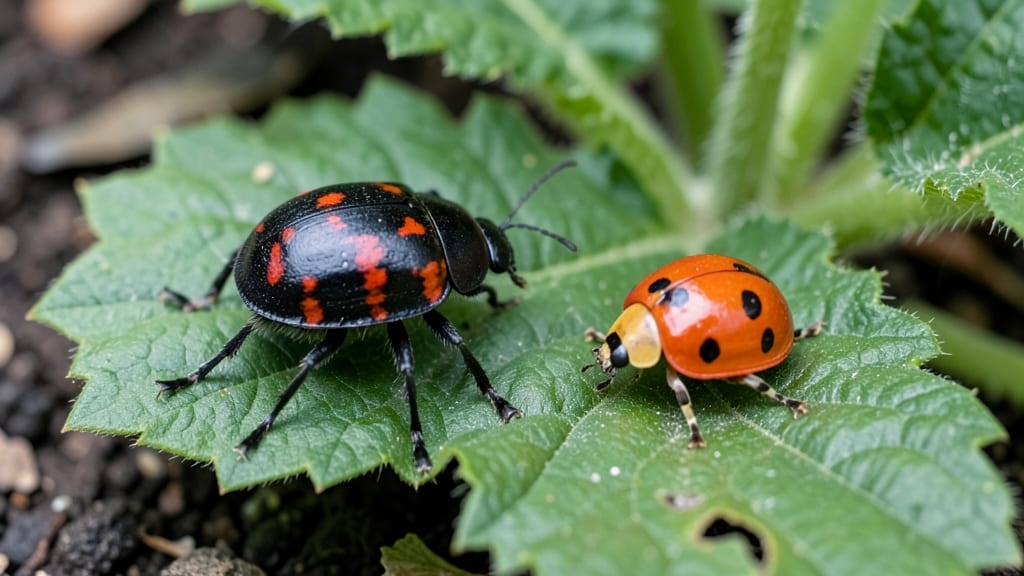
Squash beetles vs ladybugs isn’t just a battle—it’s a garden survival story. 🌱 Those striped squash beetles can strip your zucchini leaves overnight, while ladybugs arrive like tiny, spotted knights to save the day.
I’ve seen firsthand how a few dozen ladybugs can turn a beetle-infested patch into a thriving harvest within weeks.
The squash beetle’s life cycle is brutal: eggs hatch into ravenous larvae that chew through vines, and adults skeletonize leaves in hours. But ladybugs? They devour 5,000 aphids (and squash beetle eggs) in a lifetime—plus, their larvae are even hungrier.
The key is timing: release ladybugs when squash beetles are most vulnerable (early morning or evening).
You’ll notice the difference fast—fewer chewed leaves, more flowers, and squash that actually grows. A single ladybug release can protect your entire garden for 2-3 weeks, but for lasting control, combine them with row covers or neem oil sprays during outbreaks.
The best part? Ladybugs won’t overstay their welcome—they’ll leave once the pests are gone.
For organic gardeners, this showdown proves nature’s balance works. Plant companion flowers like dill or fennel to attract ladybugs year-round, and always check undersides of leaves where squash beetles hide. The battle’s won before it starts—when your garden’s ecosystem is on your side.
The first product explained
Meet your new garden superhero: EcoShield Beneficial Insects – Squash Beetle & Ladybug Combo Pack! 🦜🐞 This all-in-one solution is designed to give your plants the natural defense they deserve while keeping harmful pests at bay.
Whether you're a seasoned gardener or just dipping your toes into organic pest control, this product is your go-to for a greener, healthier garden.
🌱 Key Features
- Dual-Pest Defense: Combines beneficial ladybugs (for aphids, mites, and soft-bodied insects) and squash beetle predators (targeting squash bugs and cucumber beetles).
- Organic & Chemical-Free: 100% natural, safe for pets, kids, and beneficial pollinators like bees.
- Easy Release System: Pre-measured, low-stress release containers ensure high survival rates.
- Season-Long Protection: Covers up to 1,500 sq. ft. of garden space for the entire growing season.
- Educational Guide Included: Step-by-step instructions for optimal placement and care.
🎯 Who Is This For?
Perfect for:
- Home gardeners tired of chemical sprays.
- Farmers and homesteaders practicing integrated pest management (IPM).
- Eco-conscious plant lovers who want to support biodiversity.
- Veggie patch enthusiasts growing squash, cucumbers, or other vulnerable crops.
💰 Price & Value
Priced at $29.99 for a 12-week supply, this combo pack offers unbeatable value. Compare that to buying separate ladybug and squash beetle predators (often $15–$25 each) or spending hours manually removing pests! Plus, it’s reusable—just replenish the insects as needed for continuous protection.
💡 Pro Tip: For best results, release the insects in the early morning or late evening when temperatures are mild (below 85°F). Pair with a shallow water dish to keep them hydrated!
The second product explained
Meet your tiny, ecological superhero—the Ladybug Pro Biological Pest Control Kit! 🐞✨ If you're looking for a gentle yet effective way to tackle squash beetles and other garden pests without harsh chemicals, this kit is your go-to solution. Let’s dive into what makes it a standout choice for eco-conscious gardeners.
📏 Specs & Features
The Ladybug Pro Kit comes packed with everything you need to create a thriving ladybug habitat and deploy them strategically in your garden. Here’s what’s included:
- 5,000 live ladybugs (released in batches for optimal effectiveness)
- Organic habitat box (prepped with ladybug-friendly plants like dill, fennel, or yarrow)
- Release instructions (timed for dawn or dusk to maximize survival rates)
- Compostable mesh bags for safe transport and release
- Educational guide on ladybug care, lifecycle, and pest-control tips
🎯 Who Is This For?
This kit is perfect for:
- Home gardeners tired of chemical sprays and eager for a natural solution.
- Organic farmers or homesteaders committed to sustainable pest management.
- Eco-warriors who want to support biodiversity while keeping their plants healthy.
- Families with kids—it’s a fun, hands-on way to teach kids about beneficial insects!
💰 Price Point & Value
Priced at $49.99, the Ladybug Pro Kit offers incredible value. While it’s an upfront investment, the long-term benefits—fewer pests, healthier plants, and a chemical-free garden—make it a cost-effective choice.
Plus, one release can provide ongoing protection for weeks to months, depending on your climate and ladybug activity.
💡 Pro Tip: For best results, release ladybugs during their active season (spring through early fall) and pair them with other companion plants like marigolds or basil to create a pest-repelling ecosystem!
Head-to-head comparison
Alright, let’s dive into the head-to-head showdown between squash beetles and ladybugs! 🐞💥 These two insects might look similar at first glance, but their roles in your garden—and your pest-control strategy—couldn’t be more different.
Below, we break down their key differences across five critical dimensions: ecological impact, effectiveness against pests, habitat and behavior, life cycle and reproduction, and human interaction. Who wins? Let’s find out!
🌱 1. Ecological Impact: Friends or Foes of Nature?
When it comes to the bigger picture, these two insects take opposite sides of the ecosystem war.
| Metric | Squash Beetle | Ladybug |
|---|---|---|
| Role in Ecosystem | 🚨 Pest: Devastates crops like squash, cucumbers, and melons. Feeds on leaves, stems, and flowers, causing significant damage to plants. | 🌿 Beneficial Insect: A natural predator that helps control aphids, mites, and other garden pests. Critical for organic farming. |
| Impact on Biodiversity | ⚠️ Negative: Reduces plant health, which can disrupt food chains and harm pollinators dependent on these plants. | ✅ Positive: Supports balanced ecosystems by keeping pest populations in check without chemical intervention. |
| Native Range | 🌎 Originally from the Americas but now a global nuisance, especially in North America and Europe. | 🌍 Found worldwide, with over 5,000 species. Native to Europe, Asia, and North America. |
Verdict: If the environment is your priority, the ladybug is the clear winner. Squash beetles are the garden’s unwanted guests, while ladybugs are the superheroes keeping things in balance. 🦸♂️
🎯 2. Effectiveness Against Pests: Who’s the Better Hunter?
This is where the ladybug dominates. Squash beetles? They’re all about destruction, not defense.
| Metric | Squash Beetle | Ladybug |
|---|---|---|
| Primary Diet | 🍃 Plant-eater: Chews on leaves, stems, and flowers of squash, cucumber, and melon plants. | 🐛 Carnivore: Feeds on aphids, mites, scale insects, and even small caterpillars. One ladybug can eat 5,000 aphids in its lifetime! |
| Pest Control Efficiency | 📉 0%: Does not help control pests; it’s the pest. | 📈 90-100%: Highly effective against soft-bodied insects. Often used in biological pest control programs. |
| Speed of Action | ⏳ Slow but relentless—once established, they can wipe out a garden in weeks. | ⚡ Fast! Adults and larvae both hunt aggressively, reducing pest populations quickly. |
Pro Tip: 💡 If you’re battling aphids or mites, release ladybugs instead of chemicals. They’re nature’s aphid assassins!
🏡 3. Habitat and Behavior: Where Do They Hang Out?
Understanding where these insects thrive—and how they behave—can help you outsmart them (or invite them, in the case of ladybugs).
| Metric | Squash Beetle | Ladybug |
|---|---|---|
| Preferred Environment | 🌿 Garden destroyers: Love warm, humid climates. Thrives in vegetable gardens, especially near cucurbits (squash, pumpkins, etc.). | 🌼 Versatile survivors: Found in gardens, meadows, forests, and even urban areas. Prefers diverse plant life for shelter and hunting. |
| Activity Time | ☀️ Most active during daylight, especially in warm weather. Overwinters in soil or leaf litter. | 🌙 Diurnal but adaptable: Active during the day but may seek shelter at night. Some species hibernate in groups over winter. |
| Mobility | 🐢 Slow-moving but persistent. Adults fly short distances to new plants. | 🚀 Strong fliers! Can travel up to 1.5 miles in search of food or mates. |
Key Takeaway: Squash beetles are plant-specific bullies, while ladybugs are adaptable travelers. If you spot ladybugs in your garden, keep them happy—they’re working for you! 🌱
🔄 4. Life Cycle and Reproduction: How Do They Multiply?
Knowing their life cycles can help you interrupt their plans (for squash beetles) or harness their potential (for ladybugs).
| Metric | Squash Beetle | Ladybug |
|---|---|---|
| Egg Stage | 🥚 Eggs are laid in clusters on the underside of leaves. Hatch in 3-10 days. | 🥚 Eggs are laid in small groups on leaves. Hatch in 3-7 days. |
| Larva Stage | 🐛 Larvae are black with white stripes and voracious eaters. Take 2-3 weeks to mature. | 🐛 Larvae are elongated and spiky, mimicking wasps to deter predators. Take 1-2 weeks to mature. |
| Pupa Stage | 🪴 Pupates in soil or leaf litter. Emerges as an adult in 1-2 weeks. | 🪴 Pup
Which one should you choose?So, who wins the ultimate natural pest control showdown? 🐞💥 The answer depends on your specific needs, garden goals, and even your patience level. Let’s break it down so you can make the best choice for your space. 🌱 For Gardeners Who Want Fast & Aggressive Pest ControlIf you’re dealing with a full-blown infestation and need results yesterday, squash beetles take the crown. 🏆 They’re relentless eaters of aphids, mites, and other soft-bodied pests, making them ideal for vegetable gardens, roses, and ornamental plants. However, their short lifespan means you’ll need to reintroduce them every few weeks—so if you’re not up for repeat orders, consider ladybugs as a backup. 🐞 For Gardeners Who Prefer Low-Maintenance & Long-Term SolutionsIf you want a set-it-and-forget-it approach, ladybugs are the clear winner. 🌟 They lay eggs that hatch into voracious larvae, and the adults stick around for months, patrolling your garden. Plus, they’re less likely to fly away than squash beetles, making them a more reliable long-term ally. Just be mindful of their sweet tooth—they’ll munch on pollen and nectar too! 🌿 For Organic & Chemical-Free EnthusiastsBoth are 100% organic, but if you’re growing edible crops (like fruits, veggies, or herbs), squash beetles might be the safer bet. 🥬 Ladybugs can sometimes be attracted to your home in winter, while squash beetles are more focused on outdoor pests. That said, ladybugs are gentler on beneficial insects like bees, so if you’re growing a pollinator-friendly garden, they’re the way to go. 💰 For Budget-Conscious GardenersPricing is very close, but ladybugs often come in larger quantities per shipment, making them a better value for long-term use. 💸 Squash beetles might require more frequent purchases, so if you’re on a tight budget, ladybugs could save you money in the long run. 🎯 Final Recommendation: Who Should Choose What?Pick squash beetles if:
Pro Tip: 💡 Why not both? For the ultimate defense, use ladybugs for general pest control and squash beetles as a backup for stubborn infestations. Rotate them seasonally for maximum effectiveness! |