
Blooming
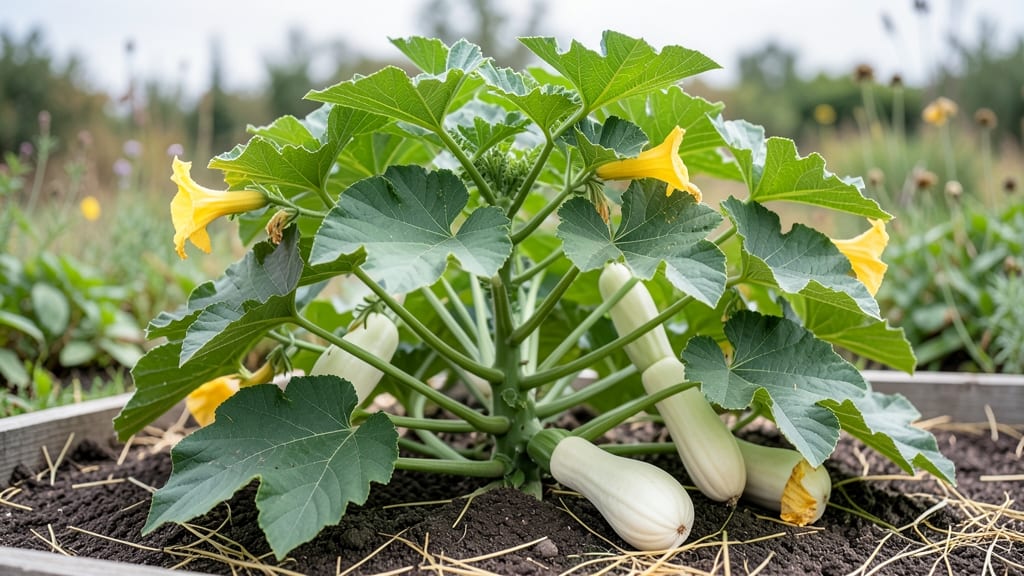
Growing long white bush squash means summer harvests that outlast most varieties. 🌱 I learned the hard way that this cold-hardy squash thrives where others fail—even in cooler climates—and its bush habit saves space while producing 10-15 pounds of squash per plant.
The secret starts with well-draining soil rich in compost, planted after the last frost when soil reaches 60°F. Space plants 3-4 feet apart in full sun, and watch them flourish without the sprawl of vining types.
Water consistently at the base to prevent powdery mildew, and mulch to keep roots cool.
By mid-summer, you'll harvest smooth, 3-4 inch squash with creamy flesh perfect for soups or roasting. The plants keep producing until frost, giving you a steady supply when other gardens fade. Prune lower leaves to improve airflow and deter pests like squash bugs.
This variety handles heat and humidity better than most, making it ideal for gardeners in zones 3-9. Start seeds indoors 4-6 weeks before transplanting for an even earlier harvest. The key is patience—these squash mature slowly but reward you with reliable yields all season long.
📚 In This Guide
- What you need
- Instructions
- Tips and common mistakes
- Wrapping up and next steps
What you need
- ● Seeds: 3–5 long white bush squash seeds (or 1–2 plants if buying seedlings).
- ● Containers or Garden Space: For containers: 5-gallon pots or larger (at least 12" deep).
- ● For in-ground planting: Well-draining soil in a sunny spot (6+ hours of sunlight daily).
- ● Potting Mix: High-quality, well-draining soil blend (add compost for nutrients).
- ● Fertilizer: Balanced organic fertilizer (10-10-10) or compost tea.
- ● Mulch: Straw or shredded leaves to retain moisture and suppress weeds.
- ● Gloves & Hand Trowel (for planting and soil prep).
- ● Watering Can or Hose (with a gentle spray nozzle).
- ○ Trellis or Cage (Optional) – If vines get leggy (though bush varieties stay compact).
- ○ Pruning Shears (Optional) – For trimming excess foliage if needed.
- ○ Row Cover or Frost Cloth (Optional) – For early planting in cooler climates.
How to grow long white bush squash for cold climates
This hardy variety thrives even in cooler regions—here's how to get reliable harvests.
🌱 Step 1: Prepare the Planting Site
Long white bush squash loves well-draining soil with plenty of organic matter. Work in 2-3 inches of compost into the top 12 inches of your garden bed before planting. This variety tolerates cooler soils better than most squash, but aim for a soil temperature of at least 60°F—use a soil thermometer to check. If your spring is slow to warm, consider using black plastic mulch a week before planting to speed up soil heating.
Choose a location with full sun (at least 8 hours daily) and space plants 3-4 feet apart in all directions. Bush varieties don't vine like their sprawling cousins, but they still need room to breathe. I always mark the spots with stakes before planting so I don't accidentally crowd them later.
🌱 Step 2: Plant Seeds at the Right Time
Wait until 2-3 weeks after your last frost date to plant seeds directly in the garden. Long white bush squash handles cooler temperatures better than most squash, but young seedlings still need protection from late frosts. Plant 2-3 seeds per hill, about 1 inch deep—deeper planting can delay germination. Space hills 3-4 feet apart to give mature plants plenty of room.
Keep the soil consistently moist but not soggy until germination, which typically takes 7-14 days depending on your climate. You'll know it's time to water again when the top 1-2 inches of soil feel dry to the touch. Once seedlings emerge, thin to the strongest plant per hill, snipping the others at the soil line rather than pulling to avoid disturbing roots.
☀️ Step 3: Provide Consistent Care After Germination
After thinning, maintain 1 inch of water per week, delivered either through rainfall or irrigation. Bush squash is drought-tolerant once established, but consistent moisture during flowering and fruiting ensures better yields. Water at the base of plants in the morning to allow foliage to dry quickly, reducing disease risk. I always use a soaker hose for deep, even watering that doesn't disturb the soil.
Apply a balanced organic fertilizer (like 5-5-5) when plants are 4-6 inches tall, then again when they start flowering. This variety is cold-hardy but still benefits from a little extra phosphorus to support root development. Watch for squash bugs and cucumber beetles—handpick early infestations or use row covers for protection. The white flowers are particularly attractive to pollinators, so you'll see plenty of bees visiting.
⏰ Step 4: Harvest at Peak Maturity
Long white bush squash is ready to harvest when the rinds turn hard and difficult to pierce with a fingernail, typically 80-100 days after planting. The fruits will also feel heavy for their size. Harvest in the morning when temperatures are cooler to preserve quality. Use a sharp knife or pruners to cut stems, leaving about 1 inch of stem attached to prevent rot.
Store harvested squash in a cool, dry place (around 50-55°F) where they'll keep for 2-3 months. The white rind resists sunburn better than many varieties, making it ideal for outdoor storage if needed. Don't wash before storing—just brush off dirt and let them air-dry completely first. You'll know they're stored properly when the rind feels firm and the stem end stays dry.
Tips & tricks for growing cold-hardy long white bush squash
These practical strategies will help you maximize your harvest with minimal fuss—especially in cooler climates.
Soil Temperature Secret: That 60°F minimum soil temperature is non-negotiable for reliable germination. I've learned the hard way that cooler soils delay sprouting—if your spring is slow to warm, lay black plastic mulch a full week before planting to create a microclimate that speeds up soil heating. This simple trick can shave weeks off your growing season.
Thinning Technique: When thinning seedlings to one per hill, snip at soil level rather than pulling. This prevents disturbing the roots of your kept plant and gives it a stronger start. I always use clean, sharp scissors to avoid spreading disease between plants. The 3-4 feet spacing between hills gives roots plenty of room to establish without competing for nutrients.
Watering Wisdom: The 1 inch per week guideline works best when delivered consistently at the base. I schedule my morning watering right after sunrise to let foliage dry completely by evening—this dramatically reduces powdery mildew risk, which is common in cooler, more humid conditions. A soaker hose delivers water exactly where it's needed without wetting leaves.
Harvesting Test: The nail test for maturity works perfectly, but I also check for a slight hollow sound when tapped gently. This variety's white rind stays firm even when fully mature, so you won't get the soft spots that plague other squash. Harvesting in the cool morning preserves that crisp texture—waiting until afternoon can make the skin slightly softer.
Pro Tips for Long White Bush Squash
- These practical strategies will help you maximize your harvest with minimal fuss—especially in cooler climates.
- Soil Temperature Secret: That 60°F minimum soil temperature is non-negotiable for reliable germination.
- Thinning Technique: When thinning seedlings to one per hill, snip at soil level rather than pulling.
Frequently asked questions
Got questions about growing or using long white bush squash?
Here are answers to the most common ones—whether you're a first-time gardener or a seasoned pro looking for tips!
How long does it take for long white bush squash to mature?
Long white bush squash typically takes 80–100 days from planting to harvest, depending on your climate and growing conditions. If you’re in a cooler region, start seeds indoors 2–3 weeks before the last frost for a head start. Patience pays off—these squash love their time to grow!
What’s the best way to store harvested long white bush squash?
Store them in a cool (50–55°F), dry place with good airflow, like a pantry or basement. Avoid refrigeration—they’ll last 2–3 months this way. For longer storage, cure them first by placing them in a warm (85°F), humid spot for 10 days to toughen their skins.
Why are my squash flowers falling off before fruiting?
This usually happens due to temperature stress (too hot or cold), poor pollination, or overwatering. Hand-pollinate flowers with a small brush if bees are scarce, and ensure daytime temps stay between 70–85°F. If soil is soggy, improve drainage to prevent shock.
Can I substitute long white bush squash in recipes that call for zucchini?
Their mild, slightly sweet flavor and firm texture make them a great swap for zucchini in grilling, baking, or stir-fries. For creamy dishes (like soups), peel them first—their skin is edible but can be tough. Try roasting them with olive oil and herbs for a delicious side!
Is long white bush squash truly cold-hardy? How do I protect it from frost?
Yes! This variety tolerates light frosts (down to 25°F) better than many squash types, but young plants need protection. Use row covers or mulch to insulate roots. If frost is forecasted, harvest mature squash first—they’ll keep well indoors. For seedlings, wait until soil is 60°F+ to plant.
Wrapping up and next steps
Growing long white bush squash is a rewarding way to enjoy a cold-hardy, low-maintenance harvest that thrives even in cooler climates! 🌱 Whether you're a seasoned gardener or a beginner, this versatile variety delivers sweet, nutritious produce with minimal fuss.
With the right soil, spacing, and care, you’ll soon be feasting on homegrown squash—perfect for soups, roasting, or fresh eating.
Ready to take the next step? Start by planting your seeds or seedlings this season and watch your garden flourish. Happy growing—your future meals (and bragging rights!) will thank you! 🍽️