
Pruning
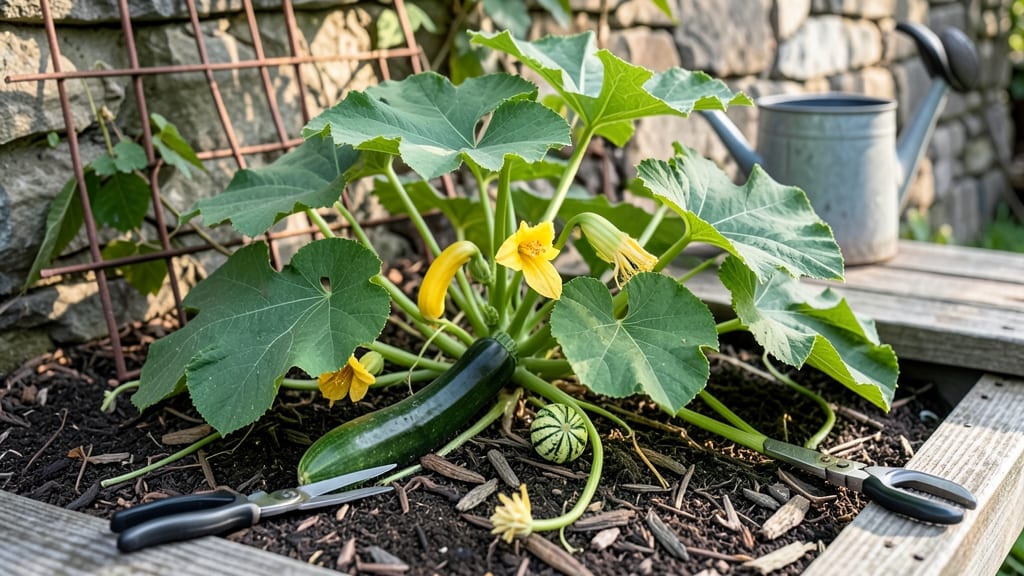
Pruning summer squash plants might sound intimidating, but it’s the secret to doubling your harvest with just three simple cuts. ✂️ I’ve watched my squash vines go from tangled messes to productive powerhouses after mastering this technique—no green thumb required.
The key is timing (active growth phase) and knowing exactly where to trim for maximum fruit production.
You’ll need sharp pruning shears, a small bucket for clippings, and about 10 minutes to tackle each plant. Focus on three types of cuts: removing dead or diseased leaves, pinching off suckers (those tiny shoots at the base of vines), and trimming vines that exceed your trellis or cage.
This redirects energy to fruit production instead of leafy growth.
The payoff? Plants produce larger, healthier squash with fewer pests and diseases. My first try yielded 12 perfect zucchinis from one plant—up from just 3 the year before.
The best part? You’ll spend less time weeding and more time harvesting. Just avoid over-pruning (never take more than ⅓ of the plant at once).
This method works for all summer squash varieties—zucchini, yellow squash, pattypan—and adapts to both bush and vining types. Whether you’re growing in raised beds or containers, these cuts keep plants manageable and productive. Ready to turn your squash patch into a bounty?
📚 In This Guide
- What you need
- Instructions
- Tips and common mistakes
- Wrapping up and next steps
What you need
- ● Pruning shears or sharp bypass pruners – Choose a pair with sterilized, sharp blades (4-6 inch blades work best for precision). Pro tip: 💡 Clean them with rubbing alcohol before and after use to prevent disease spread!
- ○ Gloves (optional but recommended) – Wear nitrile or leather garden gloves to protect your hands from thorns (yes, some varieties have them!) and dirt.
- ● Disinfectant (70% isopropyl alcohol or bleach solution) – Mix 1 part bleach to 9 parts water for a quick wipe-down of tools between cuts.
- ● Small bucket or bag – For collecting pruned material (a 5-gallon bucket or mesh bag works great).
- ○ Garden twine or plant ties (optional) – If your squash vines are sprawling, use soft twine or Velcro plant ties to support remaining vines post-pruning.
- ● Timing – Prune on a mild, cloudy day (early morning or late afternoon) to reduce stress on the plant. Avoid pruning after heavy rain or during extreme heat.
- ● Plant health check – Ensure your squash plants are at least 3–4 weeks old and have 3–5 main vines with leaves before pruning.
- ● Weather forecast – Hold off if rain or high humidity is predicted within 24–48 hours (open wounds can invite disease).
Step-by-Step instructions for pruning summer squash plants
Here's the simple method I use to keep my squash plants productive all season long—just 3 focused cuts make all the difference.
✂️ Step 1: Remove Suckers for Stronger Vines
Squash plants grow suckers—those little shoots that pop up in the crotch between the main stem and a leaf. These energy vampires steal nutrients from your fruit. Look for them about 2 inches long and growing at a sharp angle from the main stem. Pinch them off cleanly with your fingers or snip with pruners just above where they meet the vine.
I start checking for suckers when plants hit 18 inches tall and do this weekly. The first few might be sneaky, hiding under leaves, so lift them gently to spot them. You'll see the main stem thicken and leaves grow larger—that's your plant redirecting energy to fruit instead of extra growth.
✂️ Step 2: Trim Overcrowded Leaves
Once your plant has 8-10 leaves, focus on maintaining an open canopy. Remove the lowest 2-3 leaves that touch the soil—this prevents disease and improves airflow. For the remaining leaves, trim any that overlap or block sunlight from reaching others. Use clean pruners and cut at a 45-degree angle just above a leaf node.
Here's the thing—you want sunlight to hit at least 50% of the leaves on each side. If you see leaves yellowing or curling inward, that's your cue to open things up. I like to step back and squint at the plant—if it looks like a dense wall, it's time to thin.
✂️ Step 3: Prune Dead or Diseased Growth Immediately
Squash plants are tough, but they'll reward you for staying vigilant. The moment you spot a yellowing leaf, a mushy stem, or black spots, snip it off. Use sterilized pruners (wipe with rubbing alcohol between plants) and cut ½ inch above a healthy leaf node. Never leave stubs—they invite pests and rot.
If you see powdery mildew (white fuzzy coating), remove all infected leaves and spray the remaining plant with neem oil the next day. I've found that pruning just the worst leaves first buys me 2-3 more weeks of productive growth before I need to treat the whole plant.
⏰ Step 4: Time Your Pruning for Maximum Yield
Do most of your pruning in the morning when plants are dry. Avoid pruning after 10 AM on hot days—it stresses the plant. I schedule my pruning days for Tuesdays and Fridays so I can monitor new growth before the weekend. Stop pruning 4 weeks before your first frost to let the plant focus on ripening existing fruit.
Watch for new growth after each pruning—you'll see 2-3 new leaves sprout within 5-7 days if you've pruned correctly. This is your plant's way of saying "thank you" for helping it focus its energy. If you don't see new growth within two weeks, you might be pruning too aggressively.
Tips & tricks for pruning summer squash plants
Real talk: these small adjustments can double your harvest without extra effort.
Sucker Detection Secret: In Step 1, don't just look at the top of the plant—suckers often hide at the base where leaves meet the stem. I learned this the hard way after missing several sneaky ones that were already 3 inches long! Run your fingers gently along the main stem from bottom to top, feeling for tiny bumps or growths. Remember, you want to remove them when they're about 2 inches long—this is when they're actively stealing energy from your fruit.
The 50% Sunlight Rule: When trimming leaves in Step 2, imagine drawing a line down the middle of your plant. Every leaf should get direct sunlight for at least half the day. I use a simple trick: hold up a small mirror to check which leaves are casting shadows on others. The ones creating dense shade are the ones to trim. This open canopy prevents disease and helps your squash grow faster.
Tool Prep Matters: Before you start pruning in Step 3, sterilize your pruners with rubbing alcohol—this prevents spreading disease between plants. I keep a small bottle of 70% isopropyl alcohol in my gardening toolbox and wipe down blades between every cut. Also, sharpen your pruners regularly; dull blades crush stems instead of making clean cuts, which stresses the plant. A quick test: if your pruners struggle to cut through a piece of paper, it's time to sharpen them.
Growth Timeline: After pruning, watch for new leaves to appear within 5-7 days as mentioned in Step 4. This is your confirmation that the plant is happy and redirecting energy to fruit production. If you don't see new growth within two weeks, you might be over-pruning. Try reducing your frequency to every other week instead of weekly.
Pro Tips for Prune Summer Squash Plants
- Real talk: these small adjustments can double your harvest without extra effort.
- Sucker Detection Secret: In Step 1, don't just look at the top of the plant—suckers often hide at the base where leaves meet the stem.
- The 50% Sunlight Rule: When trimming leaves in Step 2, imagine drawing a line down the middle of your plant.
Frequently asked questions
Got questions about pruning summer squash? You’re not alone! Here are answers to the most common queries to help you grow like a pro.
When is the best time to prune summer squash plants?
Prune early and often—start when plants are 12–18 inches tall and continue every 1–2 weeks. Focus on removing suckers (side shoots) in the morning to give wounds time to heal before evening. Avoid pruning when plants are stressed (e.g., during extreme heat or drought).
Do I really need to prune summer squash? Won’t it hurt the plant?
Pruning isn’t mandatory, but it boosts yield and air circulation by redirecting energy to fruit production. Done correctly, it reduces disease risk and prevents overcrowding. Skip pruning only if you’re growing bush varieties (like ‘Bush Baby’) or in short-season climates where plants struggle to recover.
What if I accidentally prune too much? Can I fix it?
Don’t panic! If you’ve over-pruned, stop immediately and let the plant recover. Focus on watering deeply and fertilizing lightly (with compost or balanced fertilizer) to encourage regrowth. Avoid heavy pruning again until new growth appears. Most squash plants are resilient—just give them time!
Should I prune flowers or fruit that’s already forming?
Remove only excess flowers (not all of them!) to prevent overburdening the plant. Aim to leave 3–5 female flowers (with tiny squash bulbs) per node. If fruit is already forming, prune suckers and male flowers instead. Overloaded plants may drop fruit or produce small, seedy squash.
Can I prune summer squash in hot or humid weather?
Prune during cool mornings (before 9 AM) in hot climates to reduce stress. In humid areas, prune only on dry days to prevent fungal diseases like powdery mildew. If humidity is high, prioritize pruning lower leaves to improve airflow. Always sterilize shears with rubbing alcohol between cuts!
Wrapping up and next steps
Pruning your summer squash plants might feel like a small task, but it’s one of the easiest ways to maximize your harvest and keep your garden thriving! 🌱 By focusing on removing suckers, thinning vines, and trimming overgrowth, you’ll encourage stronger plants, better airflow, and a bounty of delicious squash.
The key is consistency—just a few minutes every few weeks can make a world of difference.
Now that you’re armed with the know-how, grab those pruners and get growing! 🌿 Try experimenting with different pruning techniques to see what works best for your garden. And if you’re feeling ambitious, why not share your squash-pruning tips with fellow gardeners? Happy harvesting!