
Pruning
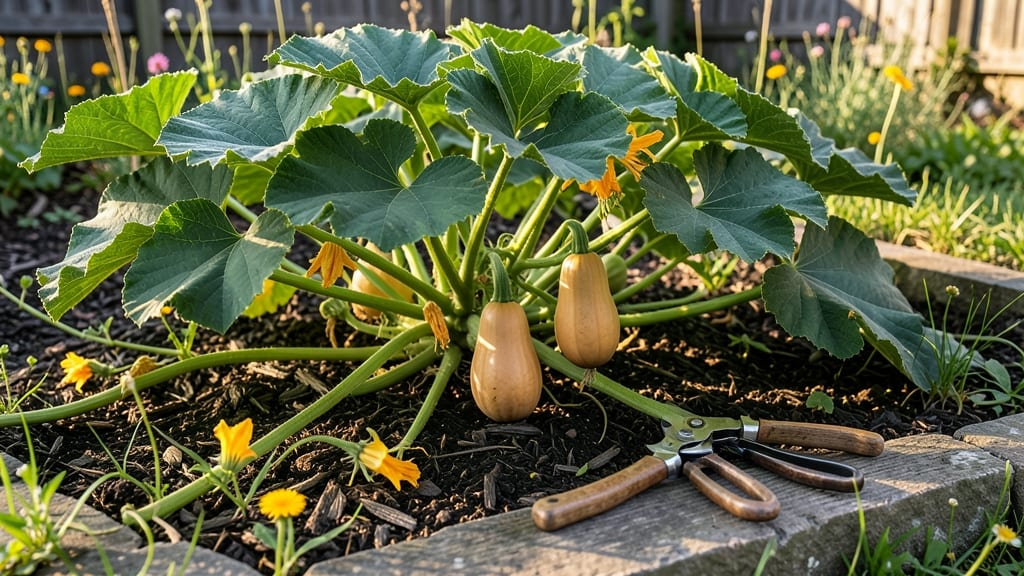
Pruning butternut squash plants can double your harvest with just three strategic cuts. 🌱 I learned this after my first season where vines sprawled uncontrollably, leaving tiny, bitter fruits—until I discovered how targeted pruning redirects energy to bigger, sweeter squash. The key is timing and technique, not brute force.
You’ll need sharp pruning shears, a clean knife for larger stems, and about 15 minutes on a warm afternoon. Focus on removing suckers (those little shoots at the base of vines) and overcrowded leaves to improve air circulation.
This isn’t about cutting everything—just the right parts to let your main vines thrive.
After pruning, your plants will focus energy on 3-5 main vines instead of dozens of weak ones. You’ll see thicker stems, more flowers, and squash that grow 2-3 times larger than before. The best part? Fewer pests and diseases sneak in when leaves aren’t packed together like a jungle.
Works for both bush and vining types, and the same method applies to other winter squash like acorn or delicata. Just avoid pruning when vines are wet or stressed—timing matters more than you’d think.
📚 In This Guide
- What you need
- Instructions
- Tips and common mistakes
- Wrapping up and next steps
What you need
- ● Pruning shears or sharp garden scissors – Choose bypass pruners (clean cuts) or anvil pruners (heavier-duty) for stems up to ½ inch thick. Disinfect blades with rubbing alcohol before and after use to prevent disease spread. (1 pair)
- ● Gloves – Wear gardening gloves (nitrile or leather) to protect against thorns, dirt, and squash vine mildew. Opt for cut-resistant if your plants have prickly stems. (1 pair)
- ● Sharp knife or pruning saw – For thicker stems or vines over ¾ inch thick. A folding pruning saw works well for stubborn growth. (1 tool)
- ● Garden twine or plant ties – Jute or plastic-coated twine (¼ inch wide) to secure vines to trellises or stakes, if pruning for vertical growth. (1 roll or 50+ ft)
- ○ Disinfectant (optional but recommended) – 70% isopropyl alcohol or a 10% bleach solution (1 part bleach to 9 parts water) to sterilize tools between cuts. (small spray bottle or wipe)
- ● Compost bin or trash bag – For removing pruned vines. Avoid composting diseased or pest-ridden plant parts. (1 bin or 2+ bags)
- ● Hand pruners with a bypass blade – More precise than anvil pruners for delicate cuts on butternut squash vines.
- ● Trellis or stakes (4–6 ft tall) – If you’re training vines vertically, use wooden, metal, or plastic trellises with 12-inch spacing between supports.
- ● Plant marker flags – Label pruned sections (e.g., “male flower” or “fruit zone”) if experimenting with selective pruning.
- ● Mulch (straw or shredded leaves) – Apply a 2–3 inch layer around the base to retain moisture and reduce weeds post-pruning.
Step-by-Step instructions for pruning butternut squash plants
Here's the straightforward method I use to maximize fruit size and plant health—no complicated tools or guesswork.
✂️ Step 1: Identify and Remove Suckers Early
Squash vines produce aggressive side shoots called suckers that drain energy from your main fruit. Scan the plant for these 1-2 inch shoots emerging from leaf axils (where leaves meet stems). Use clean, sharp pruning shears to snip them off at the base—don't leave stubs, or they'll regrow.
I prune suckers every 5-7 days during the first 4-6 weeks of growth. You'll see fewer flowers and smaller fruit if you wait too long. Focus on removing suckers that appear below the first 3-4 leaves—these compete most directly with your main vines.
🌿 Step 2: Thin Vines to 2-3 Main Stems
Butternut squash thrives with 2-3 strong main vines per plant. Once your vines reach 12-18 inches, select the three most vigorous stems (look for thick, dark green growth) and prune all others at the base. This redirects energy to fewer, stronger vines that produce larger fruit.
Here's the thing—don't prune too late. After vines exceed 24 inches, the plant resists new growth. You'll notice fewer flowers and slower recovery if you wait. I always prune on a cloudy morning so the plant recovers quickly from stress.
🌱 Step 3: Prune Excess Leaves Near Fruit
Once flowers appear, focus on leaf management. Remove 1-2 leaves directly above each developing fruit to improve air circulation and sunlight exposure. This prevents powdery mildew and helps fruit ripen evenly. Use your fingers to gently twist leaves off—no need for shears here.
Watch for yellowing leaves near the base. These are natural signs of aging, but if they appear suddenly on younger growth, your plant may be overwatered. Remove only the yellowed leaves—never prune healthy foliage. You'll see fruit develop faster and with better shape when leaves aren't shading them.
⏰ Step 4: Time Your Final Pruning for Harvest
About 4-6 weeks before your first frost date, make one final pruning pass. Remove all remaining suckers and any vines that aren't producing fruit. This forces the plant to concentrate its energy on ripening existing fruit rather than generating new growth.
Don't prune too aggressively late in the season—you want to leave enough foliage to photosynthesize and feed the fruit. I stop pruning entirely once fruit reach 6-8 inches in length. At this point, the plant's job is to mature what's already there, not produce more.
Tips & tricks for pruning butternut squash plants
Let me share the insights I've gathered after years of growing butternut squash—these small adjustments make all the difference in your harvest.
Timing is Everything: That 5-7 day pruning schedule in Step 1 might seem frequent, but it's crucial during the first 4-6 weeks when plants are establishing their main vines. I've found that pruning on cloudy mornings (as mentioned in Step 2) gives plants time to recover before the heat of the day. This reduces stress and helps maintain consistent growth—especially important when dealing with the aggressive suckers that emerge below the first 3-4 leaves.
Visual Cues for Healthy Pruning: When thinning to 2-3 main stems in Step 2, look for vines that are slightly thicker than your pinky finger and have a deep green color. These are your powerhouses. I also check for new leaf growth at the vine tips—this indicates active growth worth preserving. The 12-18 inch height guideline is a good starting point, but don't hesitate to prune slightly earlier if you notice one vine clearly outpacing others.
Leaf Management Secrets: In Step 3, when you're removing 1-2 leaves above developing fruit, focus on the largest leaves that completely shade the fruit. These leaves create microclimates that trap humidity and promote fungal growth. I've noticed that removing just one leaf can dramatically improve air circulation around the fruit, which is particularly important when summer humidity is high. The yellowing leaves mentioned are your plant's way of telling you it's ready to redirect nutrients—don't ignore these natural signals.
Final Pruning Strategy: The 4-6 week window before frost in Step 4 is your last chance to shape the harvest. I like to mark this period on my calendar and set reminders. When checking fruit size at 6-8 inches, run your fingers along the stem—you should feel a slight give where the fruit meets the vine, indicating it's ready to focus on ripening rather than growing new fruit.
Pro Tips for Prune Butternut Squash Plants
- Let me share the insights I've gathered after years of growing butternut squash—these small adjustments make all the difference in your harvest.
- Timing is Everything: That 5-7 day pruning schedule in Step 1 might seem frequent, but it's crucial during the first 4-6 weeks when plants are establishing their main vines.
- Visual Cues for Healthy Pruning: When thinning to 2-3 main stems in Step 2, look for vines that are slightly thicker than your pinky finger and have a deep green color.
Frequently asked questions
Got questions about pruning butternut squash? You're not alone! Here are answers to the most common concerns—so you can prune like a pro and harvest bigger, healthier squash.
When is the best time to prune butternut squash plants?
Prune your butternut squash early and often—start when plants are 3–4 feet tall (about 4–6 weeks after germination). Focus on removing suckers (side shoots) in the first 2–3 weeks of growth. Avoid pruning too late, as it can stress the plant before harvest. Pro tip: Morning pruning gives wounds time to heal before evening moisture sets in.
How do I know if I’m pruning correctly?
You’re on the right track if you’re:
- Leaving the main vine (the thickest stem) untouched—this is the plant’s lifeline!
- Removing suckers (small shoots growing from the base of leaves or vines) with clean cuts.
- Avoiding more than 1/3 of the plant’s foliage—over-pruning weakens growth.
Can I prune butternut squash too much?
Pruning more than 30% of the plant’s leaves can reduce photosynthesis, leading to fewer flowers and smaller squash. Limit suckers to 2–3 per node and never prune during flowering or fruiting stages. Signs of over-pruning: Wilting, slow growth, or no new leaves. Give your plant a break if it looks stressed!
What should I do with the pruned suckers?
Don’t toss them! Suckers are great for propagation—plant them in pots or another garden bed to grow new squash plants. If you’re short on space, compost them instead. Bonus: Healthy suckers can also be eaten like zucchini (young and tender)!
My squash plant isn’t producing much after pruning. What went wrong?
Check these common issues:
- Pruned too late: Wait until after the first frost to prune if you missed the early window.
- Underwatering: Butternut squash needs 1–2 inches of water weekly (more in heatwaves).
- Poor soil nutrients: Add compost or a balanced fertilizer (like 10-10-10) if leaves look pale.
- Pests/disease: Yellow spots or holes? Treat with neem oil or row covers.
Wrapping up and next steps
Pruning your butternut squash plants is a game-changer—just a few strategic cuts can boost yields, improve air circulation, and keep your vines healthy. 🌱 With the right tools and timing, you’ll be well on your way to a bountiful harvest.
Now that you’re armed with the know-how, grab those shears and get pruning! Next up? Monitor your plants weekly and adjust as they grow—your future squash feast starts with these simple steps.